
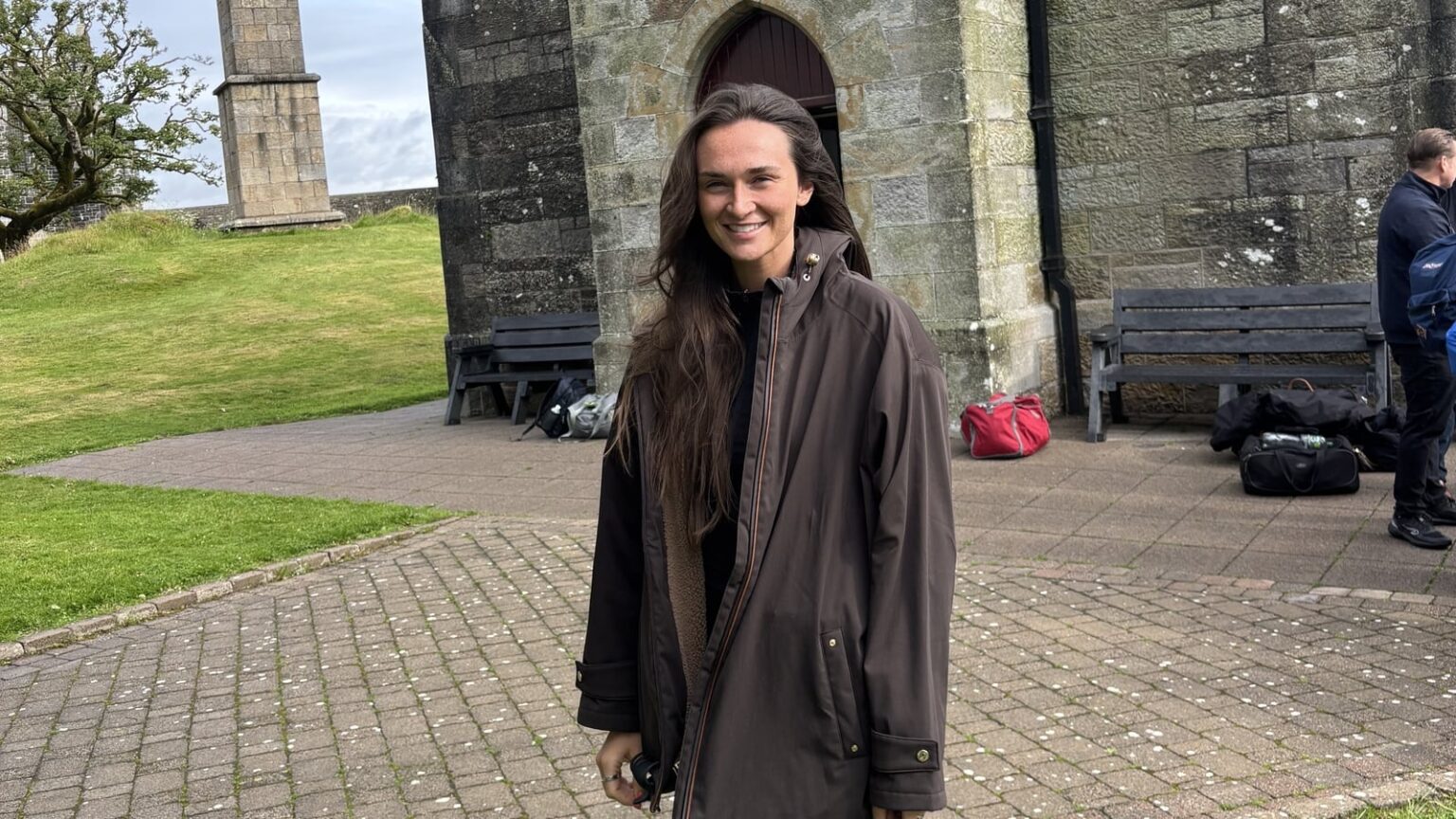
On the shores of Lough Derg in Co Donegal, people old and young prepared to make one of the oldest pilgrimages in the world.
Known as St Patrick’s Purgatory, the religious retreat has attracted pilgrims for over 1,500 years to retrace the steps of Ireland’s patron saint.
But why are people still making the spiritual journey?
Dan first made the pilgrimage in his early 20s and described it as “absolute torture”.
Over 40 years later, however, he said: “I gave out about it for about 15 years and then I thought I should go back and undo all the giving out I’ve done.
“I went back with a completely different mindset.
“It was so enjoyable and I’ve done it many, many years since.”
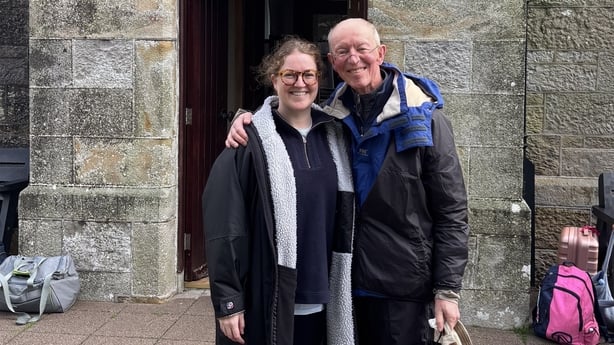
Dan and his daughter, Elizabeth, both took part in St Patrick’s Purgatory
For Elizabeth, Dan’s daughter, there are many reasons to come to Lough Derg that are both spiritual and secular.
She said: “I’ve come here a number of times since my Leaving Cert.
“I think it’s really a nice way to switch off, reset and hide the phone, and you meet some fantastic people.
“Whether you’re deeply religious or not, it’s a lovely experience.”
Of course, religion and spirituality are what bring most people to the shores of Lough Derg.
Karen felt the urge to reconnect with her faith after an unexpected life event.
She said: “I had an experience last summer where I had an anaphylactic reaction to a cough bottle that I had been having all my life, randomly from nowhere.
“Thank God, I pulled through it and I was just compelled to give thanks and practice a bit of gratitude and come back to my faith.”
Karen, 27, explained that when she told her friends about her desire to go on pilgrimage, they were more than a little surprised.
“They were shocked, especially because up to that point in my life, I would have always had a strong faith, but I was never overt about it,” she said.

The religious retreat has attracted pilgrims for over 1,500 years to retrace the steps of Ireland’s patron saint
She added: “I wouldn’t have gone to mass regularly before then.
“So, it was a bit of a shock.
“But when I sat them down and explained the reason, the why, the anchor, they understood it and they were very supportive.”
Ruth, 22, said she was drawn to the pilgrimage out of religious devotion and feels many people of her age are also turning to religion to find meaning in life.
“I’m quite drawn to the penitential aspect of it and being able to offer it up for people and for different intentions,” she said.
Ruth said: “I would say it’s becoming more and more common amongst people my age to have a religious devotion.
“People are searching for meaning, they’re searching for something greater because there’s that internal understanding that there’s something more to our lives.”
Arriving on the island any time after 11am, pilgrims will not sleep until 10pm the following night.
They will eat only one meal a day of dry toast and black tea, and complete eight penitential stations, which each consist of saying over 150 prayers, all while walking barefoot around the sacred sites and basilica that the island is famous for.
On the final day, mass and another station are required before shoes can be worn again, which symbolises the end of the pilgrimage.
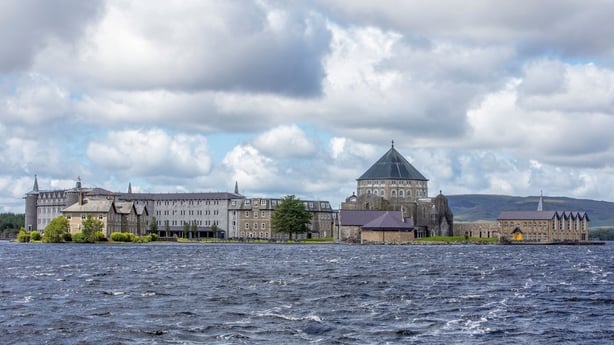
In its heyday in the 1980s, the pilgrimage attracted an average of around 15,000 people a year
In its heyday in the 1980s, the pilgrimage attracted an average of around 15,000 people a year.
Numbers have fallen since.
Around 4,500 people made the three-day pilgrimage last year, which was up almost 25% on 2024, and with the last pilgrimage of the season taking place this weekend, numbers are on track to reach that again this year.
‘Beyond ourselves’
Despite the hardship, Prior of Lough Derg Father La Flynn said the pilgrimage still holds broad appeal for people from all walks of life.
He said: “Part of it, I think, is just the fact that it’s out of the usual run of things.
“People who are faithful, weekly mass goers or whatever feel that they can come to Lough Derg, people who are not so regular, people who are on the edge of things and some people who are not Catholics or even Christians at all also feel they can come here.
“In that sense, I suppose there’s an openness and an understanding that people can come without being judged.
“In a time when there’s so much coming at people, we need something that lifts our spirits and that takes us beyond ourselves.”
With her final station complete, Karen described the post-pilgrimage glow she felt as she prepares to leave St Patrick’s Purgatory.
“The only way I can describe this, to someone who hasn’t actually done it themselves, is if you get a photograph and you turn up the colour saturation.
“You feel euphoric. You feel a sense of gratitude, grounding, a sense of calm, peace, happiness, relief.
“It’s great.”
Karen said she will take “gratitude” from the pilgrimage back to her everyday life.
“Finding gratitude in the mundane, small, trivial, everyday things that you take for granted,” she said.
“There’s always something to be grateful for and finding those little flickers of magic throughout your everyday life that’s what I’m going to bring back from Lough Derg,” she added.