
On August 15, 1947, India became independent under circumstances that would have tested the resolve of any nation. Independence came with the partition, displacement and immense human suffering.
The country inherited widespread poverty, limited industrial capacity and inadequate infrastructure. India was, in economic terms, a fledgling nation with few capabilities. Yet, from those difficult beginnings, India embarked on one of the most remarkable journeys of nation-building in modern history.
The first task was not economic growth. It was to build a nation.
In 1949, India adopted its constitution and committed itself to democracy, fundamental rights, federalism, an independent judiciary and universal adult franchise. At a time when much of the newly independent world was struggling to establish political institutions, India chose democracy as the foundation of its development. Eight decades later, it remains the world’s largest democracy.
For the Indian economy, one of the decisive inflection points came in 1991, when India undertook major economic reforms and began integrating more deeply with the global economy. Liberalisation, private enterprise and globalisation helped unleash the potential of Indian entrepreneurship and talent.
India’s real GDP grew by 7.7% in FY2025–26, according to the latest official estimate. But the more important story is what lies behind that growth. It is visible in modern highways, expressways, airports, ports, railways and metro systems; in rapidly expanding manufacturing; in electronics, automobiles, pharmaceuticals, defence production, and the space sector; and in India’s growing capacity to design, manufacture and export sophisticated products.
India’s extraordinary digital transformation is remarkable story-one that deserves to be shared with the world. The JAM Trinity – Jan Dhan bank accounts, Aadhaar biometric cards and Mobile – created an architecture for financial inclusion and delivery of public services at unprecedented scale. Digital India has taken this further.
The Unified Payments Interface (UPI) has demonstrated how a country of India’s size can build digital public infrastructure that is interoperable, inclusive and capable of global adoption. India’s digital public infrastructure is now attracting interest beyond its borders, including in countries such as France, Singapore and UAE.
The growth of India’s startup ecosystem, ranked third in the world by total number of startups and unicorns, is inspiring. The successful launch of Vikram-1, a privately developed rocket by originally a startup, Skyroot Aerospace, which placed India in elite club of three with the United States and China, is particularly significant. The average age of the team that built it was around 28. It is a powerful reminder that India’s demographic dividend is not merely a statistic; it is a reservoir of ambition and capability.
But, demographics alone do not create prosperity. This is why skilling, education and capacity building will be central to India’s journey towards 2047. India’s youth – in India and across the world – are increasingly becoming India’s most important global asset. The experience of Indians abroad reinforces this confidence.
Across professions and continents, Indians have earned a reputation for being hardworking, adaptable, diligent and committed to the societies in which they live. The Indian diaspora is not only a bridge between India and the world; it is a global network of skills, entrepreneurship and goodwill.
India’s growth story is also a sustainable growth story, with renewable energy, green hydrogen, electric mobility and other green technologies becoming integral to its development trajectory. India achieved 50% of its cumulative installed electricity capacity from non-fossil sources in 2025, five years ahead of schedule, while remaining committed to its 2070 net-zero target.
With an ambitious goal of producing 5 million metric tonnes of green hydrogen annually by 2030 and the launch of its first green hydrogen train, India is demonstrating that rapid economic development and environmental sustainability can advance together.
Global technology giants are increasingly betting on India as a key driver of the next AI revolution. With India hosting the AI Impact Summit and Google and Microsoft committing billions of dollars to AI and cloud infrastructure, the country is emerging as a major hub for AI innovation and deployment. India’s vast talent pool, digital public infrastructure and scale give it a unique advantage to shape an AI future that is not only globally competitive but also inclusive and accessible to the Global South.
India’s growing global role and strategic partnership with Israel
Indian Foreign policy has assumed salience in addressing issue of the contemporary times. The India of today is increasingly the first responder in humanitarian assistance and disaster relief. The COVID-19 pandemic demonstrated this spirit vividly. India undertook the herculean task of vaccinating its own population while also extending assistance to partner countries through Vaccine Maitri initiative, supplying vaccines to nations across the developing world.
India’s successful G20-Presidency in 2023 reflected this approach. At a time of significant geopolitical divisions, India helped bring countries together around a common agenda and ensured that the priorities of developing countries and the Global South received greater attention.

The inclusion of the African Union as a permanent member of the G20 was a particularly significant outcome. As a reliable development partner, India today works with partners across the Global South in areas ranging from capacity building and healthcare to agriculture, infrastructure, digital technology and renewable energy.
India is equally committed to a rules-based international order, respect for international law and an open, free and inclusive maritime domain. Our approach to the international system is also reflected in our call for reform of global institutions. India advocates comprehensive reforms in the United Nations Security Council (UNSC) so that the institutions of global governance become more representative, credible and effective.
India’s goal is Viksit Bharat @2047 – a developed India by the centenary of Independence. Achieving this ambition will require sustained high growth, higher productivity for our young people, stronger manufacturing, and leadership in the technologies that will define the future.
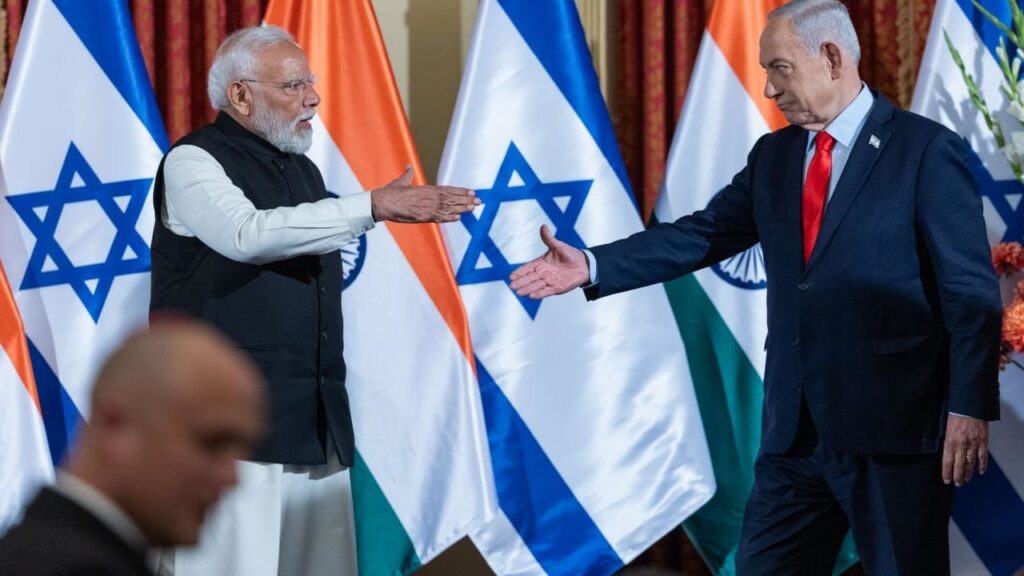
This is where the India-Israel partnership acquires particular significance. Our Prime Minister Shri Narendra Modi visited Israel in February 2026 and together with Prime Minister Mr. Netanyahu elevated our relationship to the Special Strategic Partnership.
India and Israel share democratic values, a deep respect for innovation and a proven ability to turn adversity into opportunity. Our relationship has evolved into a Special Strategic Partnership, spanning agriculture, water, defence, trade, technology, and innovation cooperation-and it has stood the test of difficult times.
The next phase must be driven by greater ambition, deeper integration and co-creation. The Bilateral Investment Treaty (BIT), ongoing Free Trade Agreement (FTA) negotiations, and the India-Israel Joint Working Plan for 2026 provide an important foundation for this next chapter.
India’s scale, manufacturing capabilities and ability to take solutions to the masses complement Israel’s exceptional innovation ecosystem. We should, therefore, bring together our entrepreneurs, researchers, universities, start-ups and businesses to co-develop, co-produce and co-scale technologies in AI, semiconductors, quantum computing, space, cyber technologies and advanced manufacturing.
Our ambition should extend beyond bilateral cooperation: India and Israel can jointly take innovative, affordable and scalable solutions to third-country markets, particularly across the Global South. Together, we can build a partnership that not only advances our national interests but also contributes to a more innovative, prosperous, and peaceful world.
The journey has been extraordinary. The destination is still ahead-and the India-Israel partnership can be a relevant force in helping shape what comes next.
Jai Hind!
The author is India’s ambassador to Israel.