
We tend to talk about aviation through its most visible actors: pilots and air traffic controllers.
But safe aviation involves many more people.
Airport operators, engineers, ground handlers, tug drivers, airlines, safety specialists, regulators, technology providers and researchers all contribute.
Safe aviation is not created by controllers and pilots alone. It is created by people and organisations working effectively together.
This is why simulation should increasingly go beyond training individuals in isolation.
We can put controllers, pilots, airport personnel and other operators into the same simulated emergency and examine where communication works, where it fails, how workload changes and whether everyone develops the same understanding of the situation.
We can also learn from events that have already occurred.
Using investigation findings and operational records, incidents and accidents can be reconstructed in simulated environments. We may never reproduce every detail perfectly, but we can recreate known or plausible conditions and examine how communication, workload, procedures, technology and decision-making interacted.
Then we can test alternatives.
What happens if a procedure changes? What if information is displayed differently? What if another safety barrier is introduced?
That turns an occurrence into an opportunity for systematic learning.
Simulation can therefore be much more than a training device. It can be a training environment, research laboratory, safety-learning platform and testbed for future aviation systems.
A local disruption can become a global problem
Air traffic management is also globally connected.
A delay in Sydney does not necessarily end when the aircraft leaves Sydney.
The aircraft may arrive late at its next destination. That can affect another flight, crew duty times, passenger connections, gates and airport resources, and have a snowball effect for all stakeholders.
One disruption can propagate through the network.
This is why resilient air traffic management matters beyond one airport or one country. A local operational constraint can have national and international consequences.
Australia should bring its capabilities together
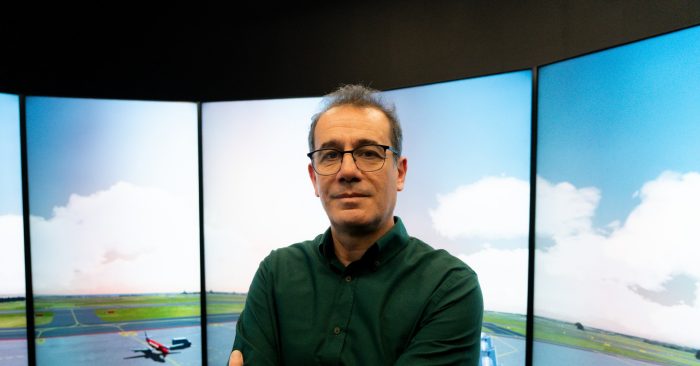
At UNSW Canberra, we have established an air traffic control simulation capability that allows complex airport and airspace operations to be reproduced without introducing risk into live operations.
But the opportunity is larger than one university or one simulator.
Australia already has considerable capability spread across Airservices, airports, airlines, Defence, regulators, government, universities, research organisations and technology companies.
We should connect those capabilities more deliberately.