

Azerbaijan’s cargo transit figures for the first seven months of 2026 provide grounds for optimism.
According to Azerbaijani media reports citing the Ministry of Digital Development and Transport, the development of the East-West and North-South international transport corridors, along with the implementation of major infrastructure projects, helped push transit freight volumes above 9.1 million tonnes in January-July — the highest figure recorded in the past five years. This represents an 11.6% increase compared with the same period last year. By direction, freight traffic along the East-West corridor rose by 16.5%, while volumes on the North-South route increased by 14.3%.
Transit transportation has demonstrated significant growth, contrary to the expectations of sceptics. This shows that Azerbaijan has not lost its strategic role or competitiveness either along the Middle Corridor or the International North-South Transport Corridor (INSTC). On the contrary, it has strengthened its position. Several factors have contributed to this, including the expansion of its network of partners, the commissioning of new infrastructure and modernisation of existing facilities, increased port capacity and other measures.
Transport corridors, often described as the arteries of the global economy, have faced serious risks in recent years. Wars, regional conflicts, political tensions and energy security challenges have undermined the resilience of major routes. As a result, demand for alternative and more stable transit routes is growing rapidly. Particular attention is being paid to ensuring the secure transportation of goods between Asia and Europe. This is one of the principal axes of global trade — and one whose stability has been significantly disrupted.
Eurasia’s transport map continues to change, and Azerbaijan is skilfully positioning itself within this transformation.
The Middle Corridor is a logical place to start, as it is currently one of the most sought-after routes. Before the corridor became fully operational, transporting goods from China to Europe took at least around 40 days, with delivery times frequently exceeding 50 days. Today, shipments can reach their destinations in as little as 12 days. There is hardly any need to explain what such a reduction means for international trade.

Source: AI
Although Azerbaijan is not the only country along the Middle Corridor, it serves as a critical junction and has played a substantial role in developing the route from the outset. Baku has invested considerable effort and resources in modernising its transport and logistics infrastructure — and those investments have paid off.
An important component of this work has been increasing the annual capacity of the Baku-Tbilisi-Kars railway corridor to 5 million tonnes. Under the Memorandum of Understanding on the Organisation of Freight Transportation via the Baku-Tbilisi-Kars Railway Line, signed by the heads of the Azerbaijani, Turkish and Georgian railway authorities in October last year, cargo delivery from the Port of Alat to Türkiye’s Mersin is expected to take 4.5 days.
The Baku International Sea Trade Port in Alat has developed into one of the principal hubs for cargo flows along the Middle Corridor. The port’s expansion is being pursued on the assumption that Eurasian transit volumes will continue to grow. The development of port infrastructure has already increased container-handling capacity from 100,000 to 150,000 TEU — twenty-foot equivalent units. A seventh berth has been commissioned, while the port’s equipment fleet has been supplemented with a new-generation crane capable of lifting 125 tonnes.
Today, the port can handle up to 15 million tonnes of cargo annually. In 2025, more than 8.2 million tonnes of freight and 107,000 TEU passed through the Baku International Sea Trade Port. During the first half of 2026, container throughput at the Port of Alat increased by 20% year on year, reaching 72,370 TEU. Dry cargo transportation, meanwhile, surged by as much as 82%.
But this is not the limit. The Port of Alat’s capacity can ultimately be expanded to 25 million tonnes of cargo and 500,000 TEU per year.
Growth in freight traffic along the Middle Corridor is also being supported by the expansion of the merchant fleets of Azerbaijan and its Central Asian partners. The Baku Shipyard, currently the most powerful shipbuilding facility in the Caspian region, plays an important role in this process. Participating countries are taking measures to renew their fleets and increase the tonnage of vessels in operation.
Digitalisation has also played a major role in achieving these results. The competitiveness of logistics routes is no longer determined solely by the number of kilometres of railway track or the handling capacity of seaports. The ability of all participants in a supply chain to operate within an integrated digital environment is becoming an increasingly important resource.
For Azerbaijan, the development of the Middle Corridor is not an isolated national project. Its effectiveness depends directly on coordinated action among all the countries through which the route passes. One of the factors behind its success is Azerbaijan’s constructive relationship, as a regional hub, with all of its partners. As President Ilham Aliyev previously noted, the success of projects implemented by Azerbaijan stems from the fact that the country maintains good relations with its neighbours and with the neighbours of its neighbours.
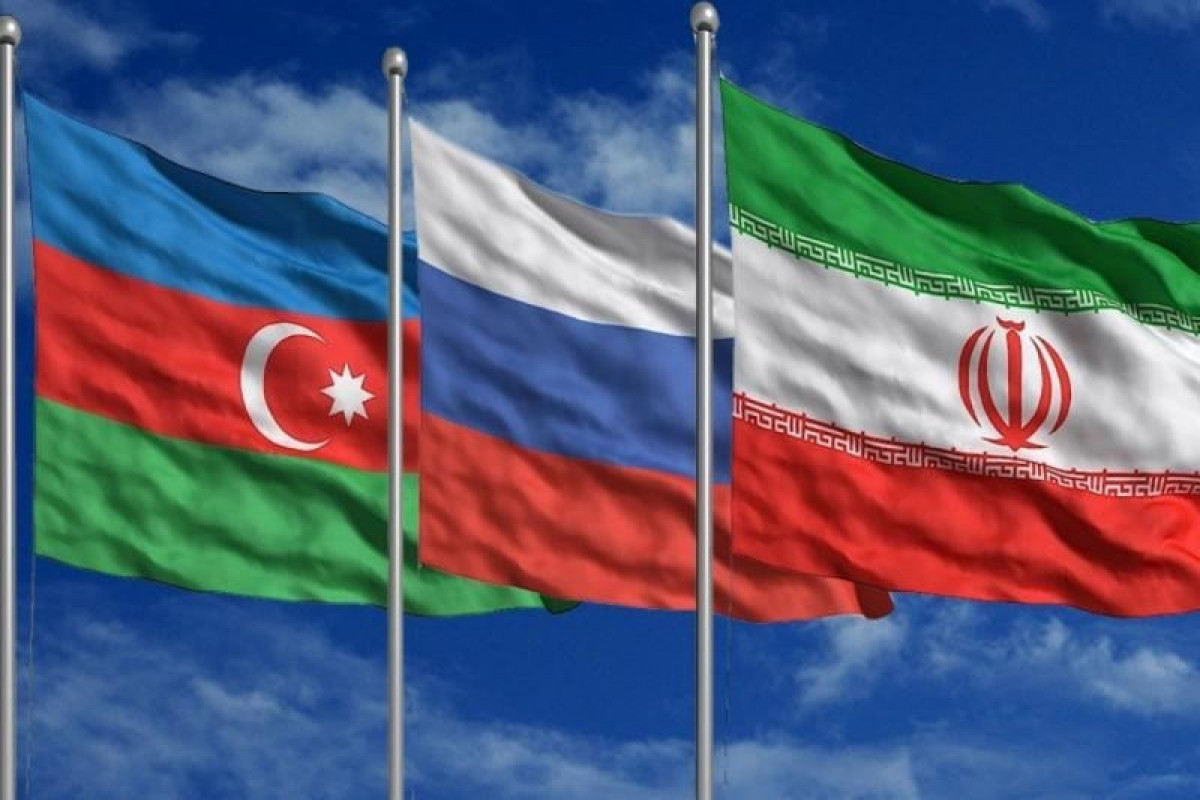
Turning to the International North-South Transport Corridor, freight volumes increased by 14.3% in the first seven months of 2026 compared with the same period last year. Traffic along the North-South route continues to grow steadily, driven by expanding rail and road freight flows between Russia, Azerbaijan and Iran.
It should be recalled that in July 2026, Russia, Azerbaijan and Iran signed a trilateral protocol in Moscow on the development of the western route of the North-South Corridor, noting the growth in mutual freight traffic and the transition to electronic documentation, including e-CMR.
Source: APA
Factors supporting the route’s development include the modernisation of border checkpoints and road infrastructure, the digitalisation of logistics processes, the introduction of electronic consignment notes and the broader reorientation of supply chains across Eurasia.
As Russian experts have pointed out, economic operators in Russia are interested in using the Baku-Tbilisi-Kars railway — the only rail connection providing Russia with direct access to Türkiye. The route has already been used, for example, by the Novokuznetsk Iron and Steel Plant, which has an enterprise in Türkiye’s Iskenderun. Other exporters and freight operators are expected to increasingly turn to this route as well. In this context, a new north-western branch of the international transport corridor is gradually taking shape.
Azerbaijan has therefore firmly established itself as a major logistics hub in the region. Its importance within international transport corridors is set to increase further.
By Tural Heybatov