
Taiwan and New Zealand have achieved another milestone in their economic and trade cooperation. The 13th Joint Committee Meeting under the Agreement between New Zealand and the Separate Customs Territory of Taiwan, Penghu, Kinmen, and Matsu on Economic Cooperation (ANZTEC) was held on August 17, chaired by Liu Wei-lien, Director-General of Taiwan’s Bureau of Foreign Trade under the Ministry of Economic Affairs. Both sides reviewed implementation outcomes across various chapters of the agreement over the past year and jointly adopted the fourth ANZTEC comprehensive review text, establishing cooperation priorities for the next three years in six areas: small and medium enterprises, e-commerce, supply chains, sanitary and phytosanitary measures, environment and trade, and indigenous cooperation.
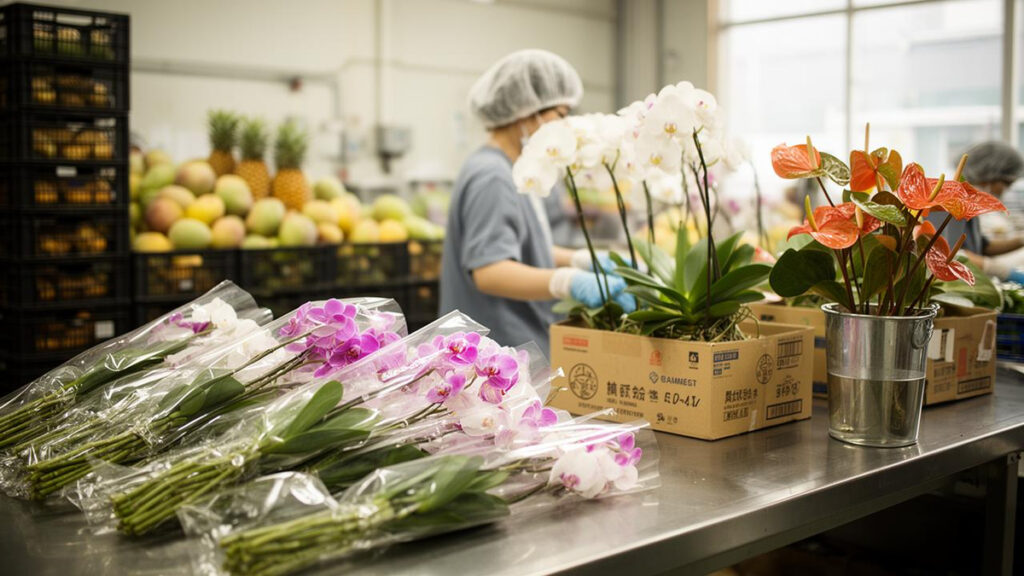
Taiwan’s Ministry of Economic Affairs stated that ANZTEC has been in force for 13 years since taking effect in December 2013, with both sides continuing to advance substantive cooperation under the agreement framework. Among these efforts, the breakthrough in agricultural market access has drawn the most attention. Taiwan’s Oncidium cut flowers, mangoes, lychees, and pineapples have already been successfully exported to the New Zealand market. In May of this year, both sides further signed the “Export Plan for Taiwan-Produced Fresh Plant Products to New Zealand,” under which New Zealand formally opened its market to Taiwan’s Phalaenopsis orchids and Anthurium cut flowers. This development is regarded as a significant milestone for Taiwan’s floriculture industry in expanding into Southern Hemisphere markets, helping to broaden the export footprint of Taiwan’s floral products and further enhance the international competitiveness of the industry.
In the area of technical barriers to trade, both sides held a seminar last August to introduce New Zealand’s inspection regime for electrical and electronic products to Taiwanese businesses, deepening exchanges and dialogue on regulatory issues in this sector and reducing regulatory uncertainty for businesses entering the New Zealand market.
On e-commerce cooperation, both sides agreed to pursue institutional exchanges on the application of the Pan-European Public Procurement Online system (Peppol). Peppol is an internationally recognized standard for electronic procurement document exchange. If Taiwan and New Zealand can achieve interoperability on this system, it would help jointly promote digital trade development in the Asia-Pacific region and provide more convenient digital infrastructure for cross-border transactions by SMEs on both sides.
Indigenous cooperation stands out as a distinctive highlight of Taiwan-New Zealand economic and trade relations. In recent years, both sides have focused on three core dimensions—culture, youth, and economy—advancing initiatives such as the translation of indigenous children’s picture books, bilateral youth exchange and capacity-building programs, and indigenous business collaboration. These exchanges not only underscore the importance both sides place on indigenous economic development and cultural preservation but also build a unique economic, trade, and cultural bridge between the indigenous communities of the two countries.
At this meeting, both sides jointly adopted the fourth ANZTEC comprehensive review text, setting the tone for cooperation over the next three years. The six priority areas—SMEs, e-commerce, supply chains, sanitary and phytosanitary measures, environment and trade, and indigenous cooperation—demonstrate that Taiwan-New Zealand economic and trade relations have evolved from traditional tariff concessions to deeper engagement on institutional harmonization, digital trade, and sustainable development.
Taiwan’s delegation emphasized its appreciation for New Zealand’s collaborative efforts in advancing various cooperation initiatives and expressed hope that both sides will continue to review ANZTEC implementation and inject new momentum into the partnership as appropriate, making ANZTEC a cooperation platform that evolves with the times and responds to the needs of both parties.
ANZTEC is a bilateral economic cooperation agreement signed between Taiwan and New Zealand in 2013, and it represents the first comprehensive economic agreement Taiwan has signed with a developed country. The agreement covers a broad range of areas including trade in goods, services, investment, government procurement, intellectual property, competition policy, e-commerce, labor, environment, and indigenous cooperation. In the 13 years since its entry into force, bilateral trade has continued to grow. New Zealand’s dairy products, meat, and timber hold a notable position in the Taiwan market, while Taiwan’s electronics, machinery, and agricultural products have gradually opened up the New Zealand market.
From an industry perspective, the approval of Phalaenopsis orchids and Anthurium cut flowers for export to New Zealand carries significant implications for Taiwan’s floriculture sector. Taiwan is a leading global exporter of Phalaenopsis orchids, with its primary markets historically concentrated in Japan, the United States, and Europe. While the New Zealand market is relatively modest in scale, as a major agricultural country in the Southern Hemisphere with stringent quarantine standards, New Zealand’s approval signifies that the quality and phytosanitary management of Taiwan’s floral products have gained international recognition. This could also facilitate future expansion into neighboring markets such as Australia.
On the digital trade front, the institutional exchanges between Taiwan and New Zealand on the Peppol system reflect emerging trends in Asia-Pacific regional economic integration. Peppol has been widely adopted in the European Union, Singapore, Australia, and other jurisdictions. If Taiwan can establish an interoperability mechanism for electronic procurement documents with New Zealand under the ANZTEC framework, it would reduce administrative costs for SMEs on both sides engaging in cross-border trade and accumulate practical experience for Taiwan’s future participation in broader Asia-Pacific digital trade arrangements.
Looking ahead, there remains ample room for Taiwan-New Zealand cooperation in supply chain resilience and environmental trade. New Zealand possesses extensive experience in renewable energy, carbon trading systems, and sustainable agriculture, while Taiwan holds advantages in semiconductors, information and communications technology, and precision manufacturing. The complementarity between the two sides in green supply chains and clean technology could become a new driver for the next phase of ANZTEC cooperation.