
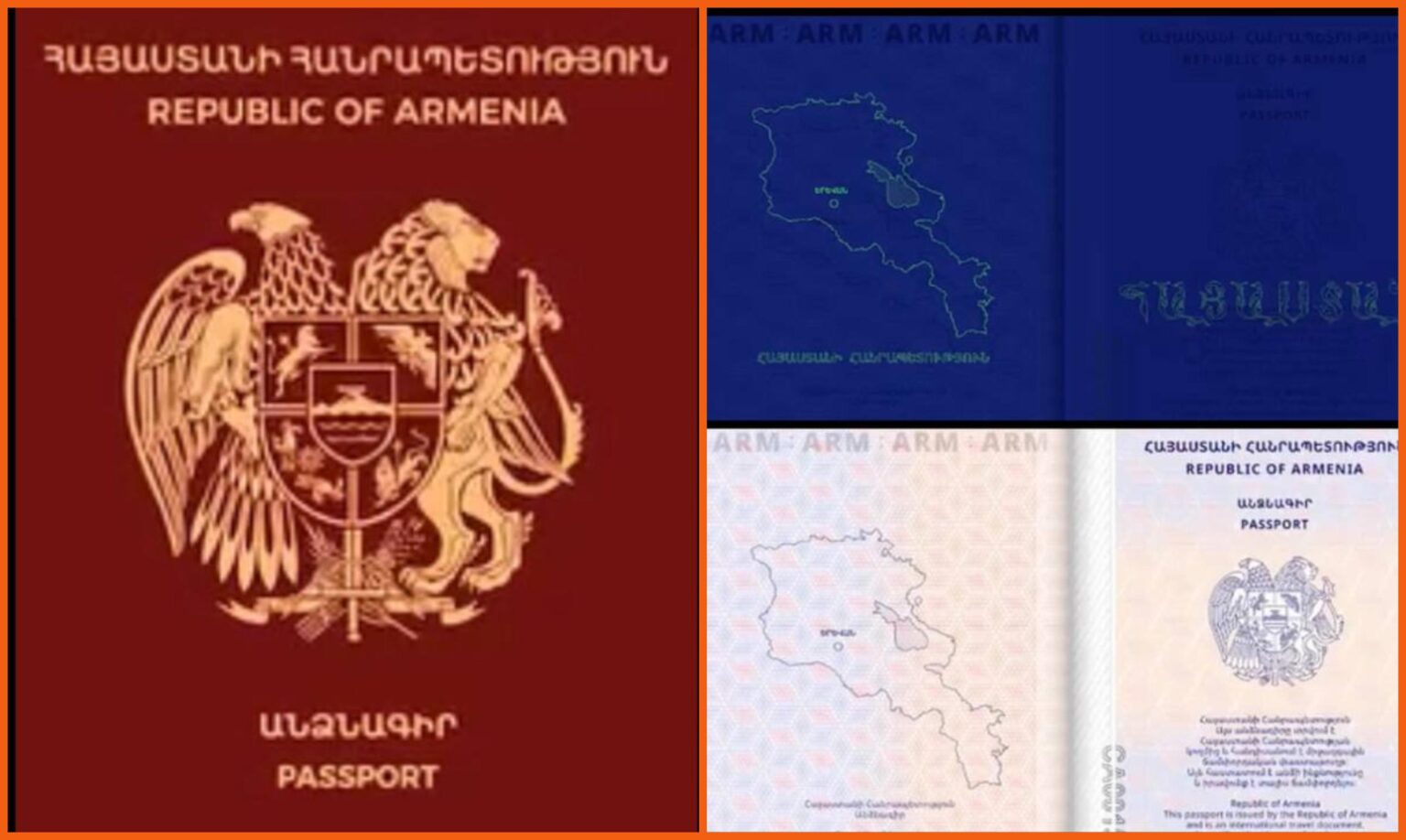

Prime Minister Nikol Pashinyan held a working discussion with Minister of Internal Affairs Arpine Sargsyan, during which the work carried out to introduce a new system of biometric passports and identification cards in the Republic of Armenia was presented.
Prime Minister Pashinyan noted in his introductory speech that the process of introducing biometric passports and identification cards is in its final stage, and they will be available to citizens from the fall of 2026.
Arpine Sargsyan emphasized that the goal of introducing the new system is to ensure that identity documents comply with high international standards, particularly those of the International Civil Aviation Organization (ICAO). According to the Minister of Internal Affairs, it will increase the reliability of documents, facilitate border crossings, and contribute to the free movement of citizens, including during visa liberalization with the European Union.
It was noted that modern infrastructure is being developed within the framework of introducing the new system. The project is being implemented through a public-private partnership. The new passports will feature high-level protection mechanisms, including security components and ultraviolet layers.
At the same time, it was emphasized that the document’s design reflects Armenian identity, historical and cultural heritage, and symbols of statehood. Accordingly, the outline map of the Republic of Armenia, the alphabet created by Mesrop Mashtots, and the first Armenian-letter sentence are reflected: “To recognize wisdom and discipline, to understand the words of a genius.” The Prime Minister emphasized that some letters appear larger and that there is a clear rationale behind it. “In particular, the letter “A” means freedom, independence, the letter “E” means happiness, the letter “E” means that in the alphabet “E” means God, emphasizing God, the letter “Zh” means the people, the letter “I” means sovereignty, the letter “Kh” means peace, the letter “K” means life, “H” means Armenia, “M” means man, “J” means water, we also wanted to emphasize the letter “O”, since there was no letter “O” in the initial version, we meant the law, legality, the letter “P” means the state, the letter “S” means love, the letter “K” means Christ, as the first state to adopt Christianity. Of course, these emphases could be done with all the letters. Still, in general, we thought that such emphasis might also significantly emphasize our strategies, perceptions, aspirations, and our ideas, and also add a certain element to the design.”
Continuing to present the images placed on different pages of the document, it was noted that it begins with the genealogy of the Armenians, with the image of Hayk Nahapet and the petroglyphs discovered in the Geghama Mountains and Ukhtasar, which have a rather ancient history. The next important milestone in history is also presented: the cuneiform inscription commemorating the founding of Yerevan, which is a very important part of Armenian identity and history. It was emphasized that scientists have restored the image of the Erebuni fortress. Next, the boundary stones of the Artaxerxes period are presented, which bear Aramaic inscriptions. The form and position of the boundary stone were also determined through consultations with scientists; it is a visualization depicting the lifestyle and agriculture of the period. It was emphasized that the choice of the boundary stone was not accidental; it was a very important state and legal tool even in that period, because it showed the existence of the state, the essence of state administration, and also the land reforms that took place during that period.
The next page presents the Mother See of Holy Etchmiadzin, which symbolizes the adoption of Christianity as the state religion in 301. The year of Christianity’s adoption is emphasized as a key part of our identity and history.
In accordance with the logic of ceremonial seniority, the symbols of modern statehood are presented: the President of the Republic of Armenia’s residence, the Government Building, the National Assembly Building, and the Constitutional Court Building. The Yerevan Cascade and Alexander Tamanyan, as the patriarch of modern urban development, are also depicted.
There is also a reference to the regions. The following are presented in alphabetical order: Aragats region with its four peaks, Ararat region with Khor Virap, one of the most important centers of Christianity, Armavir region with its lavash baking process, Armavir region with its orchards and fruits, Gegharkunik region with Lake Sevan and the 10th century Berdkunq fortress, Kotayk region with the pagan temple of Garni, Lori region with the Lori Berd fortress, Shirak region with the street of the historical center of Gyumri and the famous Phaeton scene, Syunik region with Baghaberd fortress, Tavush region with the Sranots bridge, Vayots Dzor region with the Jermuk waterfall and the famous deer, the symbol of Jermuk. The Prime Minister emphasized that through all these historical and cultural monuments, an attempt was made to ensure the diversity and multi-layeredness of the portrait of Armenia.
It was emphasized that, in parallel with the introduction of biometric passports, automatic, contactless border crossing systems will be introduced at border checkpoints, significantly simplifying and accelerating the movement of citizens.
Summing up the presentation of the passport, the head of state noted that with this step, Armenia is taking an important step towards a modern, secure, and international-standard passport system.