
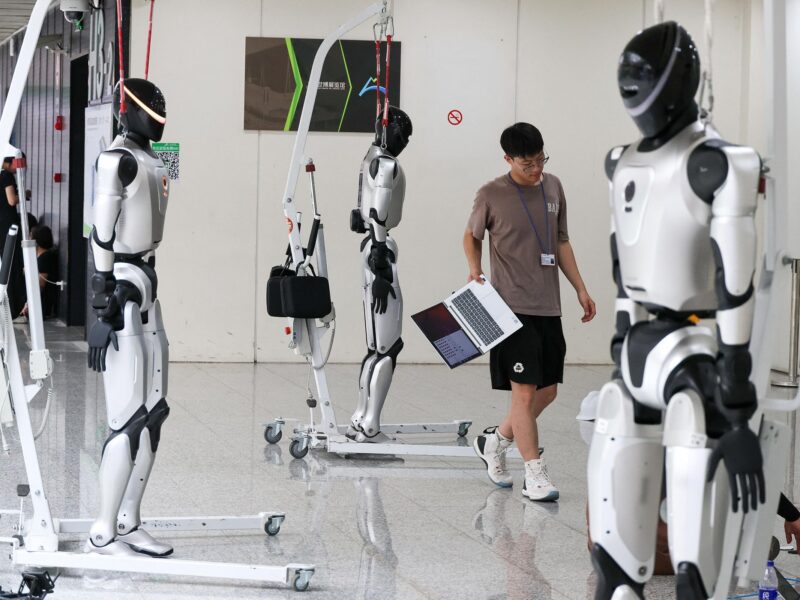
Young adults now lead in both AI use and skepticism, as concerns about job losses continue to climb.
(CN) — For the first time, a majority of young adults in the U.S. say artificial intelligence leaves them more worried than enthusiastic.
According to the Pew Research Center in a survey released Tuesday, 55% of adults ages 18 to 29 are now more concerned than excited over the increasing use of AI in daily life.
That’s up from 47% last year and just 31% in 2021, when Pew first started asking the question. Only about one in 10 young adults say they feel more excited than worried.
The shift is striking because younger people tend to use AI tools more often than older adults, yet their enthusiasm has cooled the most. Five years ago, a quarter of adults under 30 said they were more excited than concerned. Today that number has dropped to 11%.
The broader public has grown more cautious too. Overall, 52% of American adults say they feel more concerned than excited about AI’s expanding role, up from 37% in 2021. Just 9% say they’re more excited.
One of the biggest drivers of that unease is jobs. Seventy-one percent of Americans now believe AI will lead to fewer jobs in the United States over the next 20 years, up from 64% two years ago. Only 5% think it will create more work.
Young adults have moved the furthest on this question. Seventy-three percent of people under 30 now expect AI to reduce the number of jobs, compared with 61% in 2024. Their views now look a lot like those of people in their 30s, 40s and 50s. Even among adults 65 and older, a clear majority, 63%, expect fewer jobs.
The survey, conducted in late June, captures a moment when AI is showing up in more workplaces, apps and everyday tools. A broader Pew Research Center report released in June found that about half of U.S. adults now use AI chatbots, up sharply from roughly one-third just two years earlier.
Nearly one in four turn to them on a daily basis, with ChatGPT remaining the clear favorite. Younger adults lead the way in adoption, yet they are also among the most skeptical about the technology’s long-term effects on society and their own lives.
The same survey showed that AI is moving beyond chat windows into everyday homes. Roughly a third of Americans report owning a smart speaker and smaller shares have doorbells, thermostats or other devices with AI features.
Despite this growing familiarity, overall views about AI’s impact remain mostly negative. The gap between rising use and persistent unease is especially noticeable among younger adults — the group most likely to interact with the tools and increasingly worried about what they mean for jobs and daily life.
Many younger workers are already watching how the technology affects entry level roles and career paths. The data suggests that familiarity with AI has not translated into greater comfort, at least not yet.
Pew has tracked these attitudes for several years. While concern rose quickly among older adults early on, it has kept climbing among the youngest adults. The latest numbers show young people are no longer the most optimistic age group about AI’s impact on work and daily life.

Our weekly newsletter Closing Arguments offers the latest about ongoing
trials, major litigation and rulings in courthouses around the U.S. and the world,
while the monthly Under the Lights dishes the legal dirt from Hollywood,
sports, Big Tech and the arts.