
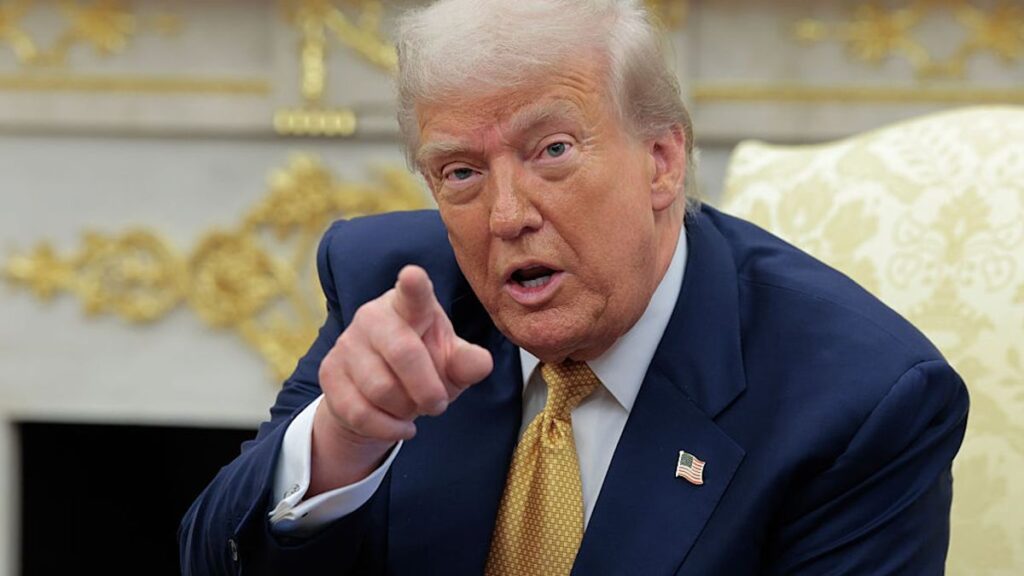
President Donald Trump paused for three days 50% tariffs on certain Canadian goods Tuesday night, hours before the duties were set to take effect, citing progress toward a bilateral trade agreement. The tariffs, which would have covered roughly $20 billion in Canadian imports, are now scheduled to take effect at 12:01 a.m. ET on August 22.
“I have paused the 50% Tariffs against Canada, that were scheduled to kick in tomorrow morning for a three day period, based on the fact that Canada and the U.S.A., subject to the finalization of documents, have a DEAL!” Trump wrote on Truth Social. He also suggested the Keystone XL pipeline could be “awoken from the grave,” according to MarketWatch.
Tuesday’s delay followed trade talks between Trump and Canadian Prime Minister Mark Carney, CNBC reported. The proclamation suspending the duties was signed Tuesday, August 18.
The tariffs were imposed under Section 338 of the Tariff Act of 1930, targeting Canada’s auto, alcohol, and dairy sectors. Trump signed three separate proclamations on July 20 invoking the law, which authorizes the president to levy duties as high as 50% against countries found to discriminate against American commerce. The White House argued that Canada and China stood apart from every other major trading partner by choosing to hit back with retaliatory measures instead of coming to the table to work out a deal.
The administration exempted a range of key Canadian exports — among them energy products, potash, and critical minerals — from the scope of the new duties, according to Axios.
As negotiations intensified ahead of the deadline, auto tariffs emerged as a central sticking point, with the two sides clashing over how to measure vehicle content for tariff purposes. Canada’s alcohol boycott — in which all but two provinces and territories halted the purchase and retailing of U.S. alcoholic beverages beginning in March 2025 — also became a major point of contention, along with Canada’s dairy supply management system.
Dan Kelly, president of the Canadian Federation of Independent Business, whose group represents 103,000 members, told CNBC that the Section 338 tariffs are devastating for cross-border commerce because the bulk of goods they cover are things everyday consumers buy. He added that some businesses were already hearing from American buyers who were pausing planned purchases while waiting to see whether the tariffs would take effect.
The White House proclamation says senior executive branch officials determined that Canada has “expressed a commitment” to remove the trade practices at issue, and that suspending the tariffs for three days serves the public interest.