
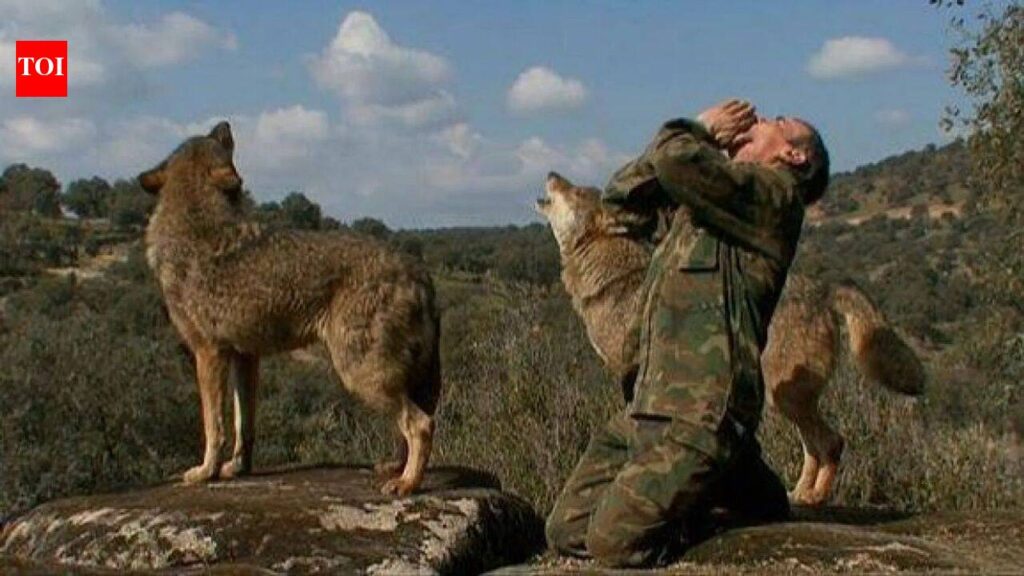

Marcos Rodríguez Pantoja, the Spanish man whose extraordinary childhood among wolves made him famous around the world, has died at the age of 80. Rodríguez died on 15 August 2026 in Rante, a small hamlet in north-western Spain where he had lived since 2001. His life was shaped by an unusual journey from poverty and neglect to years of complete isolation in the mountains, followed by a difficult return to human society. As Euronews reports, Rodríguez was six when his father sold him to a goatherd, who took him to a remote valley in Andalusia. After the shepherd died, the boy remained alone in the wilderness and gradually learned to survive alongside the animals around him. 12 years later, Spanish authorities found him living with wolves, beginning another difficult chapter in his remarkable life.
Wolf Boy Marcos Rodríguez’s arrival in the wilderness
Rodríguez was born in 1946 in the Andalusian village of Añora, at a time when Spain was still struggling with the effects of the Civil War and Second World War. According to Euronews, his childhood was marked by poverty, hunger and mistreatment. His father struggled to provide for the family, while his stepmother treated him harshly. When Rodríguez was about 6 years old, his father sold him to a goatherd. The man took the young boy to a remote valley in the mountains, where he was expected to look after livestock alongside an elderly shepherd.The shepherd taught him how to survive using what the mountains provided. But the arrangement did not last. After the shepherd died, Rodríguez was left alone. With no adult to care for him and little reason to trust people, he retreated deeper into the wilderness. Over time, the mountains became less frightening and more familiar. The animals around him became his companions, and eventually, in his own account, his family.
How did Marcos survived alongside the wolves
Rodríguez spent around 12 years without human contact. During that time, he developed ways of communicating with the animals he encountered, learning their sounds and behaviour. Euronews reports that he became particularly close to a pack of wolves after feeding its cubs. He would howl when he sensed danger, and he believed the animals responded to him as members of their group. Years later, when anthropologist Professor Gabriel Janer Manila interviewed him, Rodríguez described his life in the mountains in remarkable detail. He recalled the wolf cubs playing around him and leading him towards their den.He also described relying on the animals when hunting. If he wanted a rabbit or deer, he said he could call the wolves, hide and allow them to drive animals towards him. Janer’s research later became a book titled ‘He jugado con lobos,’ or ‘I Played with Wolves.’ Rodríguez’s memories suggested that the wilderness was not something he simply endured. It had become the place where he felt safest.
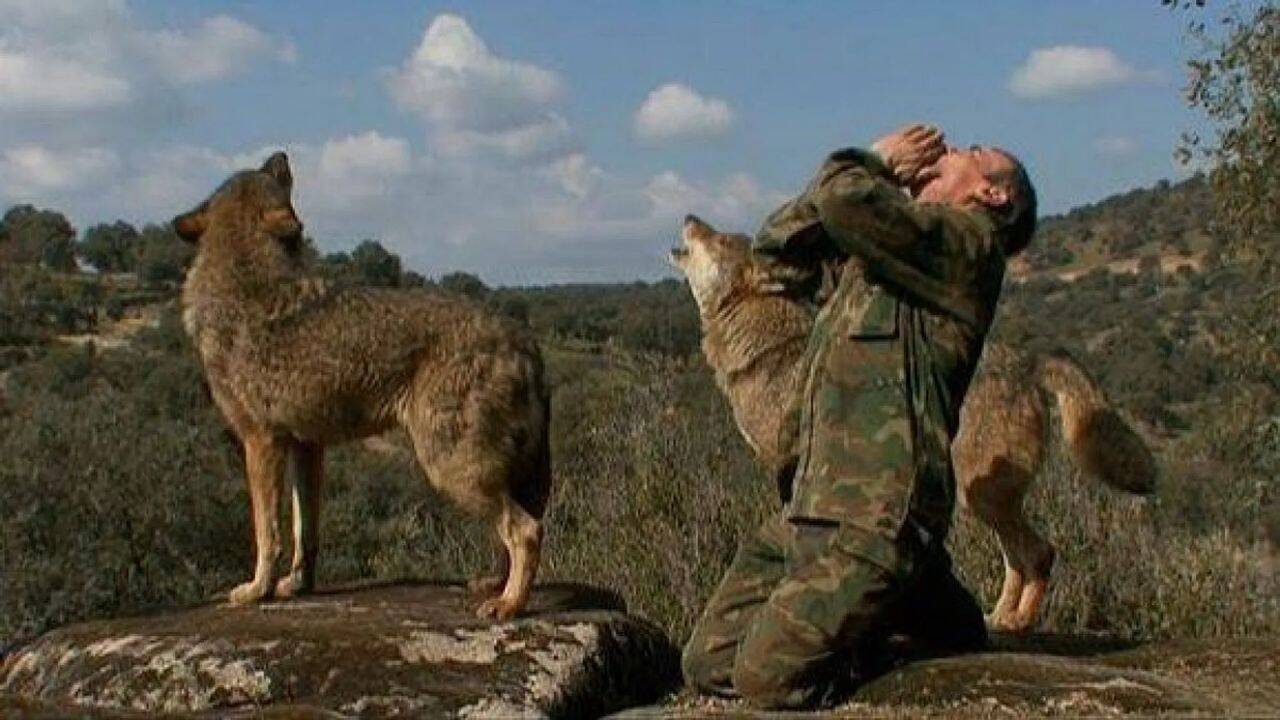
Image Credit: RTVE
Life journey of Marcos after he was discovered
In 1965, when Rodríguez was 19, the Spanish Civil Guard found him living in the mountains. His return to human society proved far more difficult than his survival in the wild. According to Euronews, he had to undergo a long process of adapting to a world he barely understood. He later said that he had been happy in the mountains and that his real suffering began after he was found and forced to return to society. MTV Lebanon described Rodríguez as someone who never completely adjusted to human life. He said he felt cheated, abused and exploited by people, including employers in the construction and hospitality industries. He also remained unfamiliar with aspects of ordinary social life that most people took for granted. After his rescue, he lived in several places, including Jaén and Madrid, completed military service and later moved to Mallorca, where he worked in hotels and restaurants.
Why did he continue to miss the wolves
Even decades after leaving the mountains, Rodríguez continued to speak warmly about his years with the animals. In 2018, MTV Lebanon reported that he had tried to return to the mountains, hoping to reconnect with the wolves. But the animals no longer treated him as one of their own. Rodríguez said he could hear wolves nearby and call out to them, but they would not approach. He believed his human smell, clothes and even cologne made the difference. He also returned to the place where his cave had once stood, only to discover that the landscape had changed, with cottages and electric gates replacing the wilderness he remembered. His memories nevertheless remained strong. In a 2010 interview, Rodríguez said that he had been very well in the mountains. He remembered not knowing what money was but always having enough to eat.
Wolf Boy’s life is a message about nature
Rodríguez eventually used his story to encourage people to reconnect with nature. Euronews reports that he wanted children in particular to understand the importance of caring for animals and the natural world. He also became a popular speaker at schools. The environmental group ‘Amig@s das Arbores’ invited him to speak to children about his experiences and the importance of looking after the world around them. Xose Santos of the group said Rodríguez could captivate children with his life story. His remarkable childhood also reached a much wider audience. His story was examined in anthropological studies, books and documentaries, and eventually became the basis for the 2010 Spanish film ‘Entrelobos,’ later released in Germany as ‘Wolfsbrüder.’
Where did Marcos Rodríguez Pantoja spend his final years
After a lifetime of moving between different worlds, Rodríguez eventually found a lasting home in Rante, in the province of Ourense. He had lived there since 2001 and became part of the local community. His neighbours accepted him as one of their own, even though his experiences were unlike those of almost anyone around him. When he died on 15 August, he was in Rante during celebrations for the municipality’s patron saint. San Cibrao das Viñas, the municipality to which Rante belongs, paid tribute to him by acknowledging the extraordinary story he had brought with him. The municipality said Rodríguez had arrived with a story known around the world and left behind a story that had become part of the community’s own history.Marcos Rodríguez Pantoja’s life was never a simple tale of a child who lived with wolves. It was a story about abandonment, survival, belonging and the difficulty of returning to a society that had once failed him. Long after he left the mountains, he continued to see the wilderness as the place where he had felt most at home. In the end, however, he found another home among the people of Rante, where the final years of his extraordinary life unfolded.