

Italy is getting crabby.
After an influx of invasive crabs, The Boot is sending in the tentacles.
The country is now arming its waters with 130,000 octopuses after a surge of blue crabs spent decades quietly swarming the seas.
For years now, the crustacean has quietly taken over the Po Delta lagoon — a protected wetland ecosystem in northern Italy. The blue-clawed creatures have been causing a raucous for fishermen as their cerulean claws continue to rip holes in fishing nets and snack on clams, mussels and fish.
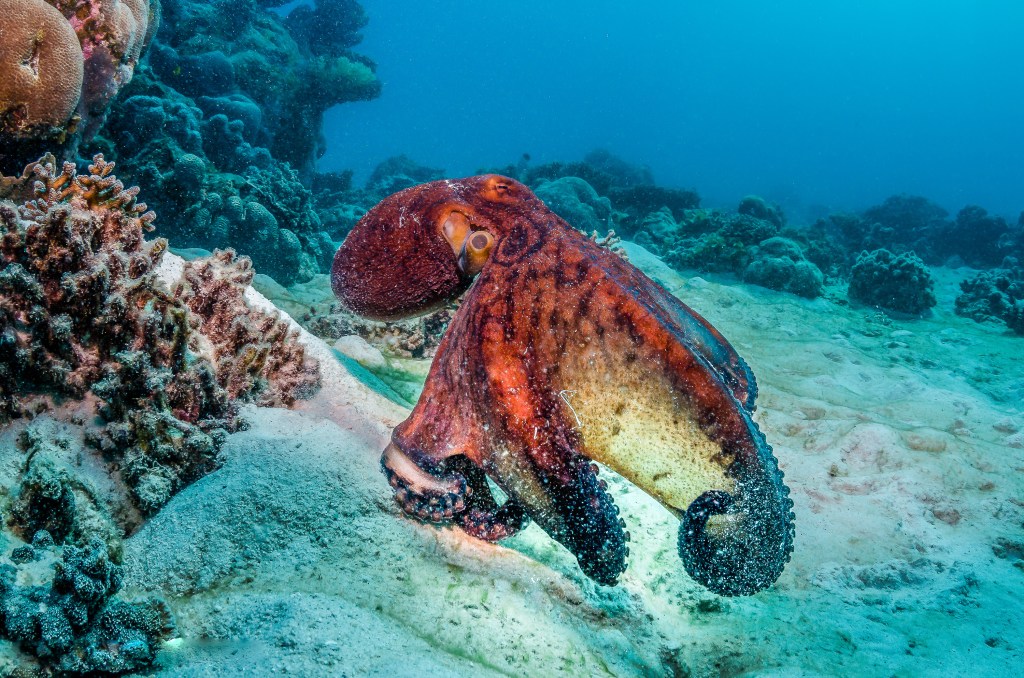 Italy is arming its waters with 130,000 octopuses after an influx of blue crabs Aaron – stock.adobe.com
Experts say that the two-pound crabs may have been on the crawl as water temperatures continue to change, making the delta a naturally bountiful buffet of food. However, the more the crabs eat, the less money the fisherman are making.
Alessio Mammi — Councillor for Agriculture of the Emilia-Romagna Region — told the Daily Telegraph, “The blue crab is not just an invasive species, it represents one of the most serious crises to have hit our waters.”
Mammi revealed that the aggressive crabs had ravaged 70% of clam production, claiming, “Saving the fishing sector is an urgent priority for us.”
According to Coldiretti, an organization representing fishermen and farmers, the total cost of the damage has been estimated at €200 million — equivalent to $233 million.
The Daily Telegraph reports Italian scientists unleashed the baby octopuses in hopes of creating an army of sorts where, once they’re fully grown, each one will eat the blue crabs. Scientists say once the octopuses mature, they can scarf down up to four crabs per day.
The octopus brigade was released near Riccione and Cesenatico — Adriatic coastal towns — as reports show they have been hit hard by the crabs.
 The blue crabs have quietly been taking over Italy’s waters for decades Getty Images
Dr Oliviero Mordenti is a scientist from Bologna University managing the “Octo-Blu” project along with the regional government of Emilia-Romagna. Mordenti spoke with the outlet and broke down why the creatures were chosen.
“They are a predator which are capable of contributing to the control of the blue crabs,” Mordenti said. “If a single octopus eats a female blue crab, you need to remember that the crab could have produced 1.5 million eggs, even two million.”
In the meantime, fishermen and other authorities are hoping to persuade Italian eaters to quickly develop taste buds for blue crab, as reporting shows the colorful species has started popping up in supermarkets and fishmongers.
Additionally, restaurants across the country are adding the crustacean to menus, putting them in salads, risotto and pasta dishes, but so far it has not even made a dent in its growing population. Despite its interesting color, the crabs are completely safe to eat.