
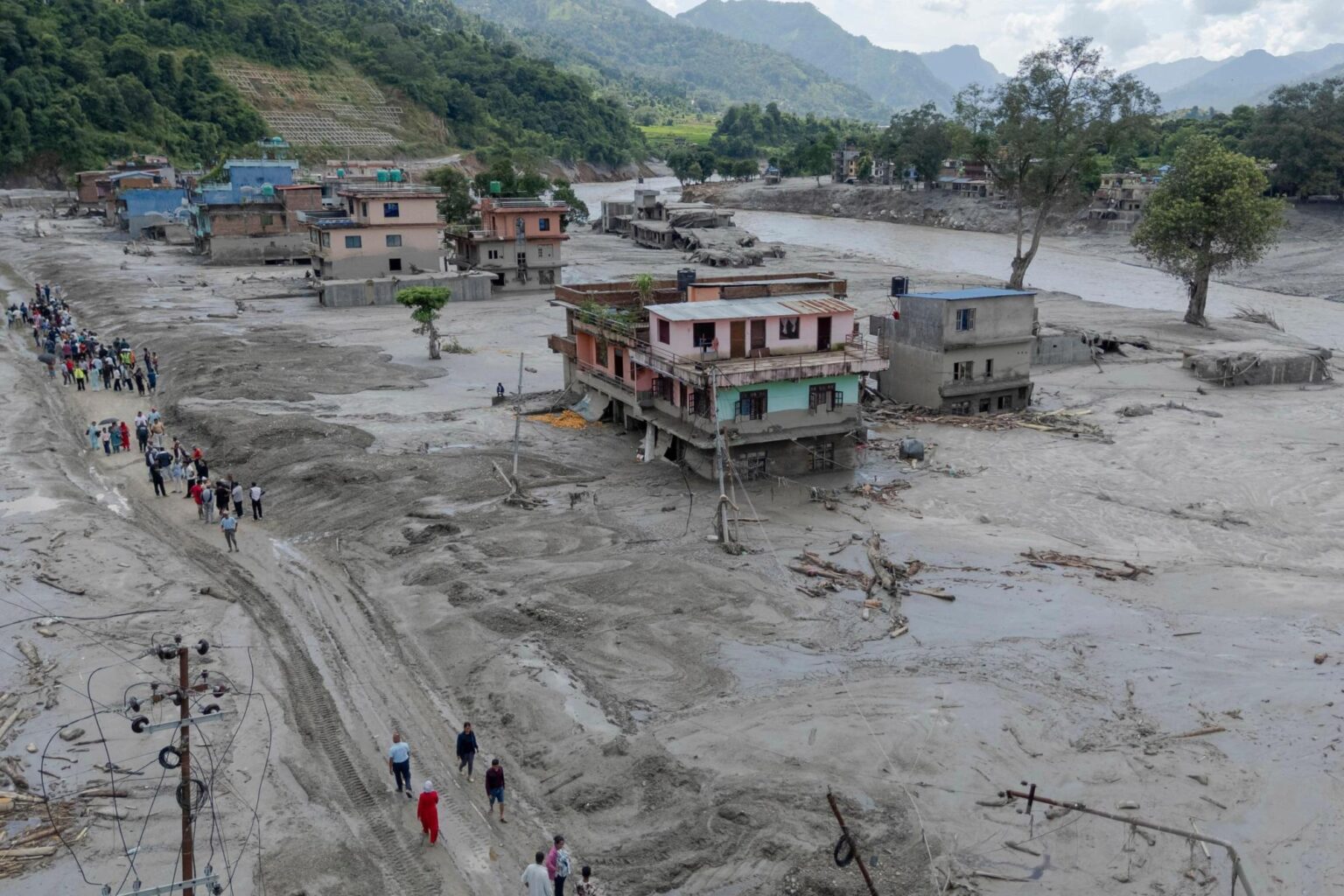
KINGSTON, N.Y. — State Assemblymember Sarahana Shrestha, a Nepal native, said Friday that the deadly flood devastation being wrought on the country where she was born could have been at least mitigated had it not been for climate change and greed.
Shrestha, D-Esopus, who represents the 103rd Assembly District, came from Nepal to the United States in 2001. She was sworn in as a U.S. citizen in December 2019.
“It has been devastating to watch the news coming out of Nepal, not only because of the lives lost, those still missing, and entire neighborhoods wiped out, but also because of the acute awareness that these disasters that could have been mitigated if not prevented, that such disasters will continue to occur against the backdrop of a failed system of Sal politics hijacked by corporate interests and politicians who enable them,” Shresta said in a statement.
“The majority of my extended family still lives in Nepal, and though they don’t live in the region that was affected, this event is not likely to be an isolated incident, is likely to impact other areas one or way another, so yes I am always concerned,” Shrestha added. “But the concern is not limited to my family and friends. I’m deeply concerned for everyone who lives in the Himalayan region as scientists continue to sound the alarm about risks faced by areas that are close to glaciers and mountains.”
Rescuers pulled out survivors caked in dark brown mud and helicopters lifted stranded people to safety Friday, as Nepal and China raced to respond to catastrophic flash floods that killed nearly 600 people and left almost 2,500 missing.
Rescue teams were put on high alert for more flooding from a new lake that formed high up on the Himalayan mountains after the initial floods on Wednesday. Experts warned that the lake, created after a glacier collapse that triggered the floods, was starting to overflow.
Nepal’s army was deployed to help rescue more than 100 people believed trapped inside a tunnel at a hydropower plant located in the country’s worst-hit district. Like elsewhere in the disaster zone, their work was complicated by thick layers of mud that covered the site.
All of this, Shrestha said, could have been avoided.
“Those living at the frontline of economic and climate injustice, which includes the entire Himalayan region, do not want to depend on charity after the fact,” Shrestha said. “What they need is a system that does not leave them out to begin with, a politics of internationalism and solidarity rooted in cooperation, collaboration, knowledge-sharing, collective well-being, and need-based problem-solving rather than the foolish and short-sighted commitment to solving the world’s biggest crises through the framework of capitalist self-interest, which led to the problems to begin with.”
 Assemblymember Sarahana Shrestha, D-Esopus, talks during a rally with activists and public officials in favor of the ‘Ulster County for Fair Taxes Act’ in front of the Ulster County Office Building in Kingston, N.Y., ahead of a county Legislature vote on Tuesday, July 14, 2026. (Ivan Lajara/Daily Freeman)
Shrestha pointed to solutions.
“Life-saving technologies, knowledge, and medicine should not be held by corporations for profit,” Shrestha said. “Countries that have been left poor should not be held hostage to massive debts that are impossible to pay. The Global South should not have to watch itself crumble as nations that hoard wealth and power take no meaningful action towards addressing the climate crisis, and instead use their resources to launch wars and enrich shareholders.”
The assembymember said that climate change is a perpetrator, combined with the greed.
“The climate crisis that enables disasters of this scale will not be addressed until we take our critical infrastructure—whether that’s physical or social—back from investors who profit off our most basic needs,” Shrestha said.
New York, she said, could be a significant player.
“Here in New York, we have always had an opportunity to pass policies and set agendas that shape our path towards these ends not just for this country, but others, too,” Shrestha said. “Policies like public ownership of our energy grid, building publicly-owned renewables and putting them towards public benefit, creating union jobs and investing in training and education but also strengthening labor standards across supply chains; single-payer healthcare that demonstrates how you can design a system based on access to care rather than profits, green social housing where families can set roots instead of creating a scarcity of affordable homes that immigrants are somehow blamed for,” said Shrestha, who is a strong proponent of a government takeover of Central Hudson Gas & Electric Corp.
“The choices we make domestically are critical in shifting our political culture towards one of mutual benefit,” she added. “As it turns out, solidarity is not just the more moral position, it is also the more logical and practical position.”
Shrestha said she has received support for Nepal.
“I want to thank everyone who has reached out to me over the last few days to share their thoughts that are with Nepal,” she said.