

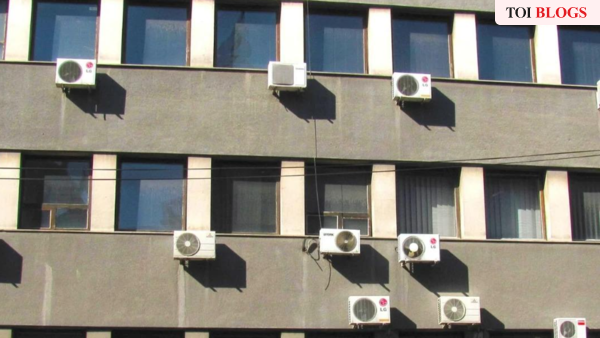
There is a peculiar irony to climate change: the hotter the world becomes, the more we will depend on technologies designed to keep us cool.Cooling is already woven into the systems that sustain modern life. It helps keep medicines viable, food fresh and economies productive, while reliable cooling can become a matter of health and safety as temperatures rise. At the same time, conventional cooling can carry a significant environmental cost. It requires energy, often involves refrigerant gases with high global-warming potential and can increase emissions when the electricity powering it comes from carbon-intensive sources. UNEP has described this as a destructive feedback loop: a warming climate increases the need for cooling, while emissions associated with cooling can contribute further to warming.This is not an entirely new environmental dilemma. The history of the ozone layer offers an unusual precedent. Refrigeration and air-conditioning were among the applications in which ozone-depleting substances were widely used before the international community moved to control and phase them out. The Montreal Protocol, adopted in 1987 and entering into force in 1989, established a global framework for phasing out the production and consumption of substances that deplete the ozone layer.The results are striking. More than 99% of the production and consumption of controlled ozone-depleting substances has now been phased out, and the ozone layer remains on track to recover to 1980s levels by the middle of this century.But the most useful lesson from Montreal is how the transition was organised. The world was not being asked simply to stop using technologies that had become deeply embedded in households, industries, health sectors and economies. It had to change the substances and technologies through which those services were delivered.That required more than regulation. Scientific assessment was built into the process, helping countries understand what needed to change and how the problem and available alternatives were evolving. The Protocol also established mechanisms for assessing the technical and economic feasibility of alternatives.Just as importantly, the transition was accompanied by mechanisms intended to make implementation possible. Financial and technical cooperation was built into the Protocol, including through the Multilateral Fund, which was established to help developing countries meet their obligations. Technology transfer and technical assistance were also explicitly recognised as part of enabling the transition.In other words, environmental regulation was accompanied by mechanisms that could help make technological change feasible. Rules created a direction for change, while finance, technical assistance and technology transfer helped countries and industries respond to it. The framework could also evolve as scientific understanding and technological possibilities changed.The ozone story, therefore, is not simply a story about chemicals disappearing from the atmosphere. It is a story about how societies can reorganise technologies and markets in response to an environmental problem.From ozone protection to sustainable coolingThe Kigali Amendment, adopted in 2016, brought hydrofluorocarbons (HFCs) under the Montreal Protocol’s control. HFCs do not deplete the ozone layer, but many have high global-warming potential. Kigali therefore established a global phase-down of HFC production and consumption, creating an important link between ozone protection and climate action.Kigali, however, is not simply another version of the original ozone problem. The challenge is now broader. The world needs more cooling even as it needs to reduce the environmental impact of providing it.That is why the 2026 World Ozone Day theme “Global Action for a Cooler Planet: Celebrating 10 Years of Sustainable Cooling under the Kigali Amendment to the Montreal Protocol” is particularly timely. The theme marks a decade since Kigali was adopted and draws attention to the transition towards more sustainable cooling.Cooling is often discussed through the appliance: how many air-conditioners are being sold, how efficient they are or which refrigerant they use. But the appliance is only one part of the system. Cooling protects people from heat, but it also supports food systems, healthcare, workplaces, manufacturing and other economic activities. Refrigeration is essential for maintaining food quality and the conditions required for medicines and vaccines. Cooling is increasingly connected with health, food security, productivity and development.This also means that access to cooling cannot be treated as evenly distributed. The people most exposed to extreme heat are not necessarily those with reliable access to air-conditioning or other forms of mechanical cooling. A sustainable cooling transition therefore cannot be reduced to replacing existing air-conditioners with more efficient models.It has to ask a larger set of questions: who needs cooling, what kind of cooling is needed, where that demand is being created, and how it can be met without creating disproportionate environmental and financial costs.This is where cooling becomes an infrastructure question.The question, about how buildings are designed, how cities are planned, how electricity systems respond to peak demand, how food and medicines move through cold chains, and which technologies become affordable and accessible.A building designed to manage heat through shading, ventilation, insulation, appropriate materials and alternative technologies may require less mechanical cooling. Where mechanical cooling is necessary, more energy-efficient equipment can reduce the electricity required to provide it. Lower-global-warming-potential refrigerants can reduce the climate impact of cooling systems, while better servicing can help equipment operate efficiently and reduce refrigerant losses.The same principle applies beyond buildings. Transport, industrial processes and cold chains also depend on cooling, and more energy-efficient technologies and better-designed systems can reduce the energy required to provide that cooling.The distinction matters because cooling demand is not created when someone switches on an air-conditioner. It is shaped much earlier by the design of a building, the layout of a city, the way goods are transported and stored, the availability of electricity, household and business purchasing power, the technologies available in the market and the infrastructure through which cooling is delivered. How efficiently that cooling is provided matters just as much as how much cooling is needed. And the scale of that problem is growing.UNEP’s Global Cooling Watch 2025 estimates that, under a business-as-usual scenario, global cooling capacity could more than triple by 2050. The report also finds that cooling-related emissions could rise from 4.1 gigatonnes of CO₂-equivalent in 2022 to 7.2 gigatonnes by 2050 under this scenario.Such growth would place additional pressure on electricity systems, particularly during periods of peak demand. UNEP’s proposed Sustainable Cooling Pathway combines passive cooling, low-energy and hybrid solutions, more efficient equipment and an accelerated HFC phase-down to reduce this pressure and the associated emissions.The question is therefore not whether societies will need more cooling. They will. The question is what kind of systems will provide it.India’s cooling transitionIndia’s cooling transition is already underway. That is why we ask what kind of transition it will become. In 2017–18, only around 8% of Indian households were estimated to have room air conditioners. India’s cooling assessment projected that this could rise to 40% by 2037–38. More recently, BEE data show annual AC sales rising from 8.4 million units in 2021–22 to 10.9 million in 2023–24.Those figures signal a much larger transformation in how Indian households and institutions will manage heat and therefore in how much electricity, infrastructure and technology will be required to provide cooling.But room air-conditioning is only one part of India’s cooling transition. India’s own policy framework recognises that cooling demand extends well beyond room air-conditioners. The India Cooling Action Plan takes a cross-sectoral approach covering space cooling, cold chains, transport air-conditioning, the servicing sector, research and development and domestic manufacturing. It provides a 20-year perspective, from 2017–18 to 2037–38, with the broader aim of addressing cooling requirements across sectors and providing access to sustainable cooling.This is significant because the cooling transition is taking place alongside wider processes of development and urbanisation. For many households and institutions, cooling is increasingly becoming a necessity rather than a luxury. Sustainable cooling is therefore connected not only with emissions, but also with health, food security, productivity, livelihoods and access.The policy question is more complicated and more interesting than whether people should use air-conditioners. It is about what happens before and after the appliance enters a building.A building designed to manage heat through shading, ventilation, insulation and appropriate materials may require less mechanical cooling. More efficient equipment can reduce the electricity needed for the cooling that remains necessary. Lower-global-warming-potential refrigerants can reduce the climate impact of cooling systems. Better servicing can help equipment operate efficiently.The design of a building matters. The availability and reliability of electricity matter. The technology chosen matters. The way equipment is installed and maintained matters. And the infrastructure through which food, medicines and other temperature-sensitive goods move matters.Infrastructure helps determine cooling demand in the first place. That is an important distinction. If buildings are poorly designed for increasingly hot conditions, more mechanical cooling may be required. If cities offer little shade or vegetation, outdoor heat exposure can increase. If electricity systems are not prepared for growing peak demand, cooling can place additional pressure on them. If efficient technologies remain unaffordable, households may face a choice between higher energy costs and inadequate cooling.The transition is therefore about improving the wider systems through which cooling is produced, delivered and accessed.What the ozone story can teach us nowThe Montreal Protocol does not provide a ready-made blueprint for solving climate change. The problems are different and the scale and complexity of climate change are far greater.But it does offer an important lesson about how environmental transitions can be organised. Scientific assessments helped establish what needed to change and continued to inform decisions. Regulations created a clear direction for industries and markets. Financial and technical cooperation helped countries meet their commitments, while assessments of alternative technologies helped make the transition technically feasible. The institutional framework could also evolve as scientific understanding and technological possibilities changed.What made this important was the connection between these different pieces. Rules created a reason to change; technology made change possible; finance and technical assistance helped make it feasible across different contexts; and scientific and institutional mechanisms allowed the transition to be adjusted over time.That distinction matters for cooling because reducing the environmental impact of cooling cannot be achieved through a single intervention either. Changing refrigerants, for example, does not automatically make buildings more efficient or electricity systems cleaner. Efficiency standards do not by themselves solve affordability or access. And expanding cooling access without considering energy demand can create another set of pressures.The demand for cooling will not disappear simply because cooling has an environmental cost. In a warming world, it is likely to grow.For India, the question is whether rising demand can be met in ways that are affordable, reliable, accessible and less environmentally intensive. That makes cooling more than a technology question. It is a question of infrastructure. It is a question of energy. It is a question of development. And increasingly, it is a question of climate adaptation. Keeping people cool is an adaptation need. Deciding how that cooling is delivered is also a question of energy, infrastructure, technology and emissions. In the case of cooling, adaptation and mitigation are closely connected.India’s cooling transition will therefore depend on both national commitments and on how these principles are carried into policies and programmes at the sub national levels. The India Cooling Action Plan already provides a framework for this, linking reductions in cooling demand and energy use with better technologies, passive cooling, refrigerant transitions and sector-specific action. As cooling demand grows, these principles will need to be reflected across policies and schemes that shape buildings, transport, energy, urban development and other sectors where cooling is increasingly embedded. At the same time, adaptation cannot be separated from questions of equity. The costs and benefits of the cooling transition will not be distributed equally, and policies need to consider whether the people most exposed to heat including lower-income and otherwise vulnerable communities can access safe, affordable and sustainable ways of staying cool.The ozone experience reminds us that technological systems that appear deeply embedded can change when science, institutions, regulation, finance and markets move in the same direction.India’s cooling transition is an opportunity to apply that lesson in a very different context. Not by asking people to need less cooling in a warming world, but by finding ways to provide the cooling people increasingly need while making the systems that deliver it more sustainable, accessible and resilient.
Disclaimer: Views expressed above are the author’s own.