


Listen to this article
Estimated 5 minutes
The audio version of this article is generated by AI-based technology. Mispronunciations can occur. We are working with our partners to continually review and improve the results.
Top military commanders from 32 Western nations will vote Saturday on whether they prefer Canada’s chief of the defence staff or her German counterpart to lead a significant NATO committee.
Gen. Jennie Carignan and Gen. Carsten Breuer are vying for the top job at the NATO Military Committee, a post not held by a Canadian in almost two decades.
The Liberal government of Prime Minister Mark Carney has thrown its weight behind her candidacy. The election at a meeting of alliance chiefs of defence staff comes as Canada and Europe explore closer political, economic and defence co-operation.
If elected, Carignan will be the first woman to lead the military committee in the 77-year history of the alliance.
In an interview with CBC News, Carignan said it’s “a privilege to be considered,” especially at a time when the alliance faces heightened tensions with Russia, hybrid attacks and the war in Ukraine.
“Don’t get me wrong. I absolutely know what I’m getting myself into, but such an important time to work with NATO as partners,” Carignan said. “And I think I can make a difference in that way.”
Carignan said she was encouraged to put her name forward by some of her fellow defence chiefs.
The chair of NATO’s Military Committee is the alliance’s senior military officer and, in practical terms, the bridge between NATO’s political leadership and its military commanders.
The committee assesses threats, capabilities and operational requirements and provides military advice to the North Atlantic Council. The current chair is Italian Admiral Giuseppe Cavo Dragone, who took office in January 2025.

Associate membership? Strategic alliance? Whatever you want to call it, Prime Minister Mark Carney’s push for deeper ties to Europe are well underway. The CBC’s Marina von Stackelberg breaks down some of the changes Canadians could see should Ottawa and Brussels formalize the agreement.
The position of chair is different from the more high-profile Supreme Allied Commander Europe (SACEUR) which is responsible for operations and potential warfighting.
The vote comes following Carney’s visit to Strasbourg, France, this week where European Commission President Ursula von der Leyen proposed the idea of Canada becoming the EU’s first “associate member.” It’s unclear precisely what that kind of status could mean but it has the potential to substantially deepen economic and political integration.
Carney welcomed the proposal. Donald Trump did not.
The U.S. president, on the one hand, called it “laughable” but then also described it as a potentially “hostile act” that would prompt more tariffs.
Steve Saideman, a defence expert at Carleton University who has written extensively on NATO, said Carignan “absolutely has a shot” at the committee chair’s position.
“I think that Carney probably did his homework and wouldn’t put the name forward if she didn’t have a chance,” said Saideman, who added the geopolitical timing is extraordinary.
“I also think that Canada, right now, is being highly sought after by the Europeans to be anchored in all kinds of European structures. So, I think it’s a possibility.”
There is, however, also the possibility the Trump administration could attempt to block consensus, said Saideman.
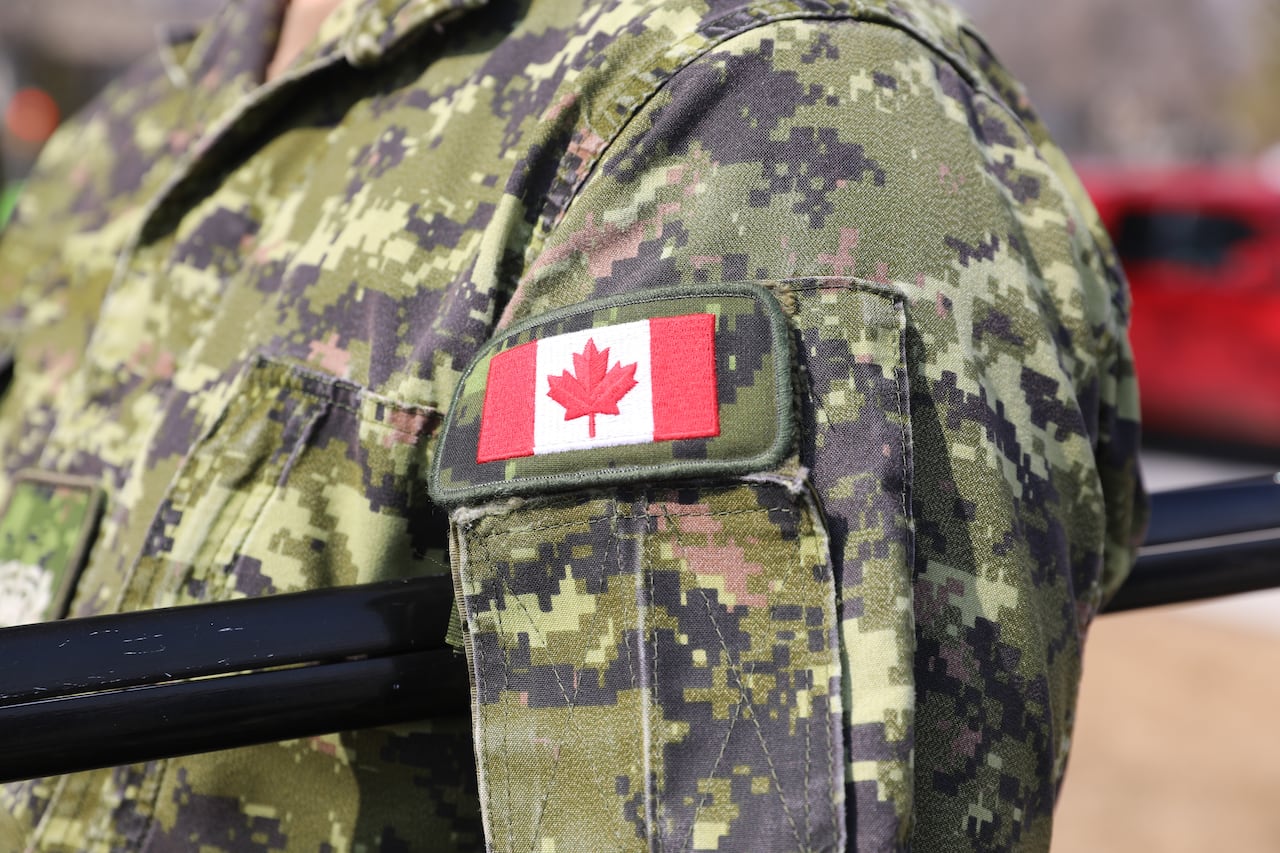
A Canadian last held the role of NATO’s Military Committee chair two decades ago. (Alexander Quon/CBC)
“Trump is not going to let a Canadian or a woman be the head of the military committee, if anybody around him has paid attention to it,” he said.
“He’s very upset at Canada for daring to actually have agency. His reaction yesterday to the news about associate membership suggests that he’ll find any opportunity, particularly one that is as relatively cost-free as this, to block Canada from whatever aspirations it has.”
The election of chair is decided by majority vote in a secret ballot among the defence chiefs. The vote takes place during a closed, private session of the committee.
Retired general Ray Henault was the last Canadian officer to hold the NATO post between 2005 and 2008. He said it took three rounds of balloting to secure his election.
“My experience has always been a couple of rounds, at least right before you get to a final outcome,” Henault said.
Like Carignan, he said he was approached by fellow European defence chiefs to run for the position.
“My gut feel though is that Jennie is very well-respected,” Henault said. “She’s a very capable lady. She’s got operational experience in excess of most people, quite frankly, as a combat engineer. She’s been in a number of the operational theaters that Canada has been in.”
Henault didn’t speculate on the position the U.S. might take.
The voice of the U.S. chairman of the Joint Chiefs of Staff has always carried a lot of weight, he said.
“I think they would probably pay attention to what the U.S. chief of defence was saying. They won’t know what he’s going to vote, of course, because it’ll be a closed vote.” Henault said.