
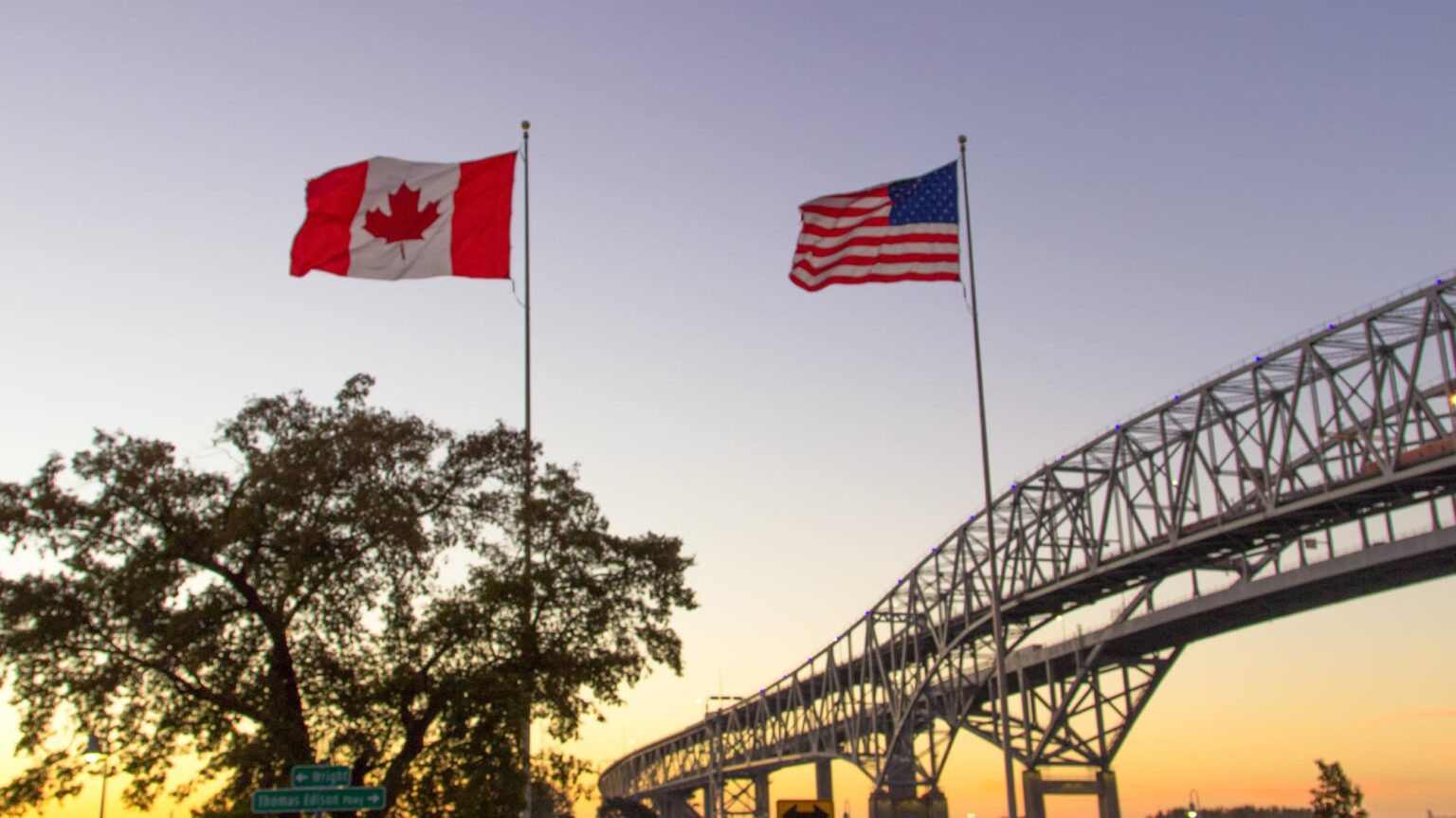
In a few weeks, the U.S. is set to ban imports of some Canadian products, ranging from beer and wine to motorcycles to whey protein.
It would be the latest escalation in a suddenly hot trade war — that is, if the two countries don’t reach an agreement first. In the last few weeks, both countries placed tariffs as high as 50% on roughly $20 billion worth of goods coming from each side of the border.
That’s just a fraction of the overall trade between the two countries. Canada is our number two trading partner. We imported over $380 billion worth of Canadian goods last year, and exported over $330 billion up north.

Ben Clark, CEO of Ann Clark Ltd., said a few Canadian companies ordered large amounts of his American-made cookie cutters before Canadian counter-tariffs took effect this month.
Ann Clark Ltd/Courtesy
But even that small fraction of trade subject to tariffs is having real-world consequences for some businesses, including Ann Clark Ltd, which makes cookie cutters in Rutland, Vermont. The company was started by CEO Ben Clark’s parents in 1989, and he said about 15% of the company’s sales go to Canada.
After Canada announced plans to place counter-tariffs on some U.S. goods, “we got a couple big Canadian orders, and they actually said we want to get this in before the tariffs potentially hit.”
Nice for Clark in the short term to get some sizable orders, but he’s worried that won’t continue if tariffs make his cookie cutters more expensive north of the border. Plus, his company markets its products as “Made in USA.”
“In Canada, we’ve actively taken the ‘Made in USA’ off of everything we can because that’s no longer a positive marketing pitch, which is crazy,” he said.
He’s also bracing for tariffs on his supplies. Ann Clark Ltd. makes food coloring using dyes from a Canadian company. The thing is, it’s hard to know if he’ll be charged more for them until those goods cross the border.
“It’s not like we get a document that says, ‘From now on you’re going to have to pay X percent of this,’” Clark said. “We’re just going to suddenly see a bill.”

Ann Clark Ltd. makes cookie cutters, food coloring, and other products at this facility in Rutland, Vermont. The company faces potential tariffs on its products heading to Canada, and on dyes from Canada that it relies on for food coloring.
Ann Clark Ltd/Courtesy
Mike Desmarais, CEO of Track, Inc., is also worried about a possible tariff hit. The company sells snow grooming equipment, mostly for cross-country ski areas and snowmobile trails, and they have offices in Vermont, Wisconsin, and Quebec.
Desmarais has an order for two machines that are supposed to ship from Vermont to a snowmobile club in New Brunswick next month. It’s unclear whether his products are subject to the Canadian government’s latest import taxes, but if they are, the charge could be steep.
“If we have two machines at 500,000 Canadian dollars, and they apply a 50% tariff, well, we can’t sell them,” he said. “Even though we have a purchase order, we have a deposit.”
Desmarais said that’s because there’s no way his business can absorb a 50% tariff, and he doubts his customer will want to pay it either. Already, the fear of tariffs has weighed on Track’s cross-border business for nearly two years now.
“The customers in Canada don’t want to buy American products, the customers in the U.S. don’t want to buy Canadian products,” he said.
On the West Coast, Ron Wille’s company, All-American Marine, builds aluminum boats in Bellingham, Washington. He’s just a few miles from the Canadian border, and relies on suppliers in British Columbia for propellers, rudders, and steering systems.
“We have a very valued supplier; they’re probably only 30 miles away from us, and the tariffs that have come across have really hit them,” Wille said.
Earlier this year, he said, the U.S. changed its interpretation of tariffs affecting that supplier’s steel rudders and propellers.
“In that case, the cost of those parts and pieces went up 25% overnight,” he said.
Wille had to pass that cost on to his customers, raising the price of his boats.
Beyond added costs, interpreting and processing ever-changing tariffs takes more time. Johanne Couture sees this firsthand. She runs her own trucking business in eastern Ontario, and frequently crosses the U.S.-Canada border. Even if the products she’s hauling aren’t tariffed, she has to wait in the customs line behind products that are.
“So there’s been times throughout these rounds of tariffs where I’ve had to wait longer to get my shipment processed to be able to cross the border,” Couture said. And in the trucking business, she added, time is money. U.S. regulations limit her to 14-hour days behind the wheel.
“That clock don’t care what you’re sitting for,” Couture said. “Whether it’s traffic, whether it’s having a leisurely lunch, or whether it’s customs paperwork that you’re in a lineup to get processed.”
Arguably, the largest effect of the ongoing trade war might be on the relationship between the U.S. and Canada. For Ben Clark, the cookie cutter maker, that relationship is personal.
“My wife’s grandparents are from Newfoundland. I have several friends who are Canadians,” he said. “I’m not Canadian, but I’m kind of like, ‘We’re friends with them. We go back a long way. Why are we doing this?’”
His fear is that even if the trade war is resolved soon, the damage to U.S.-Canada ties won’t go away.
Related Topics