
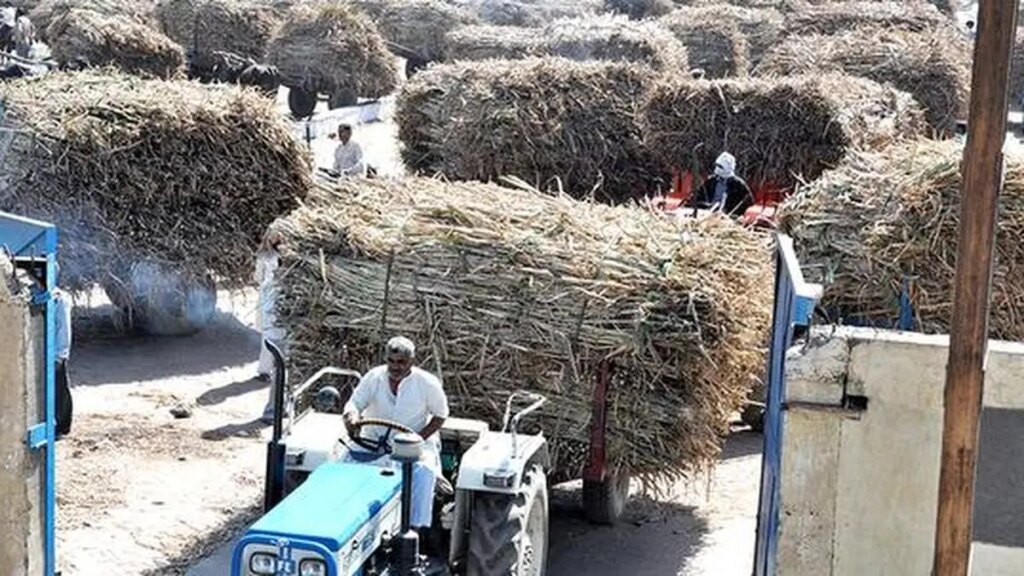

India’s agricultural framework is anchored by the National Food Security Act (NFSA), which guarantees subsidized food grains to nearly 800 million citizens.
| Photo Credit:
RAMESH SHARMA
As global trade networks navigate heightened geopolitical volatility, food has evolved far beyond a conventional commodity into a critical instrument of statecraft, political legitimacy, and national security. For India, a global agricultural titan, this shift highlights a complex dual identity: it operates the world’s largest food welfare architecture while serving as a foundational pillar of international food supply. However, integrating domestic food sovereignty with global trade stability remains a defining policy challenge.
The friction of food nationalism
Recent global shocks—ranging from pandemic-era disruptions and climate-induced yield crashes to the Russia-Ukraine conflict—have exposed the deep fragility of international food chains. In response, major economies have increasingly pivoted toward food nationalism, prioritizing domestic availability over external trade commitments.
India’s recent trade policy adjustments mirror these realities. Protective measures, such as past restrictions on wheat and non-basmati rice exports, were implemented primarily to insulate domestic consumers from runaway inflation and safeguard local food security following weather anomalies and international price spikes. While vital for domestic stability, these ad-hoc measures introduce friction and unpredictability into international markets, complicating India’s aspiration to be viewed as a reliable, long-term trade partner.
The domestic balancing act: Welfare and fiscal realities
At home, India’s agricultural framework is anchored by the National Food Security Act (NFSA), which guarantees subsidized food grains to nearly 800 million citizens. While essential for social welfare, this massive distribution system creates immense fiscal demands. The heavy carrying costs of maintaining extensive buffer stocks strain public finances, often crowding out critical capital expenditure needed for agricultural research and development, climate-resilient crop varieties, and modern post-harvest infrastructure.
Furthermore, the structural reliance on Minimum Support Prices (MSP) skewed predominantly toward water-intensive staples like rice and wheat has created secondary ecological imbalances. Over-procurement and intensive cultivation in core grain-belt states have severely depleted groundwater tables, posing long-term risks to the very resource base upon which India’s food security depends.
Multilateral strains and the WTO
This domestic necessity frequently places India at odds with multilateral trade architecture, particularly at the World Trade Organization (WTO). India’s public stockholding programs and price support mechanisms for farmers are frequently challenged by Western economies claiming market distortion. India’s persistent reliance on the WTO’s “Peace Clause” underscores a fundamental philosophical divide: for developing nations, food security and rural livelihoods are non-negotiable developmental priorities that supersede strict global trade rules, whereas developed nations seek predictable, market-driven certainties.
Charting a resilient future
Balancing national food sovereignty with active, trusted participation in global trade requires a strategic reorientation of India’s agricultural framework:
• Diversifying crop incentives: Gradually shifting policy support away from hyper-water-intensive cereals toward climate-resilient, nutrient-dense alternatives like millets, pulses, and horticulture.
• Predictable trade architecture: Institutionalising transparent export-import mechanisms that manage domestic inflation through calibrated safety valves rather than sudden, disruptive trade bans.
• Investing in logistics and value chains: Strengthening cold chains, storage networks, and quality control standards to enhance global unit-value realisation for high-value agricultural and horticultural exports.
Ultimately, agriculture can no longer be evaluated through the isolated prism of rural welfare or domestic price control. In an era of intense resource competition, building a sustainable, resilient, and trade-competitive agricultural ecosystem is an indispensable cornerstone of India’s long-term national power.
(The author is Advisor, Viksit Maharashtra 2047, Chief Minister’s Office, Government of Maharashtra)
Published on September 19, 2026