

A huge pile of rusted iron bars found beside the Danube in Austria is the largest such find in Europe.
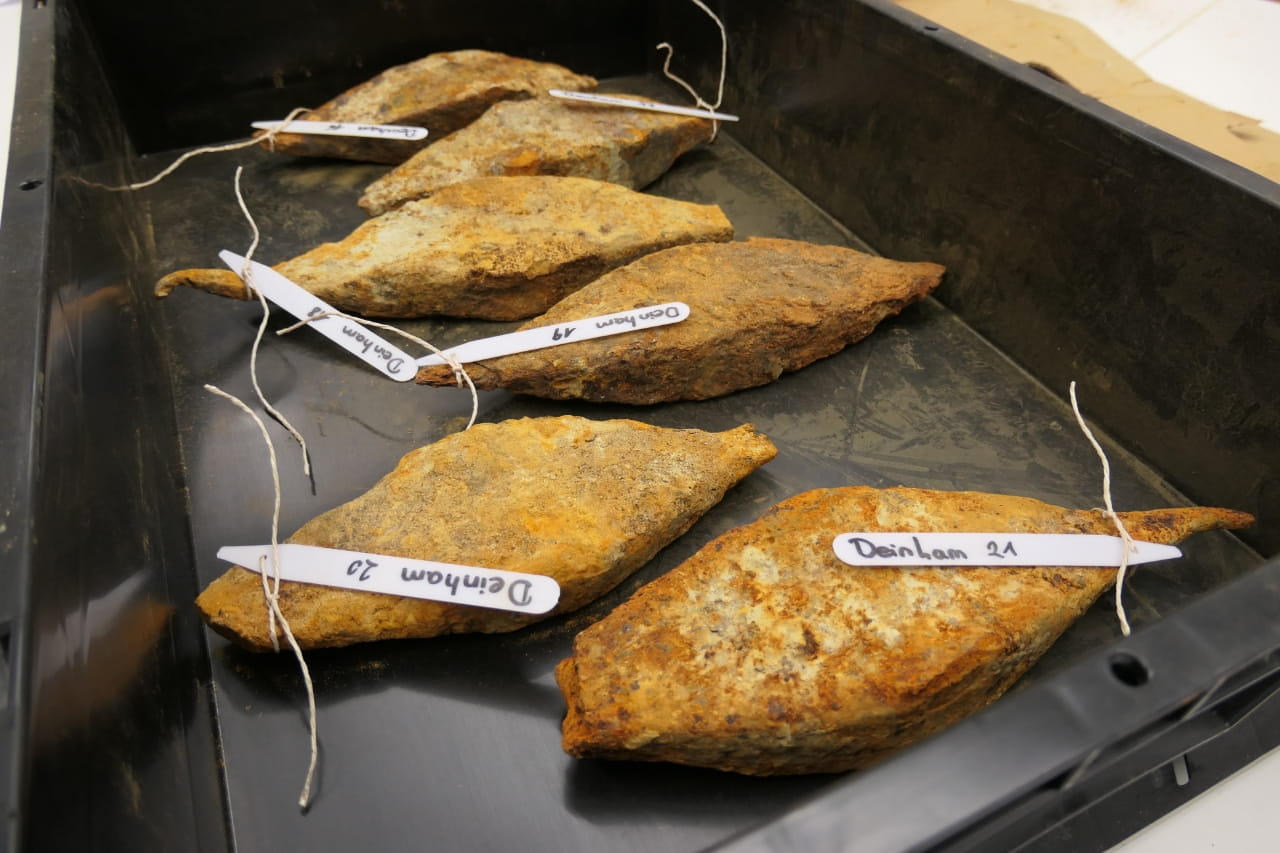 Each of the 500 bars found in Deinham was labelled individually before documentation. Credit: Peter Trebsche, from Trebsche, P., & Berranger, M., Antiquity (2026)
Workers uncovered the mass of iron in 2019 during gravel extraction at Deinham in Upper Austria. The find lay in a silted-up branch of the Danube River.
Researchers have now dated the bars to the Late Iron Age, placing them in the La Tène period. This period lasted from the mid-fifth to the first century BCE.
The assemblage contains at least 500 double-pointed, or bipyramidal, iron bars. Together, they weigh about 1,035 kilograms.
The bars are iron semi-products. These were pieces of iron made for later work, such as forging weapons or other goods. The Deinham group represents a new variant of a known bar type.
The size of the find gives archaeologists new evidence about iron production and trade in Iron Age Central Europe. During the La Tène period, iron production grew sharply across Europe.
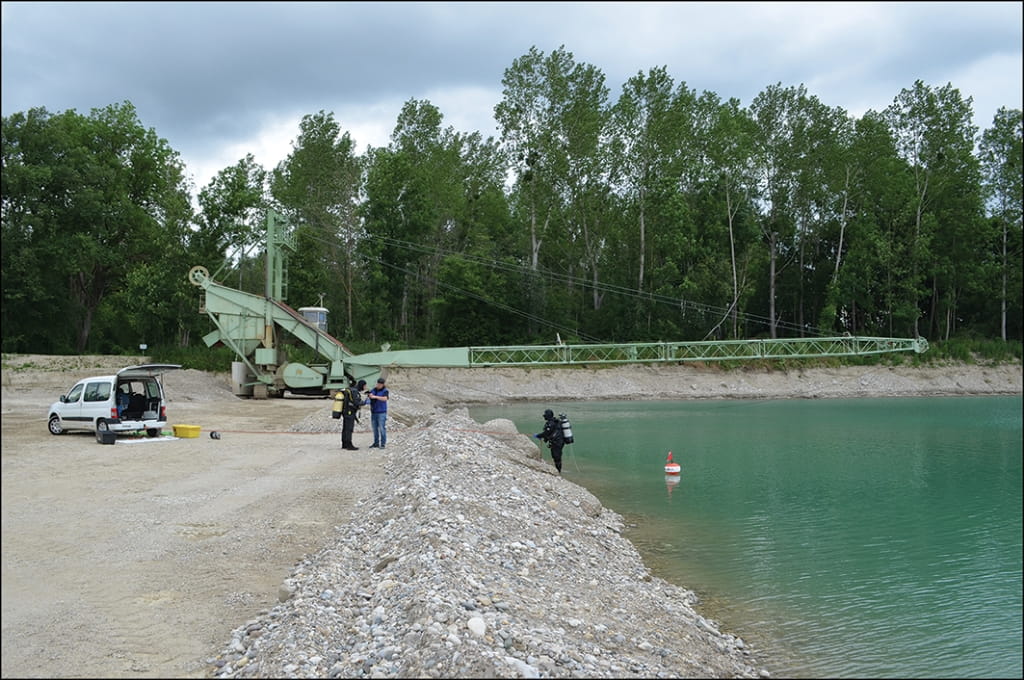 The gravel pit at Deinham. Archaeological divers investigate the find spot, with the bucket excavator in the background. Credit: Heinz Gruber, Federal Monuments Office, from Trebsche, P., & Berranger, M., Antiquity (2026)
Large amounts of iron objects became common, but the scale of trade has been harder to trace. Iron semi-products often receive less attention than finished objects. They also prove difficult to date with precision.
The Deinham find offers a rare view of a large shipment before it reached its final buyer. Researchers believe the bars were likely lost in a shipwreck on the Danube.
Their original destination is unknown. The iron might have been made in Bavaria, where archaeologists have found several Iron Age production sites near large fortified settlements known as oppida.
The bars also show how much iron moved along inland waterways. A shipment weighing more than one tonne required organized transport and trade networks.
The amount of metal in the cargo was large enough to supply weapons for about 500 warriors. Researchers estimate this based on swords weighing around 1.5 to 2 kilograms each.
The same quantity also held enough iron to make nails for roughly half of the defensive wall around Manching, a major Iron Age settlement in Bavaria.
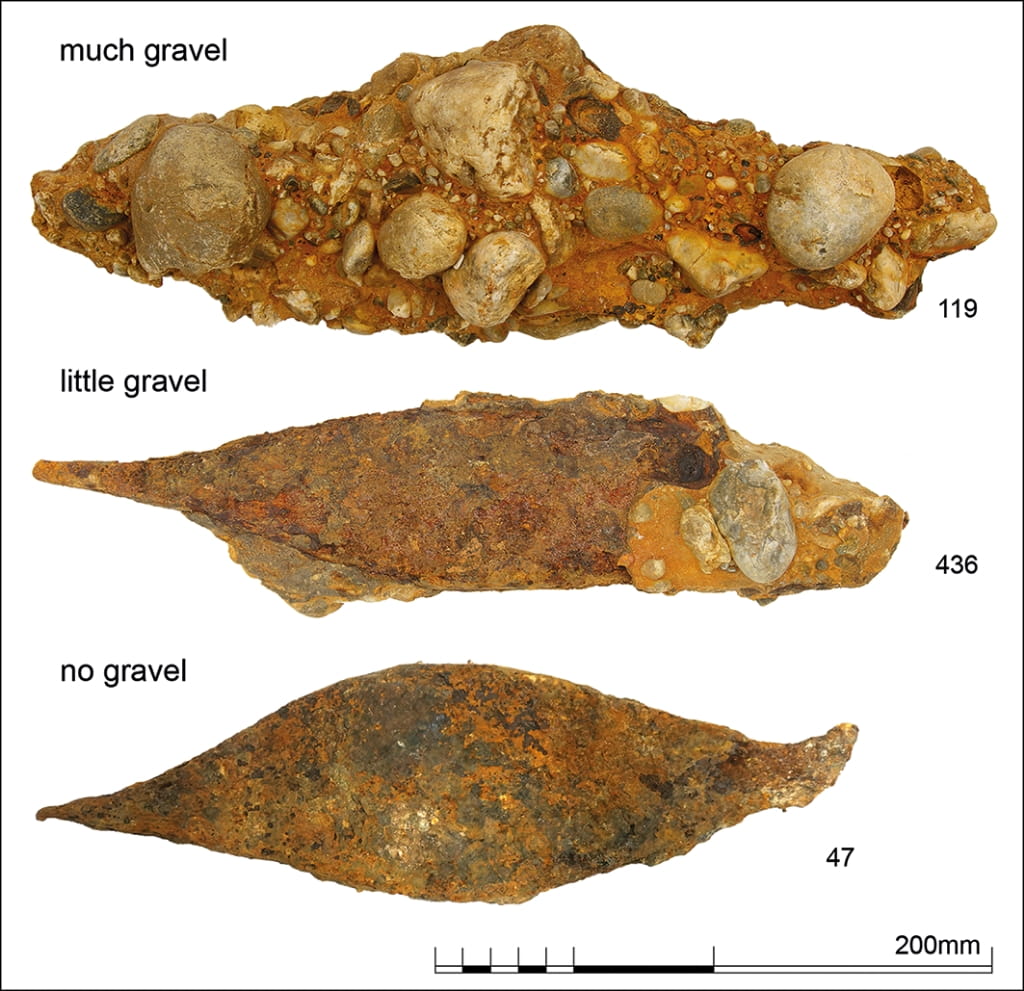 Credit: Trebsche, P., & Berranger, M., Antiquity (2026)
The cargo therefore represented a major economic transaction. The researchers compare its possible value with large gold coin hoards from the same period.
One such hoard at Manching contained 443 coins with a combined weight of 3.7 kilograms of gold. Manching also lies near a major iron mining area, which offers a possible source for the Deinham metal.
Researchers are still working to establish where the iron came from. Provenance tests will help determine whether the bars were produced in Bavaria or elsewhere.
The Deinham find also changes the dating of this form of iron bar. Similar bipyramidal bars are often linked with the Early Iron Age, from the eighth to fifth centuries BCE.
The new radiocarbon dates place the Deinham bars much later, in the fourth to first centuries BCE. The results point to a new Late Iron Age variant.
Professor Peter Trebsche of the University of Innsbruck and Dr. Marion Berranger of Université de Technologie de Belfort Montbéliard studied and dated the assemblage.
The find was reported to Austria’s monument authority instead of being sent to scrap dealers. It was later donated to a state museum collection.
The study, published in Antiquity, shows the scale reached by iron production and trade in the Danube region during the third and second centuries BCE.