Friedrich Merz summoned his inner Margaret Thatcher on Sunday, as his Christian Democrats (CDU) slumped to historic lows in the latest string of German elections. The results could have far-reaching consequences, with the rise of the far-right across Europe and Vladimir Putin looking to benefit from cracks and divisions among Ukraine’s closest allies.
The result in the region of Mecklenburg-Vorpommern was, Merz said, “a disaster”. He would not sugarcoat it, he added, before proclaiming that he would – I paraphrase only slightly – “fight on, fight to win”.
Those with a long memory will recall those words from Thatcher in November 1990. But within days she had agreed to go, defiance melting away in the face of harsh reality.
Shorts
Scroll to previous short

Scroll to next short
NEWS
Cindy Crawford’s son Presley Gerber dies in rehab aged 27
 Caption: LOS ANGELES, CALIFORNIA – JANUARY 20: Presley Walker Gerber attends the world premiere of “Infinite Icon: A Visual Memoir” at AMC The Grove 14 on January 20, 2026 in Los Angeles, California. (Photo by Monica Schipper/WireImage)
Photographer: Monica Schipper
Provider: WireImage
Source: WireImage
Copyright: 2026 WireImage
Presley Gerber, the son of supermodel Cindy Crawford and Rande Gerber, has died at the age of 27.
The former model died on Sunday at a rehab facility, according to the Los Angeles county medical examiner. The cause of death has not been disclosed.
A closer look at the detail
Gerber, who was the eldest child of the celebrity couple, and brother of model Kaia Gerber, had spoken openly about his mental health and drug use in recent years.
His sister mentioned his “decade-long struggle with drug addiction” in the September 2026 issue of Vogue.

3 min read

4 min read
Mental health struggles
Having struggled with mental health, depression and some other things that come along with that, I think that whether I help one person or a hundred people get out of that place that I was in at one point in my life, that’s all I need to do.
Speaking to podcast Studio 22 in 2023, Gerber hoped that sharing his story would help others suffering with mental health issues.

Caption: Presley Gerber, Cindy Crawford and Rande Gerber at the premiere of Apple TV+’s “Palm Royale” held at the Samuel Goldwyn Theater on March 14, 2024 in Beverly Hills, California. (Photo by Alberto Rodriguez/Variety via Getty Images)
Photographer: Variety
Provider: Variety via Getty Images
Source: Variety
Copyright: AER
Life in the limelight
- Gerber had been a model like his mother and younger sister Kaia, making his runway debut for Italian label Moschino aged just 16.
- He went on to model for brands including Burberry, Dolce & Gabbana, and Bottega Veneta.
- Gerber posted a video about undergoing drug withdrawal treatment in the months before his death, though the cause of his death was not disclosed.

2 min read
Family asks for privacy
 Caption: Presley Gerber, Kaia Gerber, Cindy Crawford and Rande Gerber at RE/DONE x Kaia Gerber ‘Short/Cuts’ Launch Event on May 20, 2026 in Los Angeles, California. (Photo by Gilbert Flores/WWD via Getty Images)
Photographer: Gilbert Flores
Provider: WWD via Getty Images
Source: WWD
Copyright: Variety
- Allie Jenkins, a representative for Crawford and her husband Rande Gerber, told CBS: “The family is asking for privacy during this very difficult and painful time.”

4 min read

Earl Spencer’s new memoir contains bombshell claims about a phone conversation with then-Prince Charles over Diana, Princess of Wales’s funeral (Photo: Max Mumby/Getty)
news
All the latest Earl Spencer revelations as royal row continues
A war of words has broken out after Earl Spencer made a series of damning claims about the King in a new memoir about his sister, Diana, Princess of Wales.
Swan Song: Diana, My Sister is due to be published on Tuesday. Here are some key claims made in excerpts from the book released so far.
‘We’ll forget her soon enough’
Spencer claims he and Charles argued over arrangements for his sister’s funeral in 1997 and the King told him: “Rest assured, we’ll forget her soon enough”.
 Caption: Prince Harry, and Meghan, the Duke and Duchess of Sussex, arrive for an event, during a visit to Bondi Beach, Australia, April 17, 2026. (Jonathan Brady/Pool Photo via AP, File)
Photographer: Jonathan Brady
Provider: Jonathan Brady/Pool PA via AP
Source: Pool PA
Copyright: PRESS ASSOCIATION IMAGES
 Caption: British Royal Diana, Princess of Wales (1961-1997), wearing a blue-and-white Catherine Walker suit and matching hat, attends the service marking the 50th anniversary of World War II’s Battle of the Atlantic, held at Liverpool Anglican Cathedral, in Liverpool, England, 30th May 1993. (Photo by Tim Graham Photo Library via Getty Images)
Photographer: Tim Graham
Provider: Getty Images
Source: Tim Graham Photo Library
Spencer has also said he believes the relationship between the press and the Duke and Duchess of Sussex “echoes” the way the media treated his sister.
Other key claims made
- Spencer has written of how Charles’s phone call following the car crash in 1997 “sounded strangely matter-of-fact”.
- “[Charles] sounded giddily elated – like a lottery winner, I remember thinking at the time,” Spencer writes.
- In another extract, Spencer told of his memories of the funeral, and his concern for Harry, after he observed a “lack of obvious care”.

3 min read
How Charles has responded
While we do not comment on books as a matter of principle, His Majesty is mindful that the pain of fraternal grief can cloud reason, affect judgment and colour memory in ways others do not recognise, even many years after such a loss.
Buckingham Palace spokesman

Caption: Britain’s King Charles III stands for the national anthem during the opening ceremony of the 23rd Commonwealth Games at the OVO Arena in Glasgow, Scotland, on July 23, 2026. (Photo by Oli SCARFF / AFP via Getty Images)
Photographer: OLI SCARFF
Provider: AFP via Getty Images
Source: AFP
Copyright: Afp or licensors
King accused of gaslighting
Spencer has accused the King of gaslighting him and called his response a “rather poor imitation of the ‘recollections may vary’ quote” – the late Queen’s response to the Duke and Duchess of Sussex’s allegations in their Oprah Winfrey interview, The Mail on Sunday reports.

2 min read

2 min read
Watch more from The i Paper
@theipaper
OPINION | “The brother who vowed Diana‘s blood family would protect her sons has now placed them in the middle of a blood feud,” writes Jennie Bond. Earl Spencer‘s new book about his sister Princess Diana is likely to affect “the two nephews he so publicly promised to guide and protect”. She adds, “Harry and Meghan’s reconciliation with King Charles just became much more awkward”.
♬ original sound – The i Paper – The i Paper
news
Badenoch pledges to bring back tax-free shopping for tourists
 The Prime Minister has the skills and persona to be a retail politician, and has told voters that tax is a lever he can pull. If he cannot capitalise on that opportunity, then Kemi Badenoch certainly should (Photo: Ian Forsyth/Getty)
Kemi Badenoch has promised to revive a tax-free shopping scheme for tourists by reversing a post-Brexit rule change.
The decision to scrap the VAT refund scheme for international visitors in 2021 left the UK “less competitive” than many other European holiday destinations as the country left the EU, the Tories said.
Business chiefs hail ‘pro-growth’ policy change
Badenoch said the policy was letting down businesses.
Business chiefs, including the bosses of Fortnum & Mason and Paul Smith, hailed the policy change as “pro-growth” and “pro-jobs”.

Caption: Shoppers and visitors on Oxford Street carrying shopping bags on 9th June 2024 in London, United Kingdom. Oxford Street is a major retail centre in the West End of the capital and is Europes busiest shopping street with around half a million daily visitors to its approximately 300 shops, the majority of which are fashion and high street clothing stores. (photo by Mike Kemp/In Pictures via Getty Images)
Photographer: Mike Kemp
Provider: In Pictures via Getty Images
Source: In Pictures
Copyright: Mike Kemp
 Caption: Shoppers and visitors out on Oxford Street walk down the steps into a very busy Oxford Circus underground station on 4th January 2026 in London, United Kingdom. Oxford Street is a major retail centre in the West End of the capital and is Europes busiest shopping street with around half a million daily visitors to its approximately 300 shops, the majority of which are fashion and high street clothing stores. (photo by Mike Kemp/In Pictures via Getty Images)
Photographer: Mike Kemp
Provider: In Pictures via Getty Images
Source: In Pictures
Copyright: Mike Kemp
Losing out to ‘rival cities’
We have iconic retailers, inventive designers and brilliant manufacturers, but they are being let down by a tax policy that is chasing their customers away. Holidaymakers are choosing rival cities in other countries for the simple reason that it saves them money.
Kemi badenoch, lEADER OF THE CONSERVATIVE PARTY

Extreme temperatures in Paris have led to the closure of the top of the Eiffel Tower (Photo: Ludovic Marin/AFP)
A closer look at the detail
 Caption: Retail space under refurbishment which will be opening soon as a new Michael Kors store on Bond Street on 7th April 2024 in London, United Kingdom. Bond Street is one of the principal streets in the West End shopping district and is very upmarket. It has been a fashionable shopping street since the 18th century. The rich and wealthy shop here mostly for high end fashion and jewellery. (photo by Mike Kemp/In Pictures via Getty Images)
Photographer: Mike Kemp
Provider: In Pictures via Getty Images
Source: In Pictures
Copyright: Mike Kemp
- Spending by visitors remains 8 per cent lower than before the pandemic – despite numbers returning to pre-Covid levels, according to 2024 estimates from tourism agency VisitBritain.

3 min read
Treasury: ‘UK visitors can claim VAT’
Almost every European country offers tax-free shopping for tourists, except the UK – although the minimum spend varies.
A Treasury spokesperson said “visitors can still claim VAT relief where the items purchased are shipped directly to their home country as exports” and that it is working to “welcome 50 million international visitors a year to the UK by 2030”.
 Caption: (L-R) Sue Clark, Anoosheh Ashoori, Joe Bennett, Leila Ashoori, and Richard Ratcliffe, family and supporters of Lindsay and Craig Foreman, a couple detained in Iran without charge pose for a selfie photogragh in Downing Street during a day of action in London on January 3, 2026, to raise national awareness of the couple’s ongoing detention and the need for urgent intervention. A British couple, Lindsay and Craig Foreman, both in their early fifties, were seized in January 2025, as they passed through Kerman, in central Iran, while on a round-the-world motorbike trip. Iran accuses the couple of entering the country pretending to be tourists so as to gather information for foreign intelligence services, an allegation the couple’s family rejects. (Photo by Brook Mitchell / AFP via Getty Images)
Photographer: BROOK MITCHELL
Provider: AFP via Getty Images
Source: AFP
Copyright: AFP or licensors

2 min read

How to be more grateful for daily life in five easy steps
Gratitude
The world feels like a difficult place at the moment, and it can feel very hard sometimes to find things to be thankful for; when we are overwhelmed, we have less capacity to notice and reflect on the good things. Yet, ironically, proactively cultivating gratitude is one of the things that can actually help us feel less stressed.
NHS GP dR RADHA
The science
Research has shown that feeling or expressing thanks can actually alter our brain.
- The balance of neurotransmitters change; more serotonin and dopamine (feel good chemicals) are produced.
- This can be long lasting if we make gratitude a regular habit.
- We also get a decrease in our cortisol (stress hormone) levels which helps lower anxiety.
- Being grateful can strengthen the nerve pathways which triggers positive emotion.
How can we build gratitude?

Caption: Two adult brothers enjoy a warm embrace in a sunny park. They stand beside a decorative fence surrounded by lush greenery, showcasing a strong bond and happiness in the moment.
Photographer: Beatriz Herrera
Provider: Getty Images
Source: iStockphoto
Copyright: beatrizherreragonzalez@gmail.com
Change your words
Instead of seeing something as a problem, try to see the opportunities within it.
Journal
Our brains are very receptive and what we read or write can alter our emotional system.
 Caucasian mid adult patient writing a diary while recovering in the hospital ward – stock photo. (Photo: Getty)

‘One question is how to achieve such a longevity hack when most of us have relationships that unsettle us,’ says Dr Amir Levine (Photo: Oliver Rossi/Getty)
Express it
This will not only make you feel good, but you will also get a positive response from others.
How can we build gratitude?
Notice more
Throughout your day, try to notice all the things that are going well; has someone opened a door for you, or smiled?
 Exercise with people you love (Photographer: Morsa Images/Getty/Digital Vision/Abel Mitj? Varela)
 Caption: Group of Happy Asian senior women friends shopping and having lunch at restaurant on summer holiday vacation. Healthy elderly woman enjoy outdoor lifestyle meeting and eating food together.
Photographer: CandyRetriever
Provider: Getty Images
Source: iStockphoto
The basics
By being thankful for the small things every day, we are far more likely to be and stay healthy so that we can enjoy them.
What to do
Gratitude can lead to feelings of optimism, lower our blood pressure, and improve sleep quality.
- Write down what potential good aspects there are to the things you don’t feel like doing, or even what could be worse about it.
- Spend a few minutes writing down three things that you are looking forward to that day, or the good things that have happened to you that day.
- Say thank you to yourself for the things you have achieved, or managed to get through and changed that day.
Sales of battery
electric vehicles hit a record high last year.
Leon Poultney, a writer who specialises in cars, gives his EV recommendations, and the ones that should be avoided.
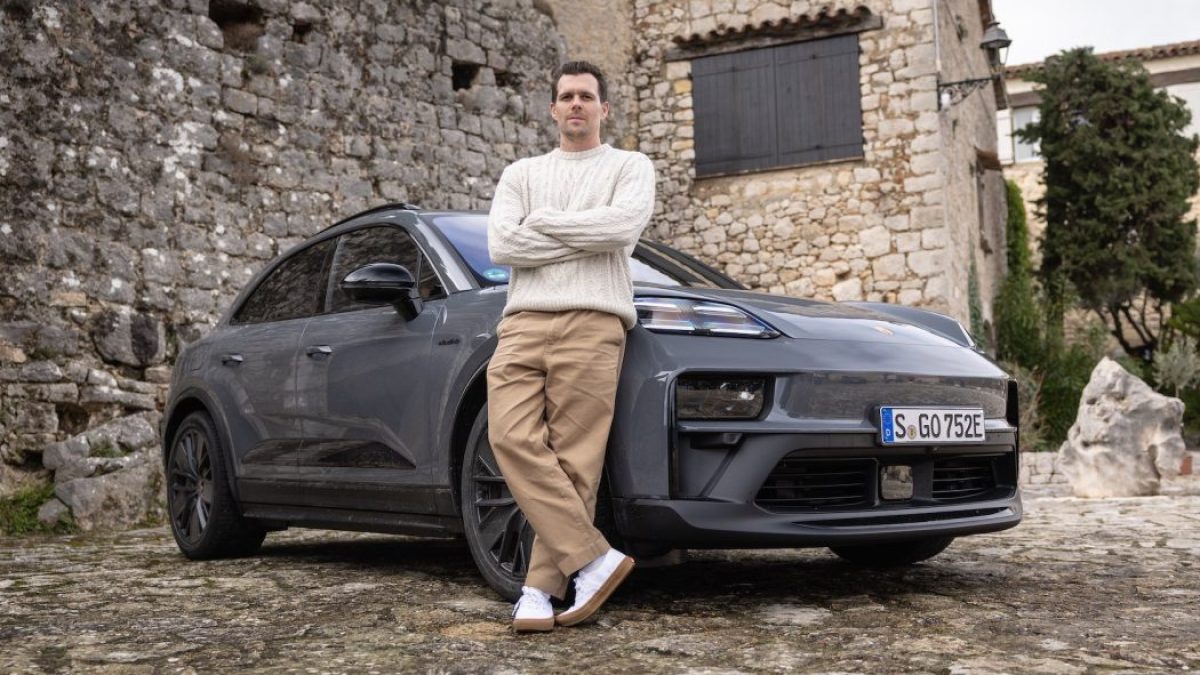
Renault 5 E-Tech
Starts at £22,995 for the smaller battery
Available with either a 40kWh battery or a larger 52kWh pack, that offers almost 255 miles, the latest, retro-inspired Renault 5 is both a joy to behold and a hoot to drive.
The interior has been lavished with a level of detail that’s typically reserved for more expensive cars.


4 min read
Mercedes-Benz CLA
A champion of EV efficiency

It offers a remarkable 491 mile range on a single charge from the 85kWh battery.
It is a technological masterclass inside with the ability to option screens that span the entire width of the dashboard, including an optional display for the front passenger.
Priced from £37,400

2 min read

Porsche Macan GTS
It’s a lot of money to part with, but this is arguably all the car you will ever need.
The £89,000 Macan is a premium SUV that somehow manages to blend Porsche’s reputation for dynamics and sporty driving with everyday practicality.
The 95kWh batteries can go from 10 to 80 per cent in as little as 21 minutes from the fastest public charging outlets.
Kia EV 9
With the business class-style six seat configuration costing a staggering £76,995, it is by far the most expensive Kia ever made, but it backs up its financial demands with a suite of genuinely useful and impressive onboard technology.


MG IM6
It’s fast, goes a long way between stops and charges relatively quickly but the interior is bland, the onboard technology is infuriating and the experience is devoid of emotion.
BYD Dolphin Surf
All of its gadgetry can’t disguise the fact that performance is weak, even for a typically zippy EV, the ride is fussy at slower speeds and it’s not in the least bit enjoyable to drive on a country road.

- While good value (prices start at £17,935) for the 200-mile max range, there are more interesting options from Hyundai, Citroen and Renault for similar money.
Leapmotor T03

- It attempts to wow with tech, much of which hinders, rather than helps.
- There’s no tangible benefit over mounting your phone to the dash.
- Simply an average driving experience, adequate range and slow charging speeds.

2 min read

The kitchen gadgets and products a food editor swears by, all under £25
The kitchen gadgets under £25

Caption: best kitchen gadgets
Victorinox paring knife
It’s comfortable to hold, with a point sharp enough for scoring pastry.
ProCook cast iron pan
For unbeatable searing and heat-retention, cast iron is the top choice.


Tesco chopping board
Priced at just £22, I’ve yet to find another board that matches it for sheer value and quality.
The kitchen gadgets under £25
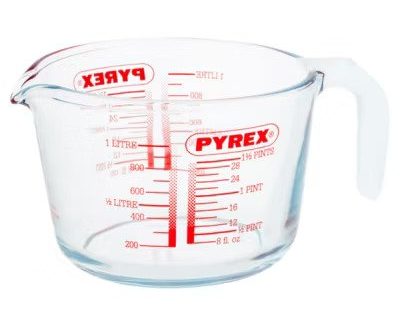
Pyrex jug
It is the perfect vessel for blending smooth sauces, melting butter, or warming stock. It won’t stain like plastic and the red measurements never fade.

Salter scales
“I’ve had my slim little set of Salter Disc Scales for over a decade, and I’m delighted to see they are still made to exactly the same reliable design today.”
Microplane grater
It uses photo-etched stainless steel teeth that stay razor-sharp for a decade, something the lookalike copycats simply can’t match.
Braun hand-held blender
It’s an essential for everything from making velvety soup to getting the lumps out of white sauce.
Bodum cafetiere
As well as delivering great results, cafetieres are easy to clean and there’s no ongoing filter paper costs or pod recycling to deal with.

5 min read
The kitchen gadgets under £25
Oxo peeler
What truly sets it apart is the chunky, rubberised handle that absorbs pressure and stays completely non-slip, even if your hands are wet. It is inexpensive and incredibly durable.
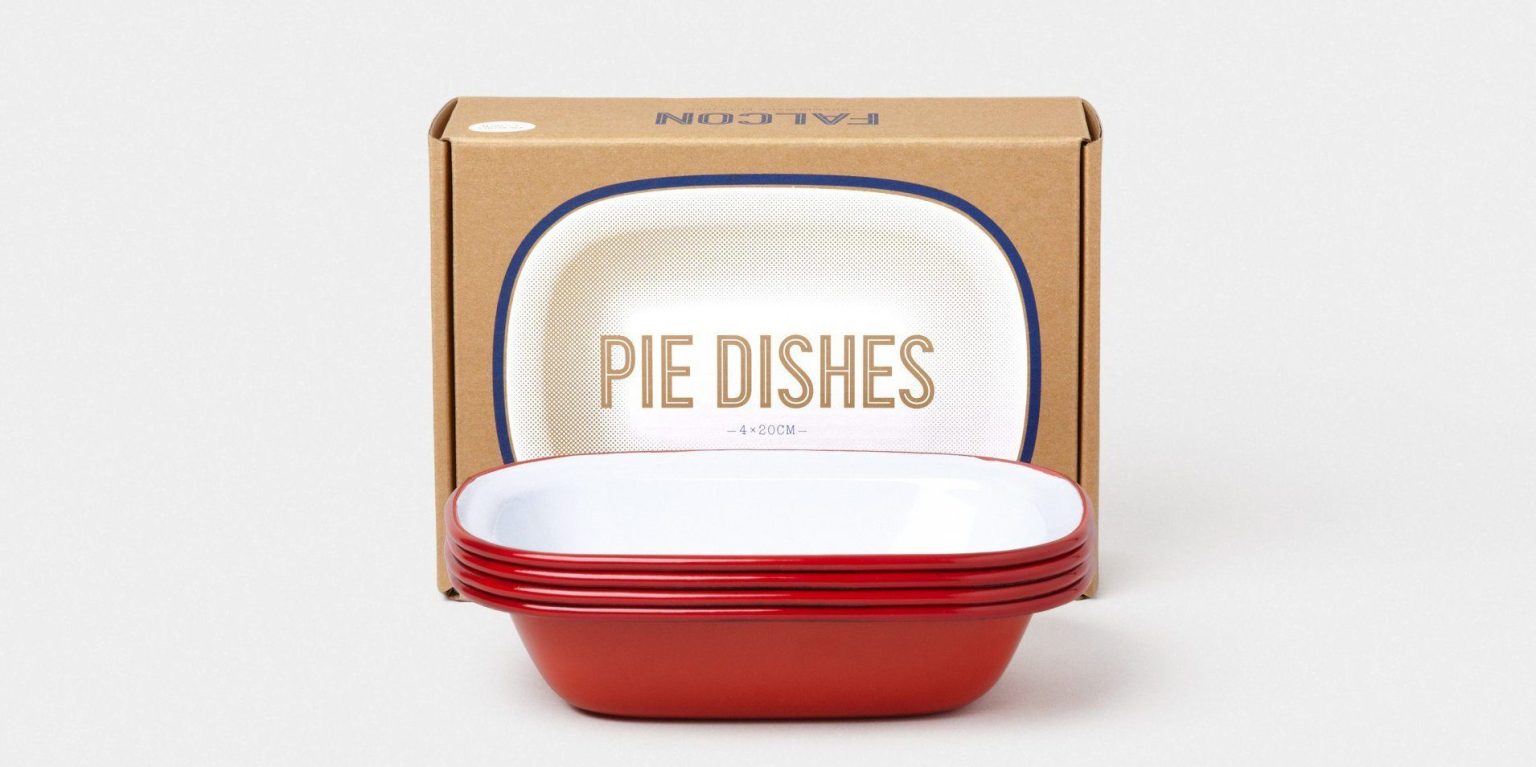

Falcon pie dish
Made by fusing porcelain onto heavy-gauge steel for smooth durability, it is dishwasher, freezer, hob, air-fryer and oven-safe.
The golden rules for a happy, secure relationship
Psychiatrist and neuroscientist Dr Amir Levine, author of bestselling book Attached, explains why we behave the way we do in love.
 Caption: Happy woman walking with male partner in vineyard during sunset. Elderly couple are touring in field against sky. They are enjoying during weekend.
Photographer: Morsa Images
Provider: Getty Images
Source: Digital Vision
Golden rules for happy relationships
Start with your own behaviours
The foundation of a secure, connected life is being what I call CARRP: that means being consistent, available, responsive, reliable and predictable. All of these qualities can be enacted in small gestures every day.
 Side view of affectionate happy couple sitting in the cozy cafe. – stock photo. (Photo: Getty)
 Son’t assume your partner knows how you think (Photo: ljubaphoto/Getty/E+)
Express your needs
People need consistency and connection to feel safe. This is not, ‘You hurt my feelings by never replying to me’, it’s more ‘this is the kind of contact that helps me feel secure’.
Golden rules for happy relationships

Unhappy married couple facing away from each other in a quiet home, concept of emotional distance, loneliness in relationship and family problems – stock photo. (Photo: Getty)
The appendix ‘inflammation’ rule
If a relationship repeatedly inflames your nervous system, you need to disengage and deprioritise it.
Lean on community
You don’t need hundreds of friends. You need people and places that regularly remind you that you belong.
 Caption: Happy couples talking while walking embraced during spring day in a meadow.
Photographer: skynesher
Provider: Getty Images
Source: E+

Candid shot happiness and togetherness Asian mother supporting daughter try to standing and walking first time and positive emotion – stock photo. (Photo: Getty)
Stop blaming childhood
Humans are much more complicated than: ‘this happened to you, therefore you are doomed to be anxious’.

Caption: Financial problems. Worried middle-aged woman holding utility bills, managing monthly household budget, sitting on bed feeling anxious. Cost of living concept
Photographer: MementoJpeg
Provider: Getty Images
Source: Moment RF
Reach for a
secure script
When something unsettles you in a relationship, your first reaction is not always the most accurate one.
If you’re anxious, your brain may jump very quickly to: ‘this is the beginning of the end’. If you’re avoidant, your brain may say: ‘this person wants too much from me, I need to get away’. So one very practical thing you can always do is pause and ask: ‘What would a secure person do here?’
Loneliness elsewhere
When people talk about loneliness, they often assume it means you don’t have enough people in your life. But you can be surrounded by people and still feel lonely if those relationships leave you feeling excluded, ignored or disconnected.

Frustrated lonely shy guy sitting apart of others teenagers – stock photo. (Photo: Getty)
What to do
- Build a community that works for your temperament and gives you regular, reliable moments of connection.
- You can still be kind to people while not treating them as someone who belongs in your inner circle.
- Explain what you need. Sometimes people simply don’t realise how you are experiencing them.
- Check in with people: does this person actually feel that I’m reliable? Do they experience me as predictable? That’s the only way that you can start to become more secure.

Do some foods leave
you feeling hungry rather than satiated? Experts say there are…
Foods that leave you hungrier
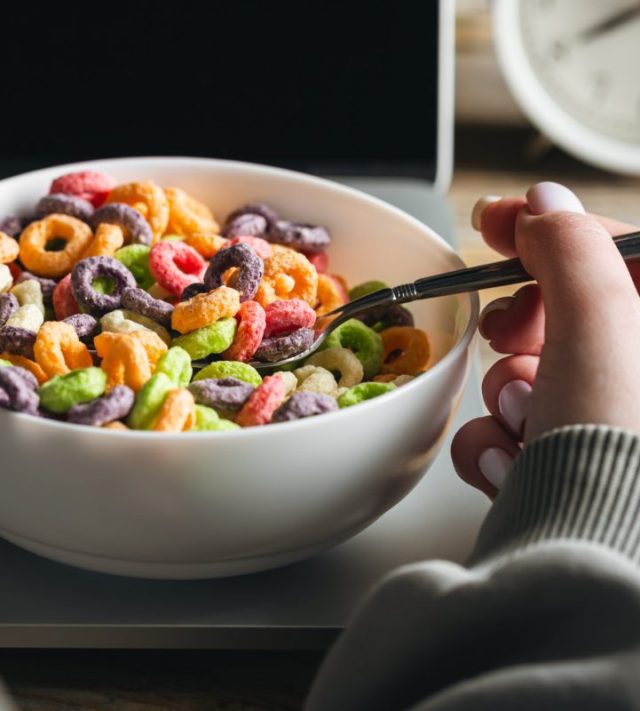
A bowl of cereal and glass of orange juice
More refined cereals are digested quickly, and fruit juice, whilst one of your five-a-day, contains less fibre than whole fruit. This might mean you find yourself hungry again within 1-2 hours of eating this breakfast.
 No more orange juice. (Photo via pixaby)
 It’s estimated ultra processed foods make up at least half of the average UK diet (Photo: Getty)
Swap the orange juice for a whole orange, the cereal for oats and milk or serve it with Greek yoghurt or a boiled egg. This would increase the fibre and protein content; two nutrients strongly linked with fullness.
Foods that leave you hungrier

Caption: Gail’s croissant
Image taken from https://gails.com/collections/breakfast/products/croissant
Croissants
These pastries are made primarily from refined flour and butter, and are relatively low in protein and fibre.
Toast and jam
It is mostly carbohydrate and without protein or fibre, it is digested quickly, leaving you feeling hungry.
 Caption: Toasted bread and white background
Photographer: Daniel Tamas Mehes
Provider: Getty Images
Source: iStockphoto
Copyright: Minden jog fenntartva!

Yakitori’s on the menu at the Japanese restaurant – but what exactly is it? (Photo: Reuters)
Sushi
Shop-bought packs can contain a lot of white rice, which is digested quickly, and the protein content is often modest.
Foods that leave you hungrier

Sarawak laksa is one of many varieties of this noodle soup (Photo: Tham Kee Chuan/Getty)
Vegetable soup
On its own, it is often very low in protein and calories, so hunger can return quickly.
Pizza
Unless it’s loaded with veggies, it’s probably pretty low in fibre.
 Best pizza in Britain named – and owner reveals the secret to its success (Photo: James Linsell Clark/SWNS)

The Government has announced that the sugar tax will be extended to milkshakes (Photo: Scott Suchman)
Smoothies
Liquids are generally less filling as they require little chewing which may not trigger satiety signals.
Foods that leave you hungrier

‘Aged 14, I started what I considered to be my own little business selling confectionary,’ writes Beauty Dhlamini (Photo: Getty)
Snack bars
They are ideal for a quick pick-me-up, but if reducing hunger is what you’re after, it’d be better to swap it out.
Low-fat yoghurt
A full-fat plain Greek yoghurt with berries and seeds tends to be much more filling due to the protein, fat and fibre.
 Which yoghurts are the best options? (Unsplash)

Caption: BANGKOK, THAILAND – OCTOBER 17: A “KT Herbalist”, a Kratom cocktail made from Kratom, coffee and siamese herbs is seen at Teens of Thailand, a bar in Bangkok’s Chinatown on October 17, 2021 in Bangkok, Thailand. In April 2021, the start of Thailand’s third and most deadly wave of the COVID-19 pandemic, the Thai government banned the sale of alcohol in restaurants and bars, crippling the already suffering food and beverage industry. With a lack of government aid and support, some bars have shuttered their doors in hopes of reopening post-lockdown, while others shuttered their doors for good. But six months into Thailand’s most recent lockdown, Niks Anuman-Rajadhon, owner of Teens of Thailand, a gin bar located in a renovated shophouse in Bangkok’s Chinatown, decided that instead of waiting for the government to allow the sale of alcohol again, they would take advantage of Thailand’s recent legalization of Kratom. Kratom is a locally grown herbal drug with mild opioid and stimulant effects and was reclassified from a type-5 narcotic to a legal-to-grow herb in August 2021. While Thailand prepares for a tentative reopening on November 1st, the alcohol ban and curfew are set to continue, leaving business owners questioning if the country can revive its suffering tourism industry. (Photo by Lauren DeCicca/Getty Images)
Photographer: Lauren DeCicca
Provider: Getty Images
Source: Getty Images AsiaPac
Alcohol
On an empty stomach, it can actually increase your appetite.
What to eat instead
Instead of thinking about avoiding foods, think about what you can add to them.
- Add beans, lentils or shredded chicken to your vegetable soup and pasta.
- Thicken your smoothies with Greek yoghurt, chia seeds and oats.
- Apple slices with peanut butter, yogurt with berries and hummus with oat biscuits are better snack options than a pre-made snack bar.
- Have alcohol alongside a balanced meal containing protein and fibre.
The next few days will be crucial for Merz, and for Germany. The outcome in the northern region, in what was once the communist east, was the worst the party has suffered since its founding in 1945. It fell below the 5 per cent hurdle established to keep extremists out.
The Social Democrats (SPD), a junior partner in the national government, will continue to run the area after an impressive campaign by its leader, Manuela Schwesig. She could be someone the beleaguered centre-left parties turn to at the next general election.
But the SPD was pipped to the top spot by the far-right Alternative für Deutschland (AfD), which got 37 per cent of the vote. While it was below the spectacular result achieved in Saxony Anhalt two weeks ago – and won’t give it a shot at governing – the results show how much German, and European, politics have changed.
Like in France, and across vast swathes of Europe, the running is being made by the far-right, followed by the far-left. Mainstream parties are haemorrhaging voters. Those who rely on European unity will be looking on with horror.
 German Chancellor Friedrich Merz speaking at a CDU campaign event ahead of Berlin state elections on 17 September, 2026 (Photo: Sean Gallup/Getty Images)
This was not how it was supposed to be. Germany’s post-war constitution stipulated three political traditions. The centre-right CDU would represent conservative-minded voters; the centre-left SPD would appeal to the working class. The smaller FDP would espouse liberal economics. That party has been all but wiped out. The Greens arrived later and were incorporated into the mainstream. These parties would form different coalitions at national and regional level, based on consensus and compromise. That is now looking increasingly precarious.
In Berlin, the Left took the capital by storm. Elif Eralp, its leader, is a cross between Zohran Mamdani and Zack Polanski. Young, fashionable, sharp and savvy on social media, she is likely to become the first woman and the first person of Turkish descent to run the city. Eralp has vowed to expropriate apartments from commercial landlords to try to solve the city’s housing crisis. There is radical fight in her belly.
But Merz is nothing if not determined. Like Gordon Brown, he spent over a decade plotting against his party’s leader (for Tony Blair, read Angela Merkel) while promising to move his party back towards its roots. In Merz’s case, it was more unabashed conservativism. The problem was that he was forced to form a coalition with the left-leaning SPD.
Cue in-fighting, record low popularity ratings. Merz is loathed by many, on the right and left. His acerbic manner doesn’t help – he has few friends left to defend him.
In shades of Keir Starmer, Merz has done well on the international stage. He has robustly defended Ukraine and has transformed Germany from a paralysed pacifist to an outrider on defence spending – 3.5 per cent of the country’s GDP spent on defence by 2029 is some feat.
 A banner depicting Russian President Vladimir Putin under the motto “Noon against Putin” at a protest outside the Russian Embassy in Berlin this year (Photo: Maryam Majd/Reuters)
If he were to go, Europe would lose its most important bulwark against Russia. The Kremlin will be watching the results with glee, coming at a time when Putin’s United Russia party is claiming its own victory in elections that saw opponents killed, locked up or silenced.
France may soon face a similar moment, with the possible takeover of the presidency by Marine Le Pen next May, and results in Poland next autumn that are likely to see the return of the far-right there. In Italy, Giorgia Meloni is also being challenged by a party even further to the right.
A few months ago, many political scientists wondered whether the spectacular ousting of Viktor Orban in Hungary might suggest the far-right bubble was bursting. That no longer looks to be the case. If anything, the rise of the far-right looks more ingrained across the continent.
For Merz, the only factor helping him is that his party can’t work out how and when to replace him. The likeliest candidate, Hendrik Wüst, premier of North Rhine Westphalia, faces regional elections next April. He either must go for the top job now or wait at least a year. Others are in the mix, but none stand out.
Merz is looking to play the long game, hoping his reforms start to bear fruit, the economy cranks into gear and the country grudgingly begins to tolerate him. But for the moment, Europe’s largest economy and most powerful state is in flux.
The lesson that the UK and other countries need to learn is nowhere is safe from the extremist threat. Andy Burnham may feel a little more comfortable; he is polling several points higher than his dour predecessor, connects better with voters and he is trying to be more positive. His arrival in Downing Street also coincided with Reform’s stickiest period for some years, mired in financial allegations and investigations.
And yet, money is pouring into Reform and Restore and it would be foolhardy to believe that Britain is somehow in a better place than Germany or elsewhere in Europe. Sadly, we’re all in this together.


