

- by croatiaweek
- September 22, 2026
- in
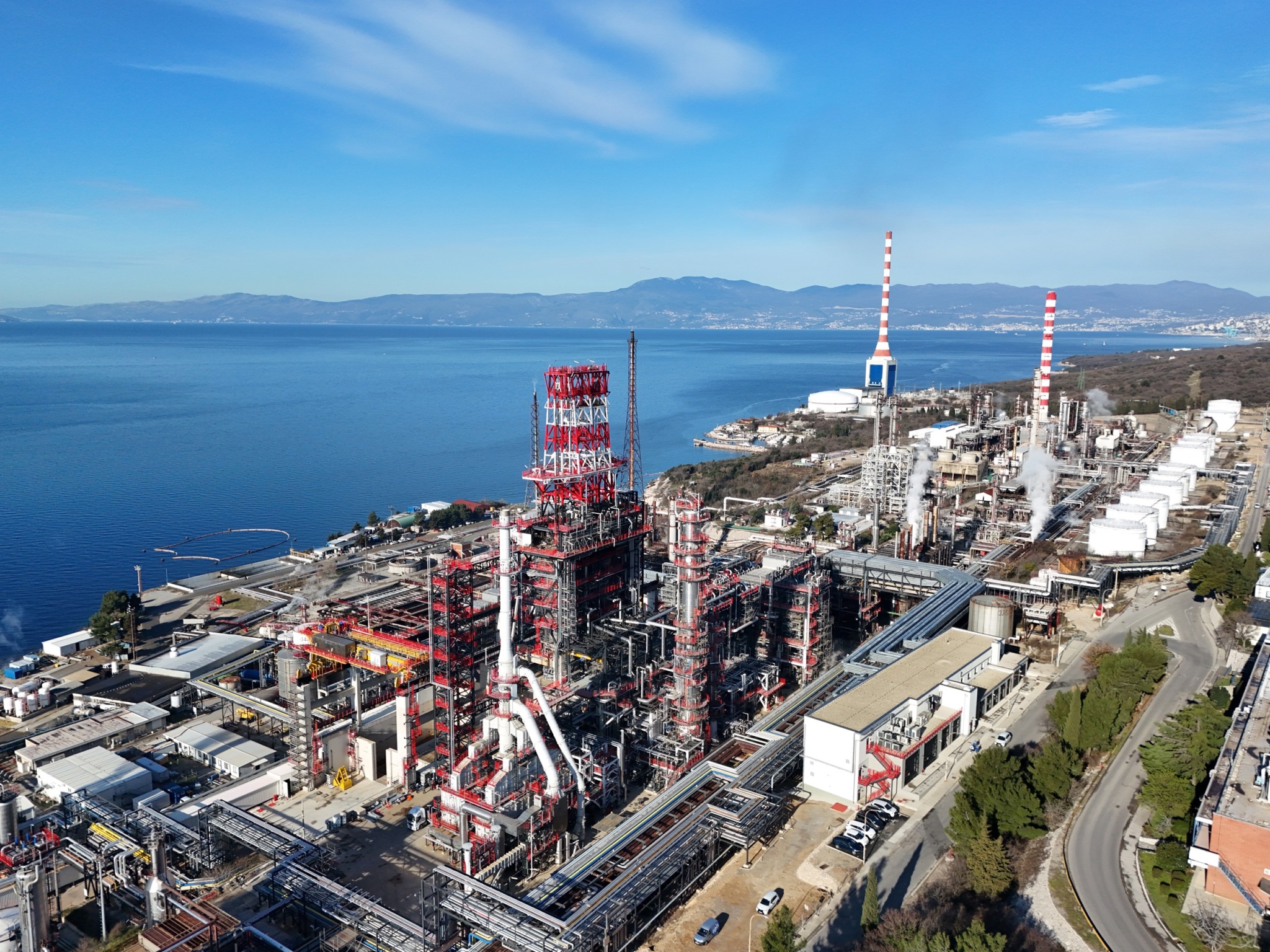
Rijeka refinery (Photo: INA)
RIJEKA, 22 September 2026 – Croatia’s Rijeka Oil Refinery has taken another major step in its €700 million modernisation project with the successful start-up of a new heavy-residue processing unit.
The Delayed Coking Unit (DCU), designed to process heavy refinery residues into higher-value products, began receiving crude oil on 1 September after operational responsibility was transferred to INA. Production has continued since then, with the facility currently operating at around 70% of its designed capacity.
INA said all key products produced so far have met the required specifications, marking a successful start-up of the new facility.
The new unit is expected to significantly change the refinery’s production capabilities. Once fully operational, the same quantity of crude oil is expected to produce up to 30% more diesel, while the refinery will also be able to process heavier grades of crude oil.
This will give INA greater flexibility when sourcing crude and expand the number of potential suppliers. The DCU also removes the refinery’s previous need to import vacuum gas oil (VGO), a feedstock used in the production process.
The company said the changes will strengthen the security of energy supply for Croatia and the wider region, while improving the refinery’s ability to respond to changing conditions on global energy markets.
The DCU forms part of a wider investment of almost €700 million in the modernisation of the Rijeka refinery. Over the past 12 years, INA, with the support of MOL Group, has invested around €1.3 billion in upgrading its refining and logistics infrastructure.
INA President and CEO Zsuzsanna Ortutay said the successful start-up would improve the sustainability and profitability of the company’s refining operations, while also supporting energy security and future investment.
The wider modernisation programme includes other projects linked to the refinery’s energy efficiency and transition. INA said construction is currently under way on its first green hydrogen production plant, while installation of a back-pressure steam turbine has already been completed.
Gabriel Szabó, MOL Group Executive Vice President for Downstream, said the successful start-up represented another important step in the transformation of INA’s refining operations.
The current focus is on ensuring safe, reliable and stable operation of the DCU, gradually increasing processing levels and optimising the efficiency of the facility.
Stable operation is expected by the end of the year, followed by final performance testing as the project moves towards completion.
Once fully operational, the modernised Rijeka refinery is expected to rank among the more advanced refining facilities in the region.