
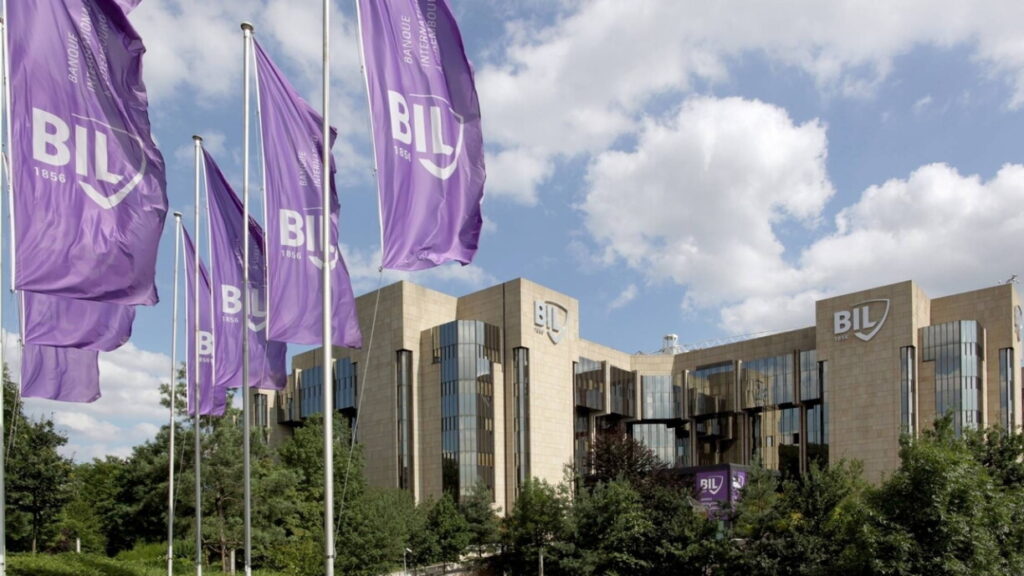
Banque Internationale à Luxembourg, or BIL, is Luxembourg’s oldest bank, first founded in 1856 to finance the country’s rail network.
The original shareholders were three German bankers: Raphael Erlanger, Abraham Oppenheimer, and Gustav Mevissen. In 1991, Belgian institution Crédit Communal de Belgique became BIL’s main shareholder, and in 2000, the bank was rebranded under the name Dexia.
As André Roelants, then General Director at Dexia Luxembourg, explained at the time, the choice of a new name was strategic. It had to be short, usable in all languages, and not already registered in any country.
However, neither a new name nor a fresh logo could shield the bank from the global financial crisis of 2007–2009.
Dexia Group found itself in serious trouble and in 2011, Luxembourg’s then Minister of Finance Luc Frieden announced that the state would step in to safeguard BIL’s future and take the bank out of this group “in the interest of our country”.
To rescue the bank, the Luxembourg government issued two state guarantees. As Frieden pointed out, this solution was not without risk: it would cost taxpayers and the Luxembourg state if they ever had to be called upon.
It was still the price that had to be paid to save BIL, Frieden continued.
By 2012, BIL had not only returned to its original name but had also stabilised. The state took a 10% stake, while the remaining 90% went to Qatari investment fund Precision Capital.
Many at the time criticised the sale price of €730 million as far too low.
Five years later, those concerns seemed justified. In 2017, the Qatari owners sold BIL to China’s Legend Holdings for around €1.5 billion, effectively doubling their investment.
Luc Frieden, by then Chair of BIL’s Board, emphasised continuity in the transaction, as BIL was a functioning bank not requiring change.
“BIL is and remains Luxembourgish”, Frieden concluded at the time.
Now, nine years on, BIL and its 1,555 employees are once again up for sale, with the bank’s value now estimated at €2.5 billion.
The state intends to keep its 10% share, while the other 90% will likely go to a foreign investor, even though the identity of the buyer remains unknown.