
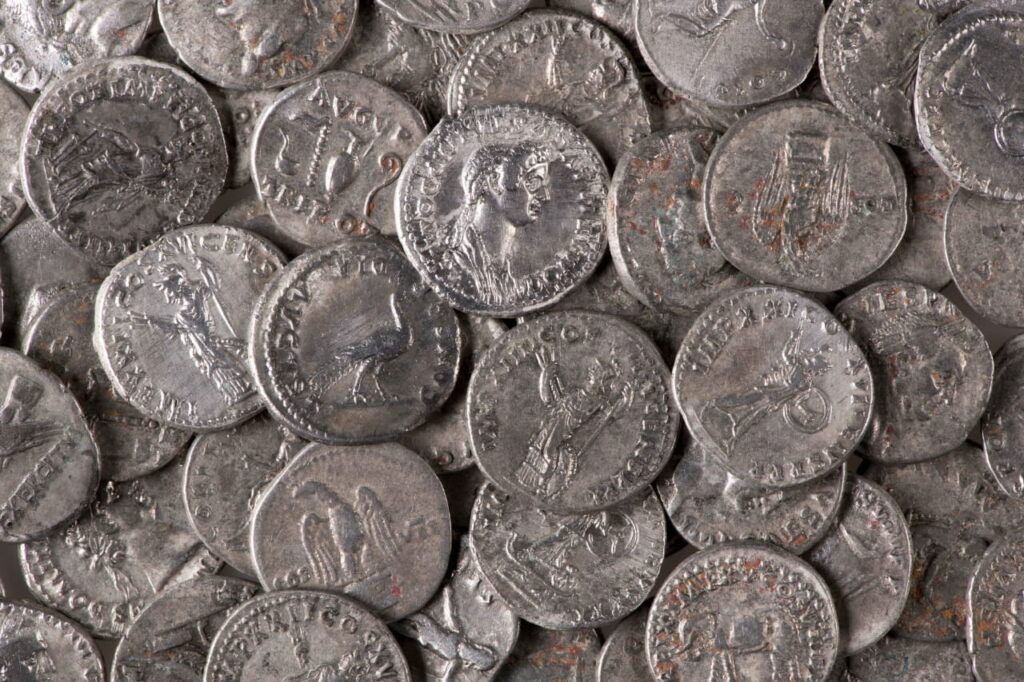
Archaeologists have recovered 934 Roman silver denarii from a field near Wesseling in western Germany. The coins form the largest known hoard from the reign of Emperor Hadrian found in Germany.
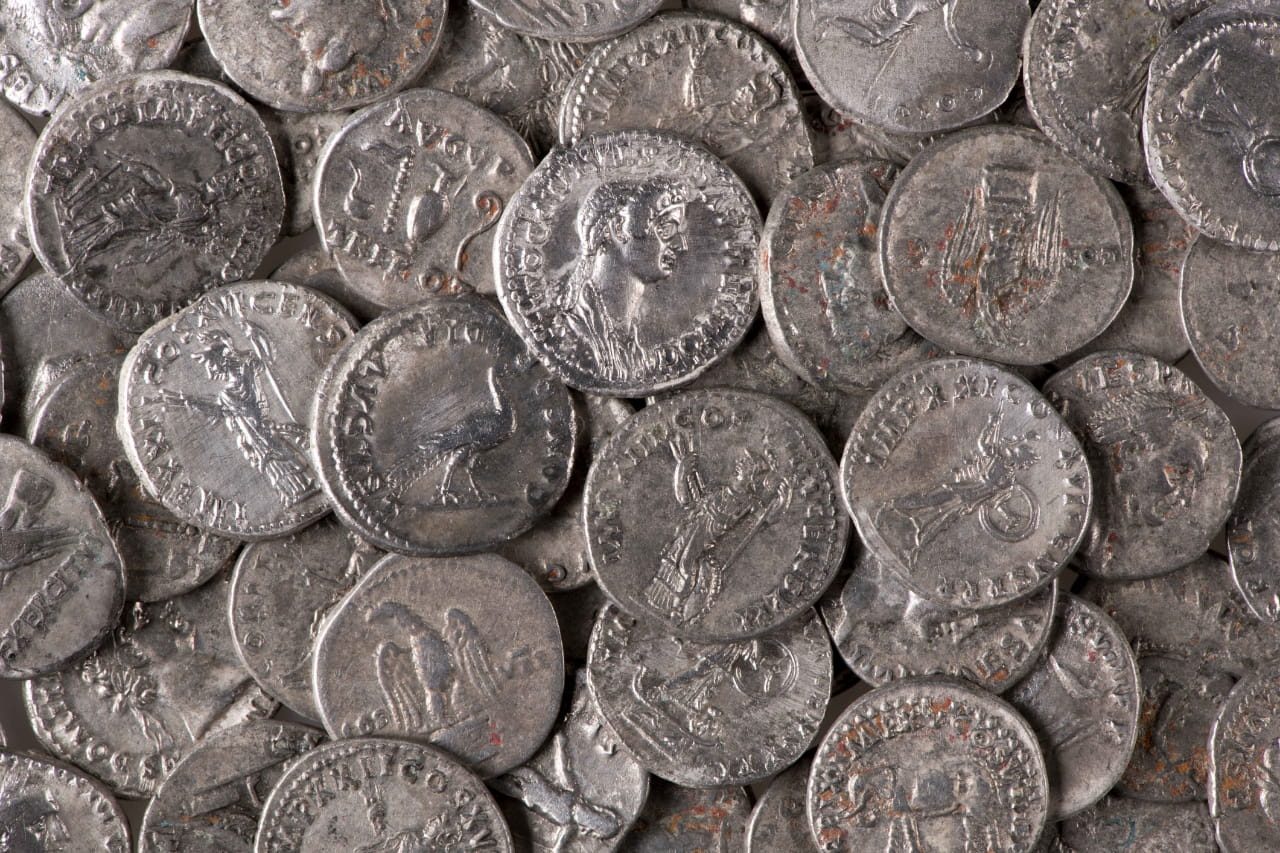 More than 900 Roman silver coins make up the hoard. This image shows a small selection. Credit: Marcel Zanjani/LVR Office for the Preservation of Archaeological Monuments in the Rhineland
The hoard weighs about 3.1 kilograms of silver. Archaeologists believe someone buried the money during the second quarter of the second century CE. The find was made during an approved metal detector survey, followed by an excavation by the LVR Office for the Preservation of Archaeological Monuments in the Rhineland.
Metal detectorist Oliver Riedl first found several silver coins in the field. After recovering 15 coins, his detector continued to signal. He then contacted the LVR archaeological office. Archaeologists arrived and began a controlled excavation.
The work produced far more coins than expected. The youngest denarius dates to CE 124 or 125, placing the burial in the reign of Hadrian, who ruled from CE 117 to 138. The hoard is the largest from Hadrian’s time known in Germany and ranks fifth worldwide, according to the LVR.
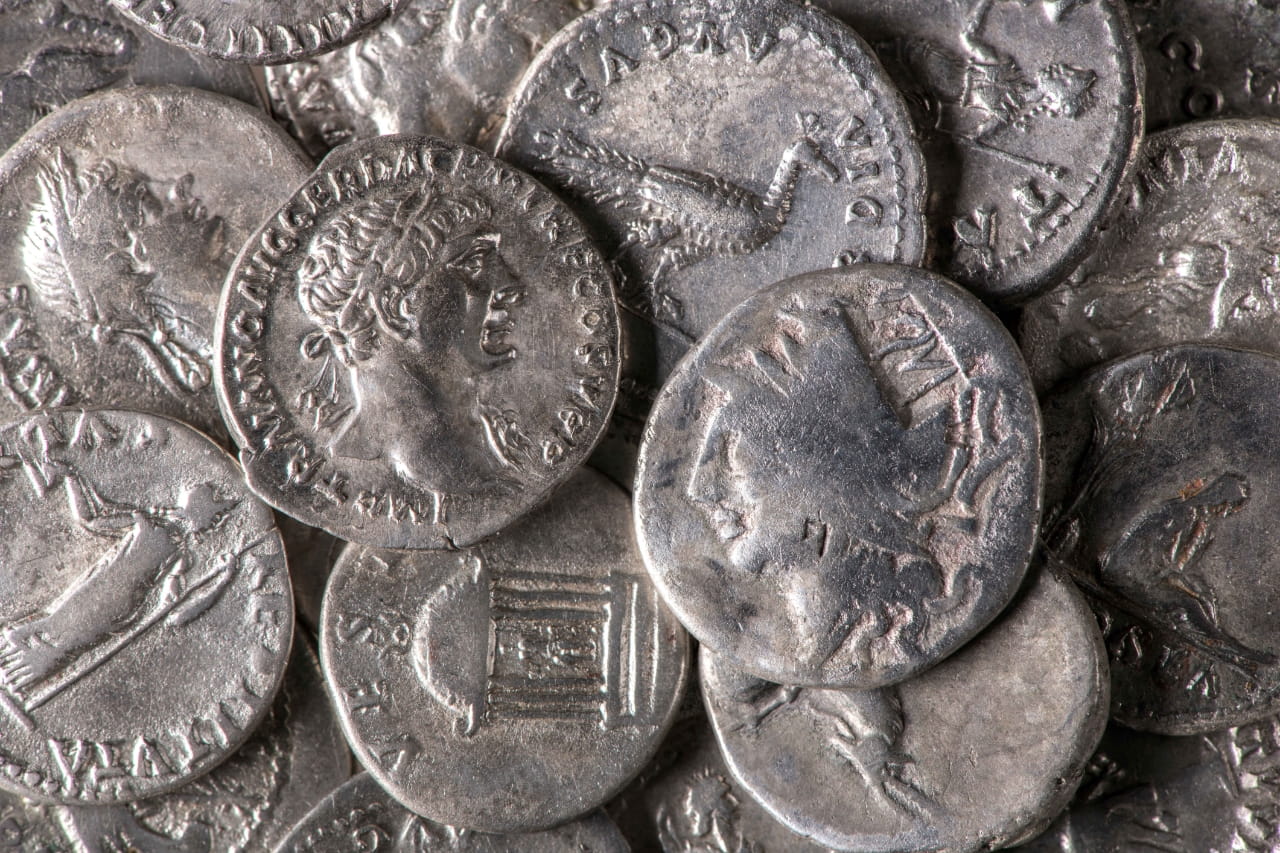 The hoard includes several unusual coins, including this heavily worn coin whose value was later confirmed with a countermark (right). Credit: Marcel Zanjani/LVR Office for the Preservation of Archaeological Monuments in the Rhineland
Most of the coins date to the reigns of the Flavian emperors, from CE 69 to 96. The oldest coin is much earlier. It was struck in 148 BCE during the Roman Republic. The denarius was already more than 270 years old when someone buried the hoard, yet it was still valid currency.
The mix of older and newer coins suggests the wealth was built up over a long period. Archaeologists think much of the money was gathered around CE 100 before being buried during Hadrian’s reign.
The reason for hiding the money is unknown. Archaeologist Erich Claßen said the owner likely wanted to keep the wealth safe. Roman society had no banks for people to use in the modern sense. The owner might have died before recovering the coins or telling someone else where they were hidden.
The size of the hoard points to a large amount of personal wealth. Rahel Otte of the LVR examined the coins in detail. At the time, a Roman legionary earned about 300 denarii per year. Roughly half went toward food and equipment.
A soldier therefore would have needed to save all of his remaining pay for about six years to reach the hoard’s total. The owner remains unknown. Archaeologists suggest the person might have lived on one of the Roman estates in the surrounding area.
The way the coins were recovered adds another important part to the find. Riedl reported the discovery quickly, allowing archaeologists to excavate the site and record the find in place.
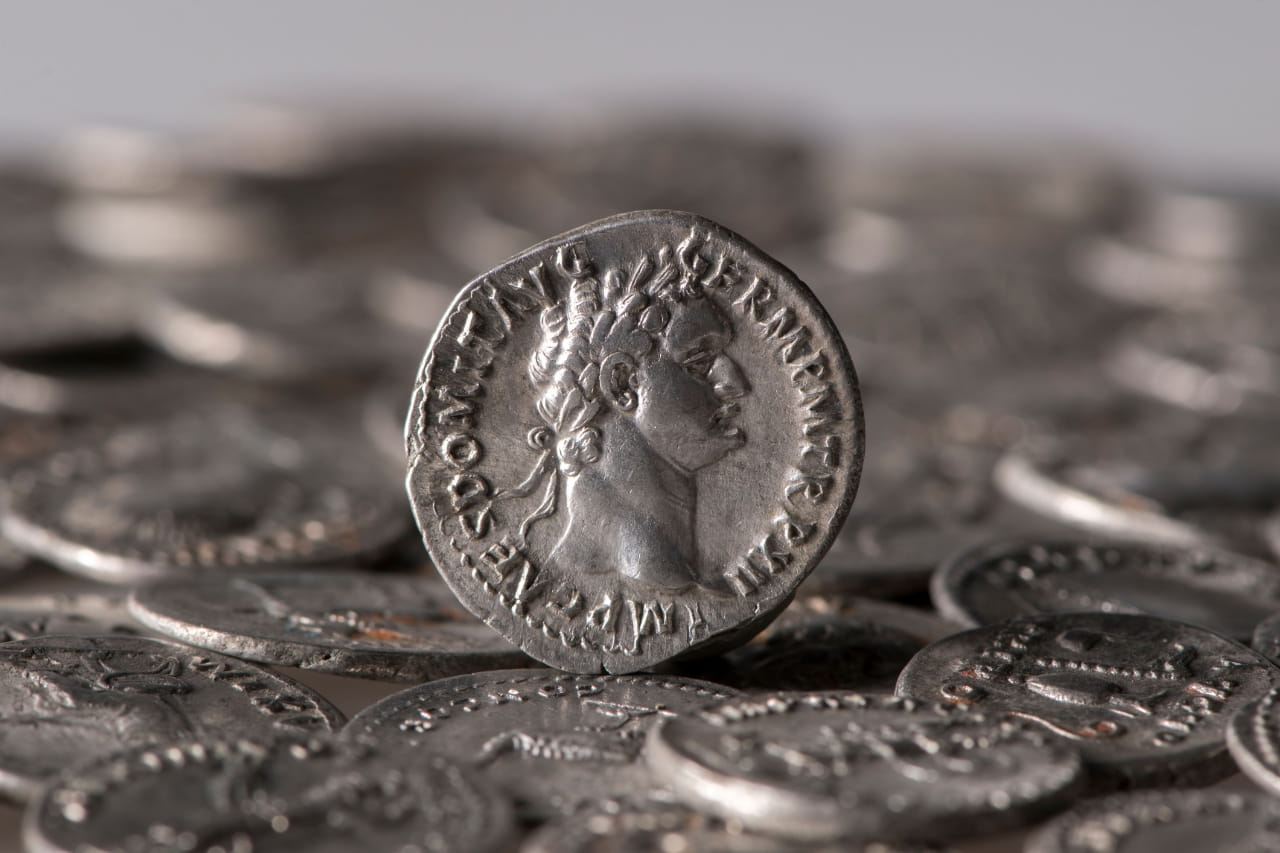 Most of the coins date to the reigns of the Flavian emperors and bear their portraits, including this coin showing Emperor Domitian. Credit: Marcel Zanjani/LVR Office for the Preservation of Archaeological Monuments in the Rhineland
During excavation, the team saw a dense concentration of coins. They removed the find as a single block and took it to the restoration workshop at the LVR-Landesmuseum Bonn.
There, staff X-rayed the soil block before removing the coins. The images showed fragments of a ceramic vessel and traces of straw. The evidence suggests the coins were first placed inside a straw-lined pot.
Years of farming had destroyed the vessel and spread the coins through the soil. Archaeologists report that they were still able to recover all 934 denarii.
The hoard also highlights the rules for metal detecting in North Rhine-Westphalia. Anyone seeking archaeological objects with a metal detector needs approval from heritage authorities and permission from the landowner. Detectorists also need training from specialist heritage offices such as the LVR.
The Wesseling hoard is now being presented to specialists at the annual meeting of the West and South German Association for Archaeology in Bonn. About 300 archaeologists from across Germany are attending the meeting.
The hoard will also go on public display for the first time at the LVR-Landesmuseum Bonn. Under North Rhine-Westphalia’s heritage law, the find now belongs to the state. Because Riedl followed the rules and reported the discovery, the state will also pay him a finder’s reward.
More information: Regional Council of the Rhineland Municipalities (LVR)