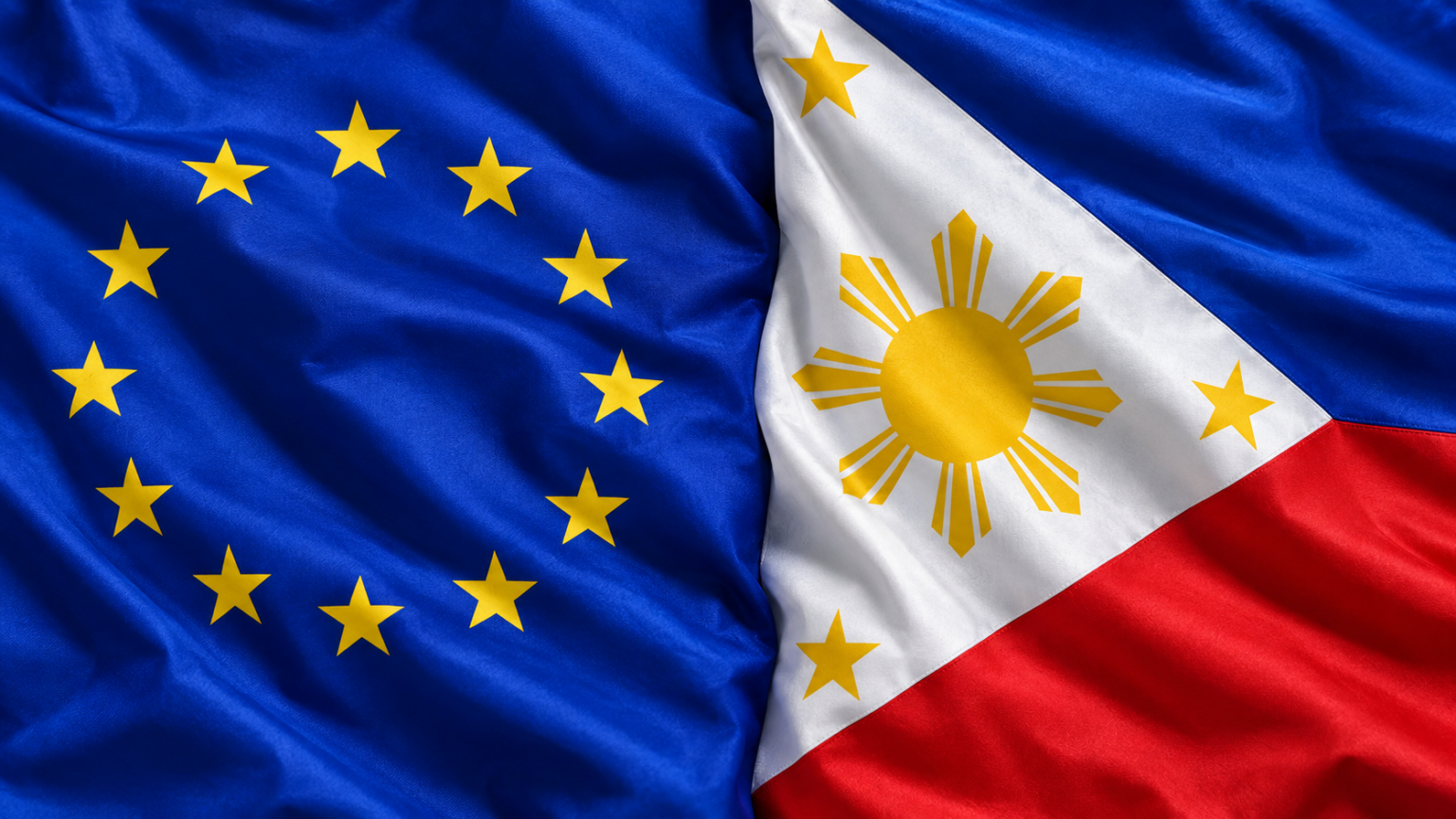
The EU and the Philippines have reached a deal for an FTA.
According to a European Commission press release, there has been ‘substantial agreement’ on a European Union‑Philippines trade deal. Announced in Brussels on 22 September, the EU-Philippines free trade agreement (FTA) will include rules to enable bilateral digital trade. During a video call, the announcement was made by Maroš Šefčovič, Commissioner for EU Trade and Economic Security, and Maria Cristina Aldeguer‑Roque, Secretary of Trade and Industry of the Philippines. Both officials said the substantial agreement puts the deal on a ‘clear path towards final conclusion’ in the months ahead.
The parties to the agreement claim that the EU-Philippines FTA contains rules on digital trade to facilitate cross‑border data flows, while simultaneously guaranteeing data privacy and consumer protection. Establishing a clear framework for digital trade in goods and services between the EU and the Philippines, the agreement intendeds to remove tariffs on more than 94 % of tariff lines, covering over 97 % of bilateral trade, and improve market access for services and investment. Bilateral trade between the EU and the Philippines totalled EUR 17.6 billion in goods in 2025 and EUR 10.3 billion in services in 2024.
Why does it matter?
The EU‑Philippines FTA has a stated aim to create a predictable regulatory environment for e‑commerce, digital services, and cloud computing. Digital trade rules under the forthcoming FTA between the EU and the Philippines have been designed to facilitate cross‑border data flows in alignment with their respective data privacy regimes, most notably the EU’s General Data Protection Regulation (GDPR), and consumer protection rules.