BOISE – Idaho law enforcement believe a man found dead after poisoning himself in a Boise church 44 years ago could have a connection to the 1982 Tylenol killings, an unsolved string of homicides that roiled the nation and changed the way consumers open over-the-counter pill bottles to this day.
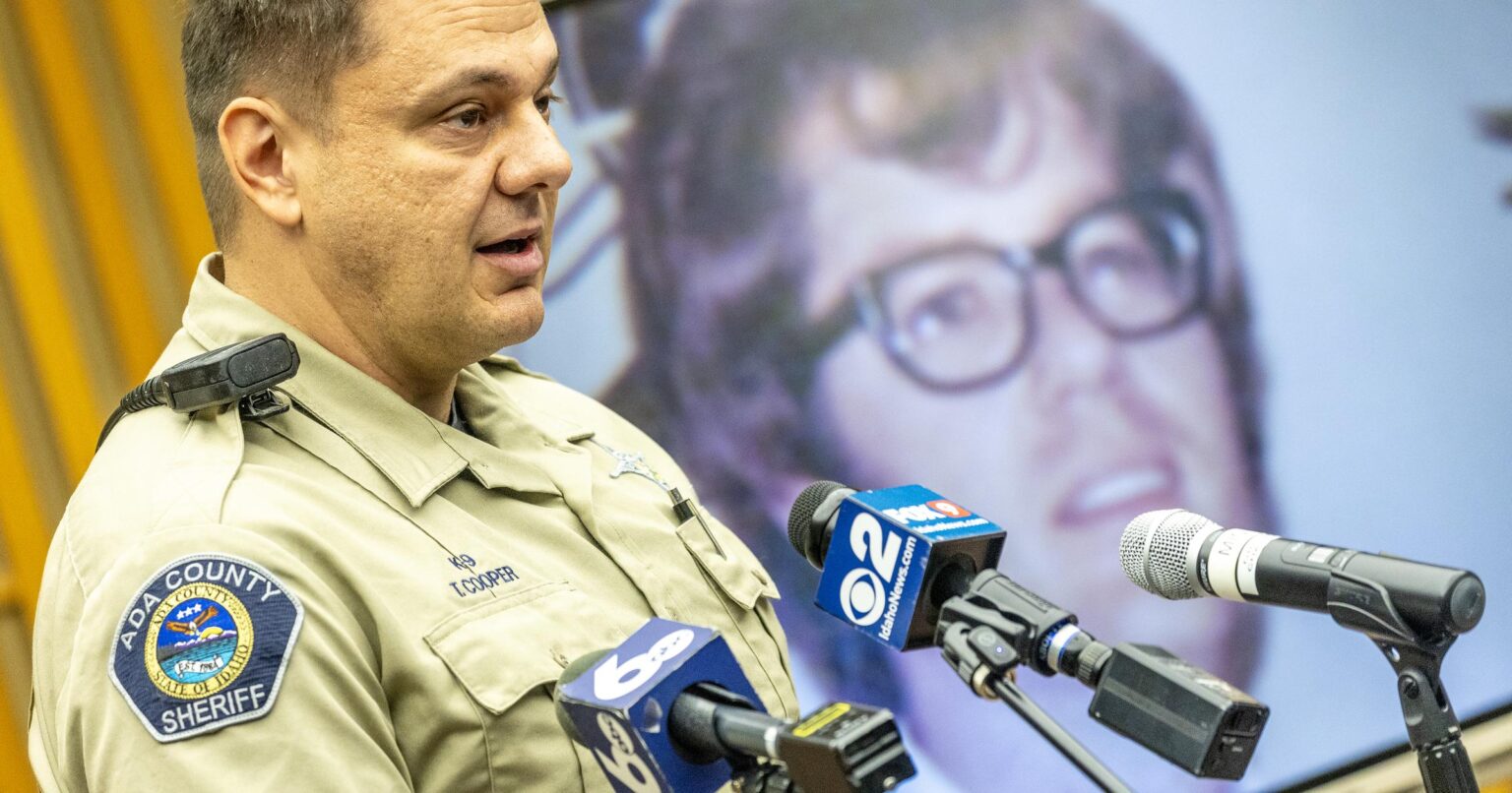
Ada County Sheriff’s Office Detective Tim Cooper in a news conference Wednesday identified Mathew Francis Betkouski, a Lockheed Martin organic chemist who worked on NASA-related projects, as the man who poisoned himself with cyanide in Sacred Heart Catholic Church and was buried without a name. The case was reopened in 2019 because a church member had asked about its progress.
The chaos and uncertainty began in the greater Chicago area in the fall of 1982, when 12-year-old Mary Kellerman died in the hospital after consuming Tylenol capsules. Six more people, all below the age of 35 and also living in the Chicago area, died the same way.
Investigators discovered the capsules were laced with a lethal dose of cyanide, leading to a widespread recall of Tylenol and immediate removal of the medication across shelves nationwide.
Johnson & Johnson determined whoever laced the capsules did so after Tylenol left its distribution centers, meaning the bottles must have been taken off store shelves, poisoned with cyanide and eventually placed back on the shelf. Some of these stores were more than 20 miles apart.
Referred to as the “Unknown Wanderer” before his identification, Betkouski had a documented fascination with chemistry and explosives. His odd behavior increased following a brain injury in 1974 from falling off a tall fence, Cooper said, adding that though plagued with mental illness, Betkouski was a brilliant man who struggled to connect with people.
While working in the area of Las Cruces, New Mexico, Betkouski attempted to obtain capsules of some kind in March of 1982. Police were called to a pharmacy and escorted him home, Cooper said. That’s when they discovered he was taking unauthorized material from his lab at the White Sands Test Facility in New Mexico and later found cyanide in his room. Co-workers said Betkouski would often discuss how cyanide could be used in “the perfect crime.”
Betkouski had earlier received months of outpatient and inpatient psychiatric treatment at the Resnick Neuropsychiatric Hospital at UCLA, but when he returned to work in Florida, he was later fired in part because his behavior had not improved.
He also made frequent calls to chemical supply and pharmaceutical companies in Pennsylvania in the weeks before the Tylenol homicides.
After the poisonings, Betkouski sold his car and other possessions from his home in Las Cruces and disappeared.
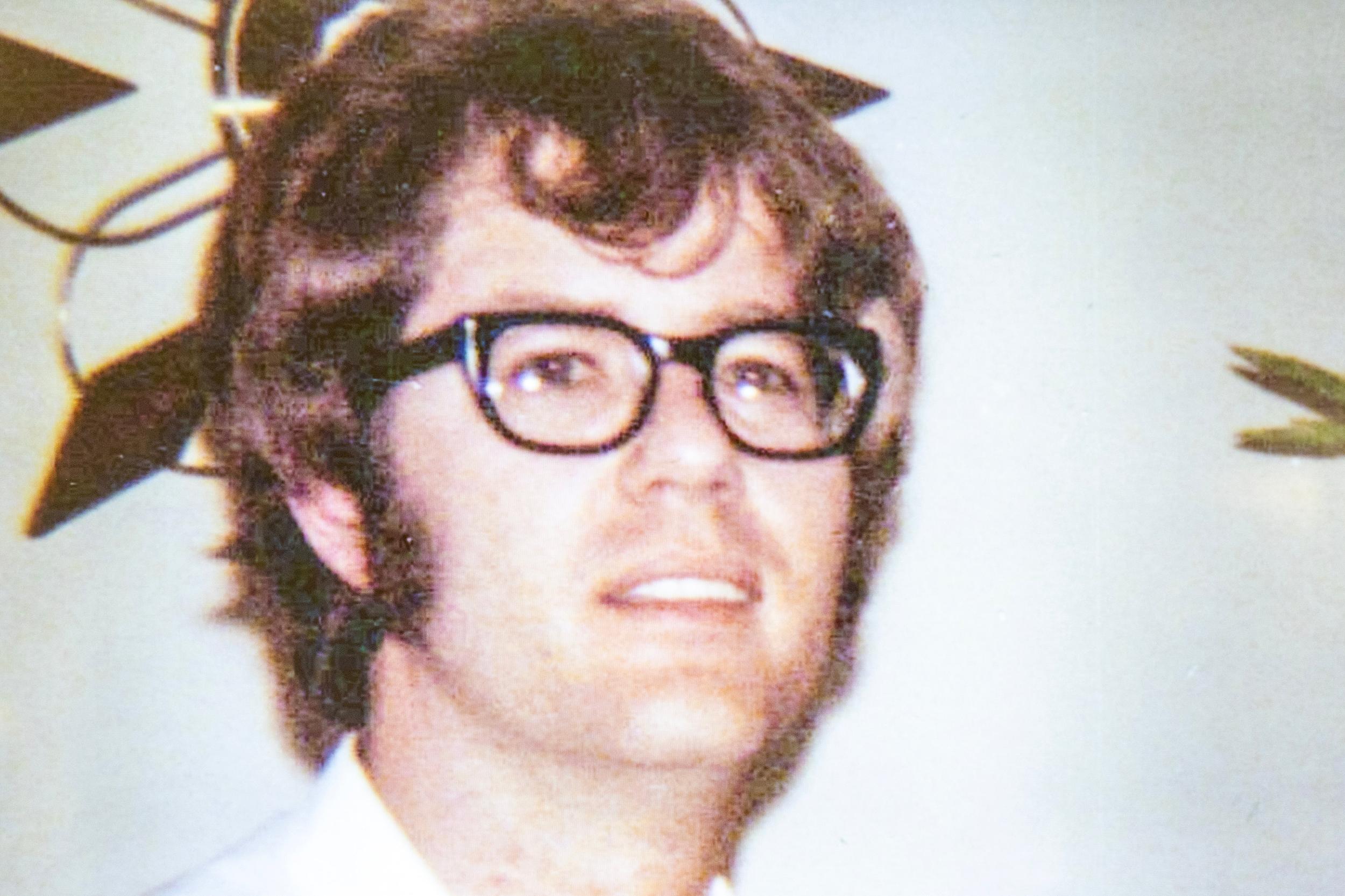
Mathew Francis Betkouski is pictured during a press conference about the “Unknown Wanderer” case and potential connections to the Tylenol murders of 1982 on Wednesday at the Ada County Sheriff’s Office in Boise. (August Frank/The Spokesman Review)
A key becomes the key
When people at the Boise church found a body in the pews, they recovered two key rings full of keys and a wallet without identifying information. But it did contain DNA.
Cold case investigators reviewing evidence noticed that a house key had markings of a hardware store in Jacksonville, Florida. It also had an etching on it that led investigators to a specific street called Mills Court.
Investigators then pulled property records of homes on that street. It led them to Betkouski’s brother. The brother’s DNA was a familial match to DNA left on the wallet that belonged to the “Unknown Wanderer .”
Betkouski was part of a prominent Los Angeles family and a graduate of Loyola University in Los Angeles. He was granted a teaching internship at the University of Dayton in Ohio, newspaper records show. He became engaged in April of 1967. His wife, whom he was later divorced from, graduated from the University of Dayton, according to records.
Cooper maintained that while they will not name Betkouski as a suspect in the Tylenol homicides, their goal is to “generate new leads” and ask people with knowledge of his whereabouts in 1982 to come forward.
“We sent all our information to the Chicago area. It’s really not our job to name him as a suspect,” Ada County Sheriff Matt Clifford said during the press conference Wednesday. “What we are looking for is … Do you have any information?”
Investigators had some suspects throughout the years, but their prime suspect was always James Lewis, a man who was convicted for trying to extort the makers of Tylenol. Lewis wrote a letter around the time of the poisonings to Johnson & Johnson, saying the killings would stop if they wired $10 million to a Chicago bank account belonging to a travel agency.
Lewis admitted to writing the letter, but claimed it was only to embarrass the travel agency, where his wife used to work. Lewis despised the agency’s owner, whom he believed stiffed employees on their paychecks, the Chicago Tribune reported. Lewis also told investigators how one might hypothetically poison grocery shoppers with cyanide during interviews after the killings, but never admitted to doing it himself. He maintained his innocence until his death in 2023.
Though some FBI agents always believed Lewis was behind “the Tylenol Murders,” as the press dubbed the homicides, former U.S. Attorney Dan Webb maintained there was never enough evidence to formally charge him, according to the Chicago Tribune.
By December 1982, two months had gone by without any answers to who had poisoned seven people in Illinois. And Idaho law enforcement’s unidentified “Unknown Wanderer” was already dead. Investigators now believe he had taken a train from Chicago to Boise.
Betkouski was a well-dressed and well-off man who had poisoned himself with cyanide while sitting in a pew at Sacred Heart Catholic Church on Dec. 4. He was there around the time of confession service, fueling speculation by investigators about a possible confession – but the priest who was there at that time never provided a statement to investigators about what the man said before his death.
“We have heard various things that may have been said or done in the church that day, and some are interesting,” Cooper said. “But in the end, we cannot independently verify what was or wasn’t said in the confessional on the day Betkouski died.”
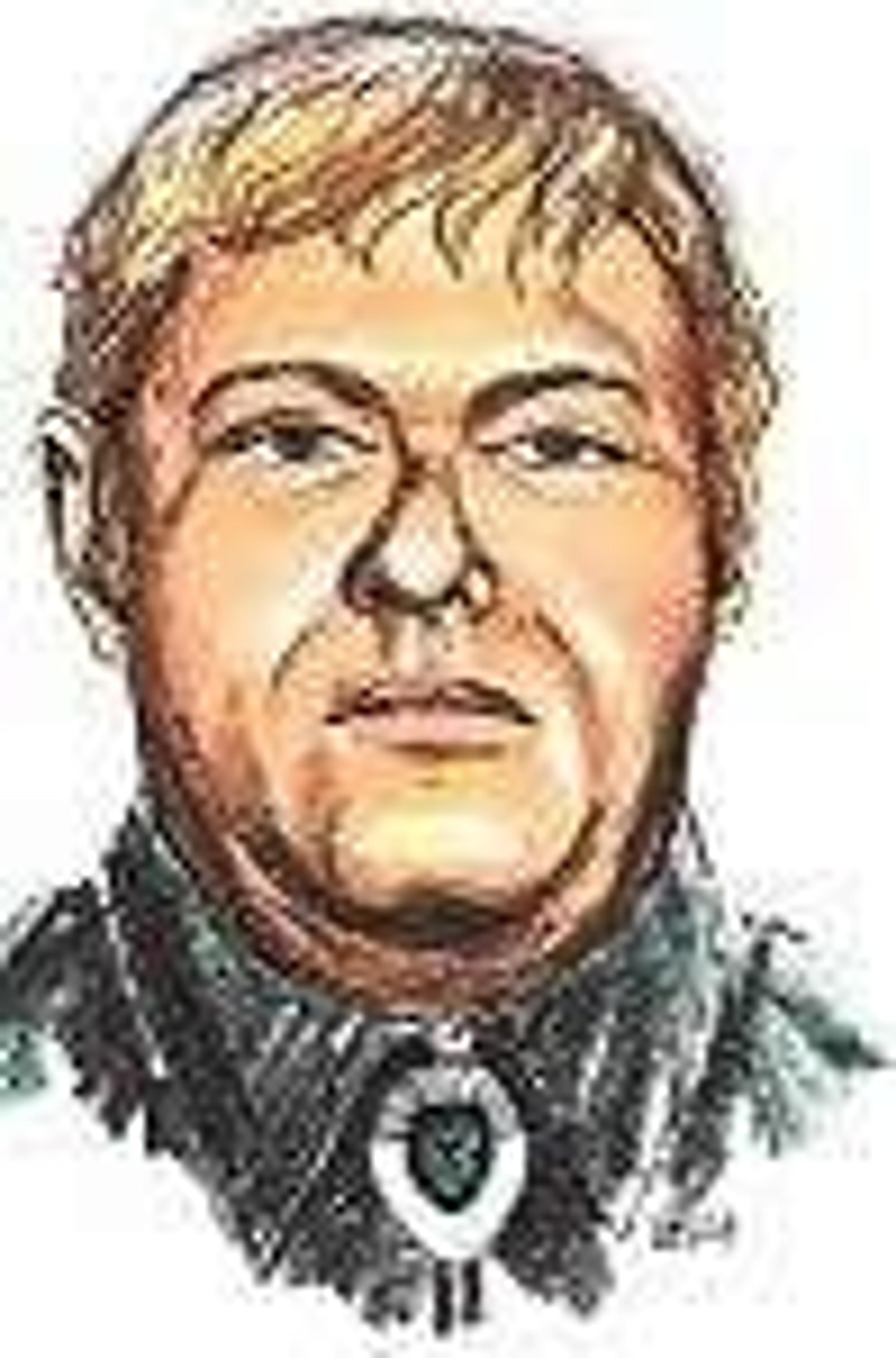
The man had sandy, dyed hair and wore a green long-sleeved shirt, blue jeans, a belt with a metal buckle, a bolo tie, a Seiko watch and cowboy boots.
Sketch of man with alias “Wm. Toomey” who was buried in Boise in 1982 after ingesting a cyanide pill at a local church. (“Toomey” sketch from the DoeNetwork)
“He was carrying a wallet, no cards in it, but you could still see the sweat lines where the cards used to be,” Clifford said. “The man’s fingernails were finely filed. His hair had been dyed and styled, possibly with a razor. His pants looked like they had never been worn, or just or had just been pressed.”
Two key rings with nearly 30 keys between them were found on his person. He also had an ink marker, a lighter, $1,900 in cash and a typewritten suicide note.
The note began with, “In the event of my death,” and instructed whoever found him to use the money enclosed for his funeral, the Idaho Press reported in 2021. The man wished to be cremated and instructed the rest of the money be donated to the church.
The note ended with, “God will see to your honesty in this.”
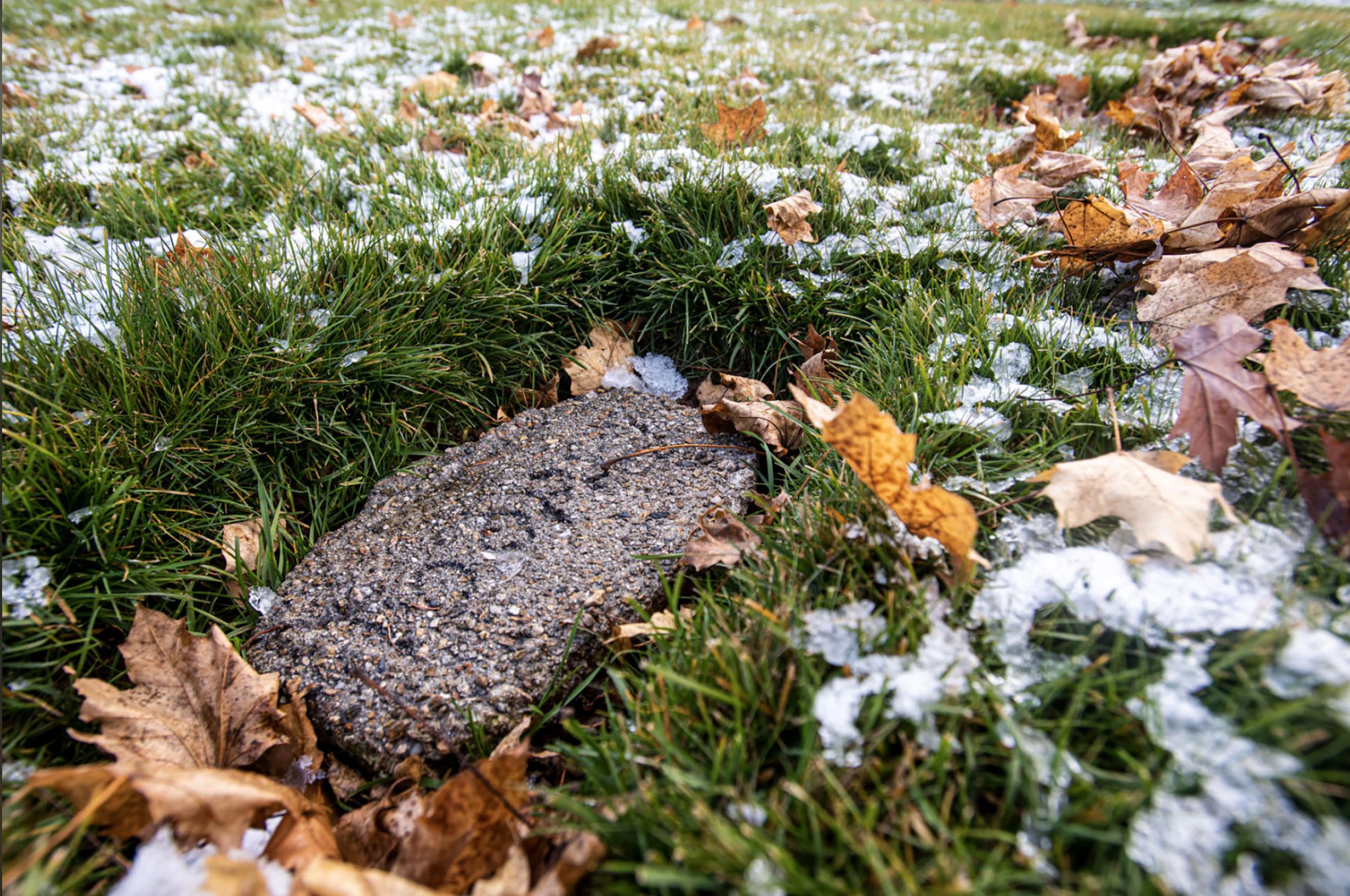
It was signed by “Wm. L. Toomey,” an alias. Investigators believed he came from New Mexico, California or Arizona based on his tanned complexion, according to the Doe Network, a center for unidentified persons. Police attempted to chase leads across the country, but none surfaced, the network’s website says. He was buried as an unidentified man in Eagle, Idaho’s Dry Creek Cemetery with a rock labeled “Toomey” for a headstone.
A grave marked only with the word “Toomey” rests at Dry Creek Cemetery in Eagle, pictured here on Dec. 15, 2021. (Jake King/Idaho Press)
A nation in panic
Across the country, grocery stores were in chaos. A quarter of a million bottles of Tylenol were recalled nationwide, according to newspaper archives. Other focus areas included capsules distributed in other states, including North Dakota, South Dakota and part of Wyoming. Illinois investigators quickly established a task force of 15 officers to pursue leads. Psychiatrists interviewed by the Associated Press at the time profiled the unknown killer as a single loner who was “sadistic,” compulsive, meticulous and organized, with above-average intelligence.
The horror of the homicides reached local newspapers across the country, with one opinion editor for The Spokesman-Review writing, “On the scale of crimes, this must rank as one of the most heinous.”
The first priority was to “get Tylenol off the shelves,” former Illinois Attorney General Tyrone Fahner told reporters in the fall of 1982, and catch “the madman or madmen responsible for this sick behavior.”
Tylenol placed ads in newspapers across the country including The Spokesman-Review that year pledging they would replace Tylenol capsules with Tylenol tablets for free.
“We are doing this to help protect you against the risk of further capsule tampering,” the ad says. “We want all Tylenol capsule users to now use Tylenol tablets until new tamper-resistant capsule packaging is available.”
Poison control centers across the country also were fielding floods of calls about whether it was safe to take the pills. In one day, the Spokane Poison Center logged nearly 50 calls. The Seattle center reported a “barrage.” Both centers at the time urged callers to refrain from taking Tylenol until further notice, The Spokesman-Review reported.
The Tylenol homicides shaped how the nation consumes over-the-counter medication. Johnson & Johnson introduced tamper-proof packaging using a foil cover sealed over the bottle, which later became an industry standard. In 1989, the Federal Drug Administration required all medication manufacturers to make all similar products tamper-proof.
The panic of that year is something Former Chicago Assistant U.S. Attorney Jeremy Margolis will never forget. The only comparable event would be the panic of COVID-19, he said.
Margolis remembers Chicago police in 1982 swerving in and out of neighborhoods and blaring daunting messages from their patrol cars.
“‘Do not take Tylenol!’” Margolis recalled the police saying. “‘If you have Tylenol in your bathroom, throw it out or turn it in!’ It was freaky. It’s frightening stuff.”
Clues, but also doubt
Cooper said Betkouski had been in Chicago in the year before the Tylenol homicides, corroborated by photos, but they cannot currently place him in the area in the months of the deaths. However, Betkouski did correspond to many friends and family through letters and wrote that he believed there was “lots of things to do there,” Cooper said.
He also wrote about depression, schizophrenia and thoughts of violence.
Three months before the Tylenol homicides, the Pittsburgh Post-Gazette wrote about Betkouski attending an “inventor” conference where he and 44 others were looking for their big break to market their inventions to consumers.
Betkouski’s invention was a more complicated deadbolt designed to thwart intruders. The writer described Betkouski’s device as something that “still had a few bugs” to sort out.
The key Mathew Betkouski had on him when he was found dead in a Boise catholic church. The key led to investigators tracking down a relative that lived in Los Angeles. (Ada County Sheriff’s Office)
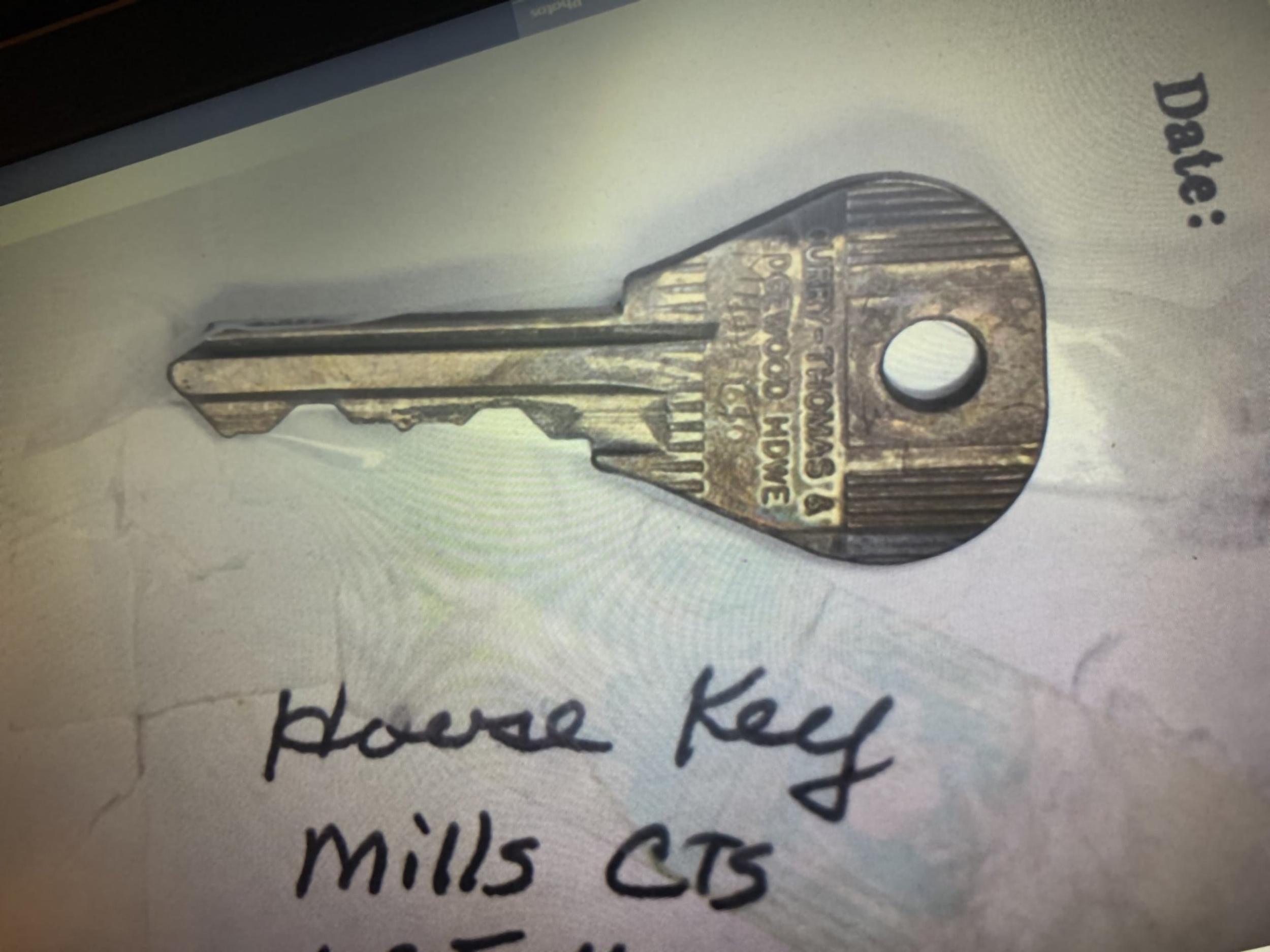
In 2021, when Betkouski’s brother died, police traveled to the brother’s Los Angeles home where Betkouski frequented and stayed during the 1970s and early 1980s. The brother had kept Betkouski’s belongings almost just as he had left it before his disappearance.
His bed, dresser and desk were still there. In his desk, detectives discovered letters, photos and a map to the city of Chicago.
They also found a bottle of cyanide, Cooper told reporters.
“This was sodium cyanide. This was not potassium cyanide, as was used in the Chicago-area deaths of 1982. So a different type of cyanide,” Cooper said. “Testing on the bottle revealed that it contained organic properties. Peach pits and apricot seeds were found with the bottle, and it’s believed that it was likely homemade.”
That’s one of the reasons Margolis isn’t convinced.
The seven victims around Chicago were poisoned with potassium cyanide, “not the kind of cyanide he had on his shelf,” Margolis told The Spokesman-Review in a phone interview Wednesday .
“It’s cyanide,” he added, “But it’s not what we have here.”
Even though the cyanide found in the brother’s home was a different type, Betkouski’s access to the poison and apparent obsession with it was alarming in itself, said forensic psychiatrist Dr. Park Dietz, who consulted for the FBI on the Tylenol killings and also is known for his work on serial killer Jeffrey Dahmer’s case.
Dietz, who was in Boise on Wednesday, consulted with other criminal profilers and psychiatrists with the FBI who agreed Betkouski was a “viable suspect.”
“The information developed about Dr. Betkouski is extraordinary,” he said. “These two phenomena – interest in poisons and interest in explosives – have in common the ability to conduct violence against multiple victims simultaneously in a manner that allows the killer to escape undetected.”
Dietz fully believes Betkouski is the Tylenol killer. Other suspects don’t fit a profile as accurately, he said. Betkouski’s mother and father died, he lost his job, the media coverage about him at the inventor’s conference was unfavorable, and he got a divorce, all elements that were a “cascade of stressors” shortly before the Tylenol deaths.
“The chance to be far from the scene where the deaths occur, and to not become a suspect, that requires IQ. The intelligence to be able to carry out this crime and not be caught for years or decades is quite high, and there aren’t that many criminals who have both the other necessary elements and the intellect to carry it out,” Dietz said in an interview Wednesday.
Dietz said when Betkouski was in college, he was toying with explosives and injured a classmate when he sent an explosive to the student’s dorm. He was never properly punished, Dietz said.
There were also other cyanide deaths in the states Betkouski was living, including one in New Mexico, investigators said Wednesday. The Las Cruces Police Department still had an unsolved cyanide poisoning case in their file from May of 1982.
“The circumstantial case is very, very big, and not all of it was reviewed here. I don’t think you could hear the whole circumstantial case and retain much skepticism about Betkouski being the Tylenol killer,” Dietz told The Spokesman-Review. “You’d have to believe in an enormous number of coincidences.”
Park Dietz speaks during a press conference about the “Unknown Wanderer” case and potential connections to the Tylenol murders of 1982 on Wednesday at the Ada County Sheriff’s Office in Boise. (August Frank/The Spokesman Review)
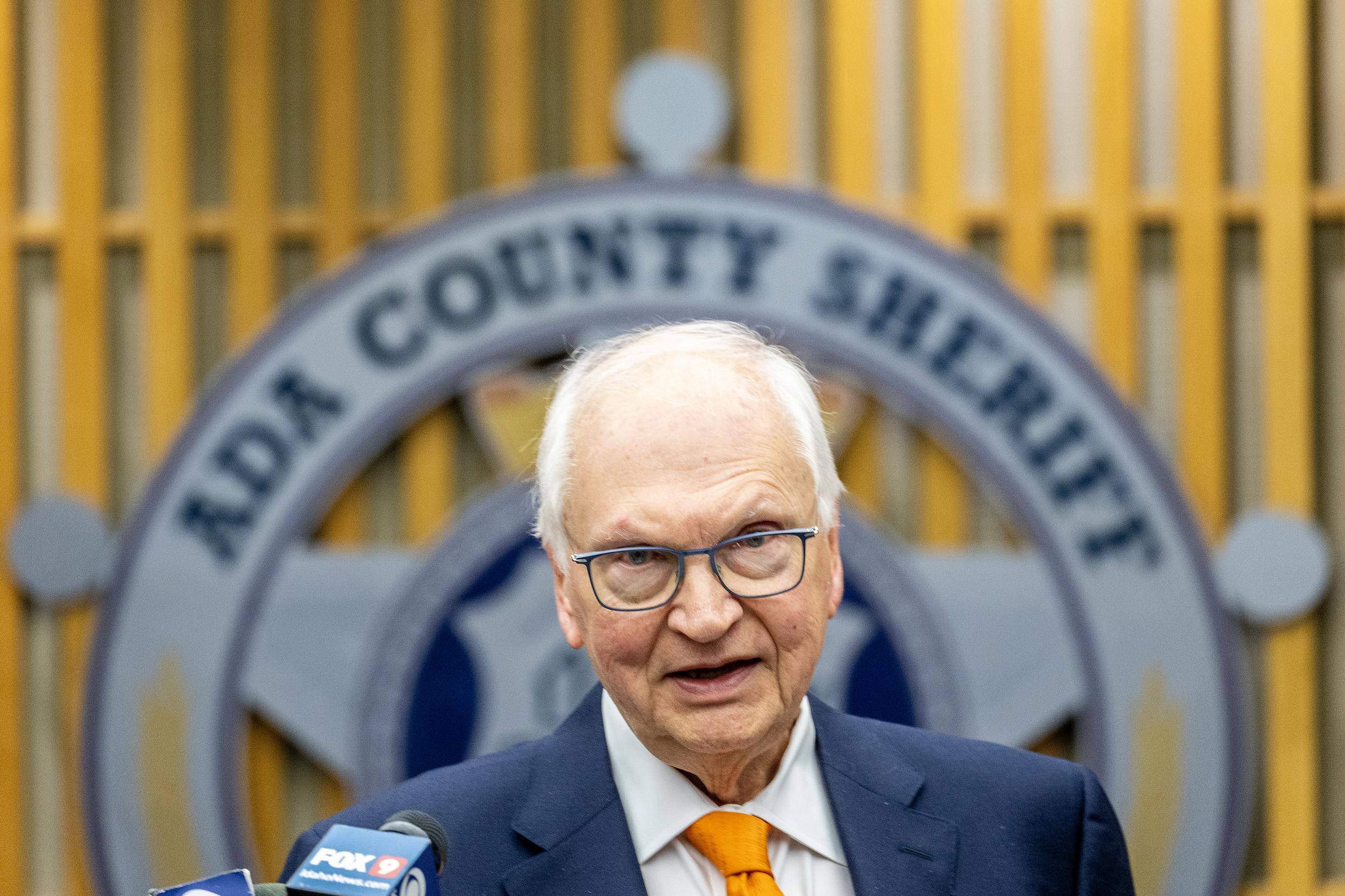
Lewis, law enforcement’s prime suspect in the killings for years, is a “silly suspect,” Dietz said.
“One would have to be stupid to do the murders, and also try to extort money from someone under the claim you’ll do it more if you don’t get paid,” he said. “Dr. Betkouski is exactly the kind of person who would commit the Tylenol murders because of his fascination with cyanide and poisons, his fascination with explosives, his interest in knowing that cyanide could be used for the perfect crime, his friends in Chicago, his belief that others were out to harm him and his belief that he could cure himself (of his mental illness).”
But Margolis isn’t convinced.
He said the Betkouski story was “bizarre” and the profile created was “laughable.”
Margolis served on the first task force created in the Chicago area to help catch the Tylenol killer. He also was the one who prosecuted Lewis for his extortion scheme and was among the people who interviewed Lewis when he volunteered to try and help solve the homicides himself, a move that raised red flags for investigators at the time.
Margolis hopes the recordkeepers of the case, Arlington Heights Police, will eventually fulfill the media’s floods of records requests for the rest of the case file. Doing so will reveal who the killer really is, Margolis said.
“I never said publicly who I believe did it, but I’m convinced I know who did it,” he said. “The comprehensive files of the real investigation and facts, not astrology readings – when that is revealed, the world will know beyond any doubt who did the crime, and it’s not this character who killed himself in 1982.”
Moving forward on a ‘viable suspect’
The Chicago Police Department was less involved than other departments in the surrounding counties at the time because many of the homicides did not happen in its jurisdiction. Other jurisdictions are not responding to Ada County’s questions or comments about the case, Clifford told reporters Wednesday. Chicago Police have been responsive, however.
The department said in an email to The Spokesman-Review Wednesday that their detectives have been in contact with Ada County to “determine whether there is a connection to the Tylenol murders investigation, which remains an open cold case.” Anyone with information is encouraged to call Cook County Crime Stoppers at 800-535-7867 or submit an anonymous tip on their website.
Clifford does not have access to any Chicago case files, so further follow-up on any incidents that took place there would likely be completed by detectives in that area, he said. But he remains optimistic.
“From what I have and what I see, I believe Betkouski is a viable suspect,” Clifford said. “I would ask people to keep an open mind. I know the family members would ask that people keep an open mind.”
The church where Betkouski took his life all those years ago still stands on the corner of South Latah and West Cassia streets. The stained glass windows still catch the rays of sunshine that bring bright colors into the church’s sanctuary. The only difference now is the altar no longer sits on the east side of the building, where Betkouski would likely have been facing when he sat in the back right corner and prepared to take his own life.
Church parishioner Skip Gerard did not want to discuss Betkouski’s death Wednesday. But he still hears stories of what it was like that day.
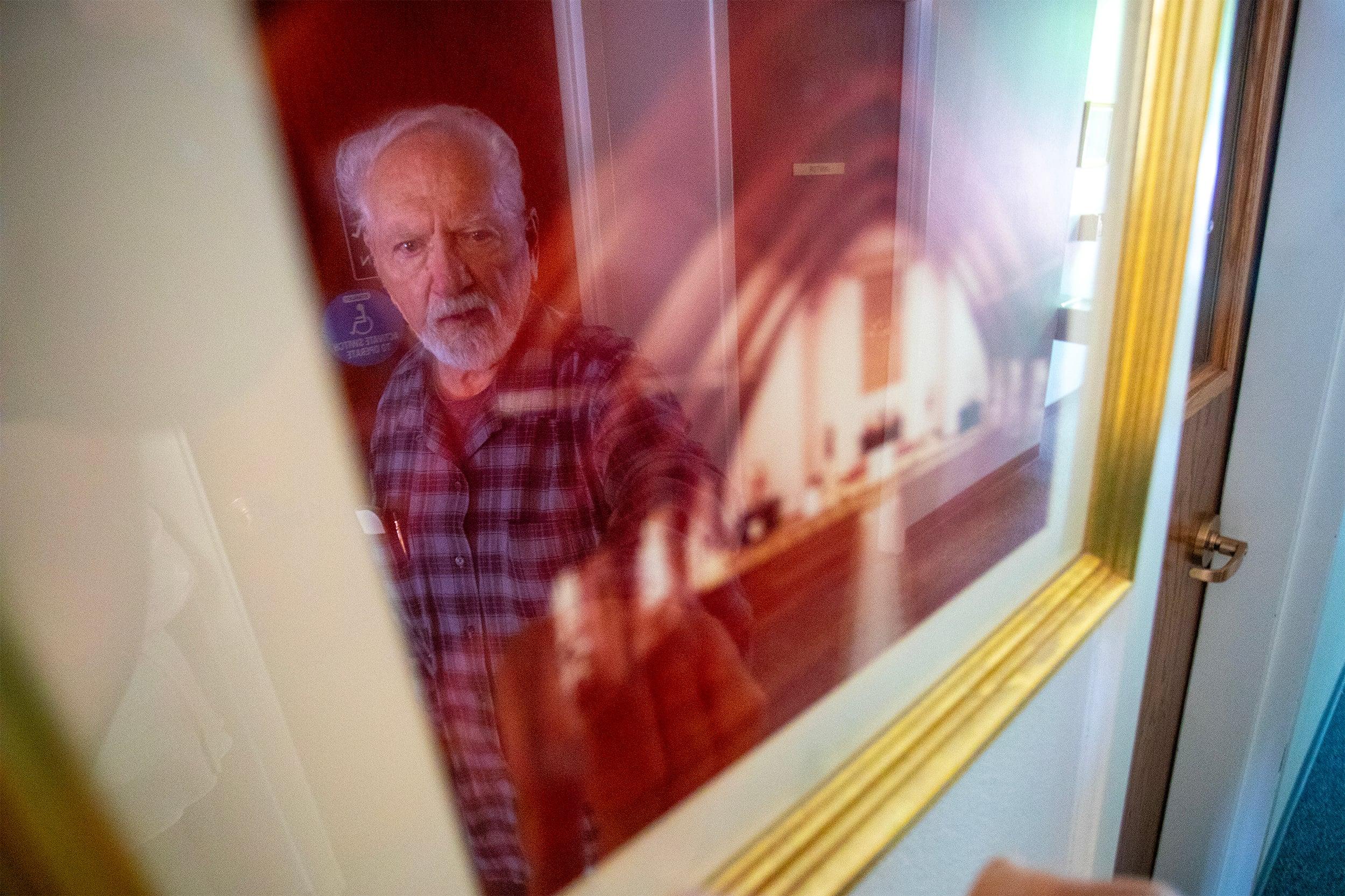
Gerard pointed to an old picture on the wall of the church that depicts what the sanctuary looked like in 1982. He moved his finger to the bottom corner of the frame: “That’s where they found him.”
Skip Gerard points to where in the Church of the Sacred Heart Mathew Francis Betkouski poisoned himself with cyanide in 1982, on Wednesday, Sept. 23, 2026, in Boise. (August Frank/The Spokesman Review)