
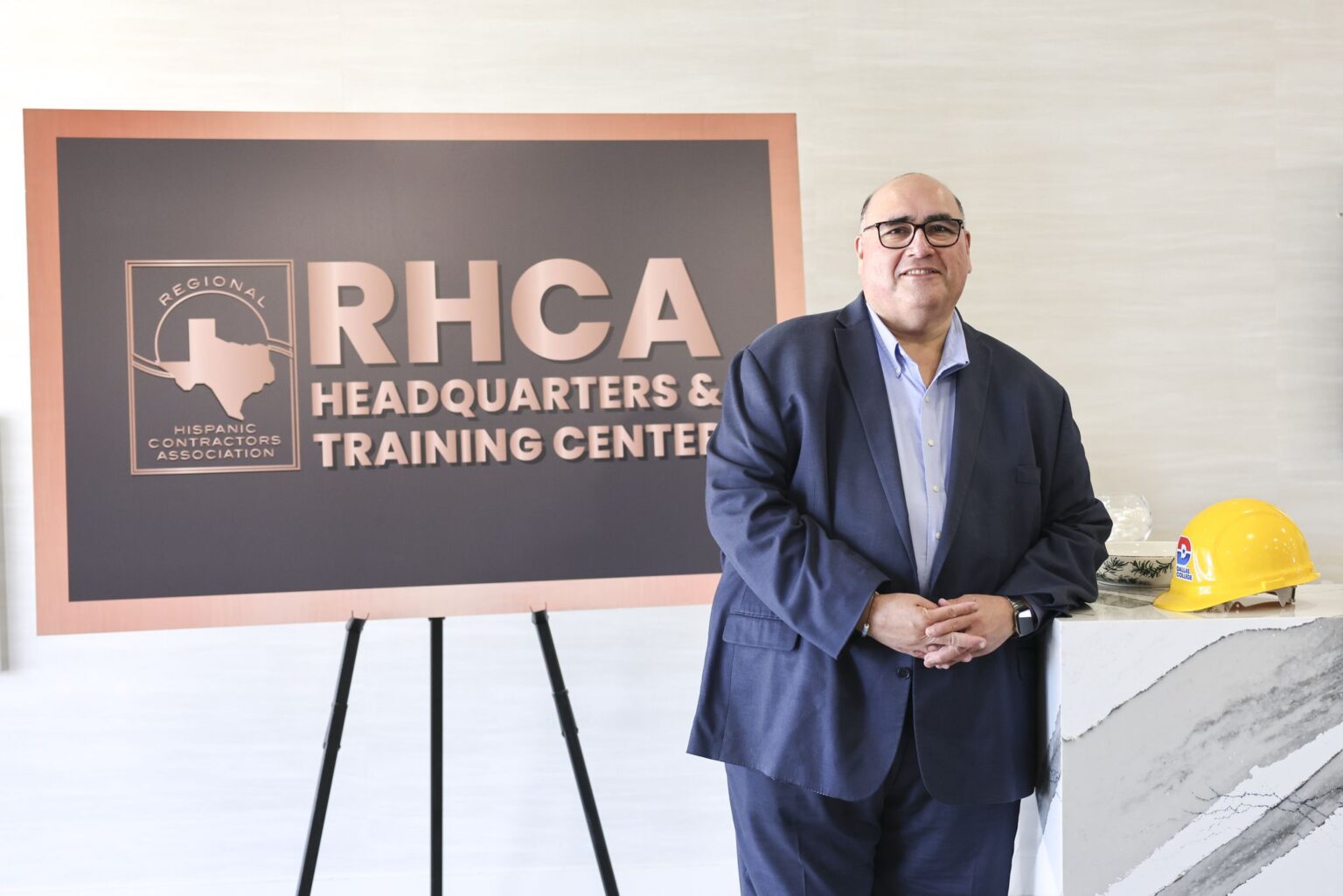
The Regional Hispanic Contractors Association in Dallas offered a class about construction during a recent August weekend.
Shafkat Anowar/The Dallas Morning News
Small-business owners Gabriela Vazquez and Luis Romero are having a hard time finding workers. Their company, L&G Fencing and Deck, has built fencing, porches and other outdoor structures for 14 years. Now, they’re struggling to hire people.

Vazquez and Romero said they know why.
“The youth today don’t like to work much outside or hard,” Romero said.
Article continues below this ad
The labor shortage has impacted construction companies across Dallas. It’s a problem that Vazquez said is currently masked by low demand for residential construction, which has been dampened by high interest rates and inflation.
Vazquez and Romero aren’t the only ones concerned Texas doesn’t have enough construction workers. Industry experts who spoke to The Dallas Morning News said they expect the labor shortage to become more acute as older generations retire and established immigrant workers depart the country.
“It’s unpredictable right now just because we don’t know how it’s going to impact us,” Vazquez said. “Once the economy comes back up and then there’s an abundance of work, how are we going to find these people to come and work for us if a lot of them have left?”
Vazquez doubted the industry would be able to survive if younger people continued to view the industry negatively, which she said is the case among many today, including her own children.
“It’s very uncertain at this point what the future of construction can look like,” Vazquez said. “We have two adult children, and they don’t want to do anything outside.”
Article continues below this ad
Reinforcement through recruitment
Almost two-thirds of single-family homebuilders cited the cost and availability of labor as a key problem they faced in 2025 and expected to deal with in 2026, according to a National Association of Homebuilders survey.
Construction companies need to take charge by educating people about the benefits of a career in construction, said Meloni Raney, president and CEO of the Texas construction industry trade association TEXO.
“It’s just an unbelievable career that most people don’t even consider,” Raney said, “because they’ve been told their whole life that a four-year college degree is literally the only path to higher education.”
TEXO is trying to address the shortage by connecting with high schools. They tell students construction is a viable career with job security, a relatively high starting salary and little to no student debt.
Article continues below this ad
They’re not the only regional organization doing outreach to current and future construction workers.
On a Friday afternoon at the Regional Hispanic Construction Association’s Dallas location, Vazquez, Romero and other students sat with pencils at the ready as they listened to their instructor.
The whiteboard and desks made the space look like any other college or high school classroom. But unlike other classrooms, this one’s shelves were filled with boxes of construction tools.
The instructor walked students through basic construction skills, safety, mathematics and other skills a worker wouldn’t necessarily learn in the field. Some students in the class were new to construction. Others like Romero and Vazquez wanted to add to the expertise they already had.
Article continues below this ad
The 80-hour course offered training in areas they didn’t already have experience in such as construction-specific mathematics and how to read plans to be able to work well alongside other contractors. They would also receive a National Center for Construction Education and Research certification at the end of the course.
The Regional Hispanic Construction Association offers the same course in Spanish and English. Organization President John Martinez said there are plenty of jobs in construction if people invest in their careers through training.
“It is not a lack of jobs,” Martinez said. “It’s a lack of the skills you have, what jobs you can get.”
Regional Hispanic Contractors Association president John Martinez said there are plenty of jobs in construction if people invest in their careers through training. The association offers training in areas construction workers didn’t already have experience in such as how to read plans to be able to work well alongside other contractors.
Shafkat Anowar/The Dallas Morning News
More than 927,300 Texans work in construction, according to the Bureau of Labor Statistics. The sector experienced a 2.7% employment growth in Texas from June 2025 to June 2026, which makes the field a promising one for young people.
Article continues below this ad
Wages for construction workers in Texas keep growing, too. Average hourly earnings for all construction employees increased almost $10 between the end of the COVID-19 pandemic and June 2026.
Recruitment and training efforts are showing signs of success. Interest in construction among youth improved from 2016 to 2026, according to a National Association of Homebuilders survey. In 2016, only 2% of young adults in the South who knew what career they wanted to pursue said they wanted to work in construction. By 2026, that number tripled to 6%.
Looking ahead
Cadence McShane Construction President Will Hodges said he’s seen more young adults interested in the industry. But not necessarily in the kinds of jobs that are needed.
Article continues below this ad
“None of them are wanting to go be carpenters or painters or hang drywall or pour concrete, which is hard work,” Hodges said. “How do you have enough people to do that hard work, in the sun, in the heat?”
Small-business owners Gabriela Vazquez and Luis Romero say they are struggling to find workers for their deck and fencing company.
Shafkat Anowar/The Dallas Morning News
Vazquez said it’s a problem she foresees as well.
“Everybody’s going to want to own something, but you’re not going to have the labor to do it,” Vazquez said. “You’re going to see a lot of leaders, but you’re not going to have a lot of workers.”
It’ll take time for the recruitment and training efforts to pay off too, Association of General Contractors of America spokesperson Brian Turmail said.
“Let’s just assume that Congress came in and doubled funding for career and technical education tomorrow,” Turmail said. “It would take years for that money to have an impact on the workforce.”
A survey of 56 Texas construction contractors by Turmail’s organization found 46% said their firm had a larger backlog than last year and 82% said they had a hard time filling positions for hourly workers. They expected it to stay that way, too: 61% said they think it will continue to be or become harder to hire.
Vazquez said she’s worried that once interest rates go down and demand for housing increases again, it could be difficult to build those houses.
“We just need to brace for whatever’s coming,” Vazquez said. “But we’re not going to have the people that we need to build our buildings.”