

They are so small that they cannot be seen with the naked eye, yet—as the saying goes—they “change the course of events” in a person’s life and the world around them. They inhabit every environment: the air, the soil, the water, and the bodies of humans and animals. These single-celled organisms can influence even the largest ecosystems. We’re talking about microbes.
Today, the study of the microbiome—the entire community of microbes—has become a “star” topic in the scientific world. An increasing number of scientists are dedicating their work to this field.
“The human body is more than just a collection of cells; we actually harbor more bacteria than human cells. However, because they are tiny, they occupy very little space,” says Portuguese Professor Maria Manuel Mota, adding that it would be wonderful if we could gain a fundamental understanding of the role these microbes play.
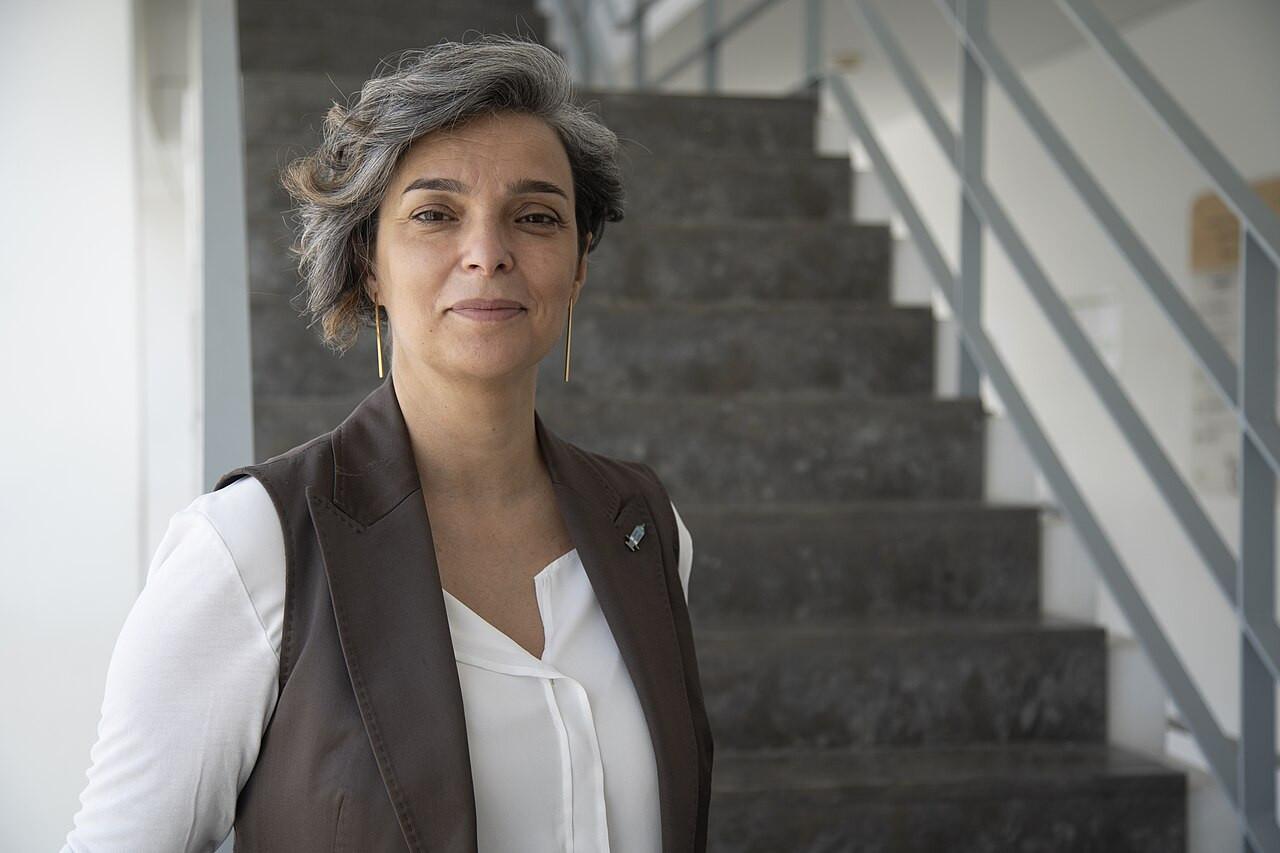
Maria Manuel Mota (Wikimedia.org)
Prof. Mota is the Executive Director of the Gulbenkian Institute for Molecular Medicine (GIMM) in Lisbon, Portugal.
Mota’s scientific field is molecular parasitology; she studies the single-celled protozoa of the genus Plasmodium—the causative agents of malaria—specifically focusing on the interactions between these pathogens and the host, as well as the pathogen’s impact on the liver. Research led by the Portuguese scientist revealed for the first time that, upon entering the liver during the early stages of infection, malaria parasites traverse multiple liver cells before finding the specific cell where they will settle and replicate.
GIMM: One of Portugal’s leading research institutions
The name of the renowned Armenian-born businessman and philanthropist Calouste Gulbenkian can be seen in many places across Lisbon—at the airport, at a metro station, on the streets…
Following the philanthropist’s death in 1955, and in accordance with his will, the Calouste Gulbenkian Foundation was established in Lisbon in 1956. One of its first initiatives was the founding of the Gulbenkian Science Institute (IGC – Instituto Gulbenkian de Ciência) in 1961, located in the Portuguese town of Oeiras.
In an interview with Hetq, Mota explains that the institute aimed to be innovative and to explore topics that were not being addressed in Portugal at the time. According to Mota, the institute’s research focus was initially diverse, spanning fields such as agriculture, mathematics, and biology. When the dictatorial regime in Portugal was overthrown and democracy was established in 1974, the IGC—according to our interviewee—dedicated itself exclusively to biological and biomedical research ten years later.
In 2023, the Gulbenkian Science Institute (IGC) and the Institute of Molecular Medicine (iMM) merged to form a new institution: the Gulbenkian Institute of Molecular Medicine (GIMM).
A future collaboration between Armenia and the Gulbenkian Institute of Molecular Medicine (GIMM) is on the horizon, according to GIMM head Prof. Mota. She tells Hetq that while no concrete results have materialized yet, formal cooperation could launch soon. The partnership is expected to involve the Kochard Charitable Foundation, an organization dedicated to supporting children suffering from inflammatory bowel diseases and other intestinal conditions. The foundation already has several researchers actively working in the field, paving the way for upcoming joint medical initiatives.
Mota: “We must address the questions that still remain unanswered”
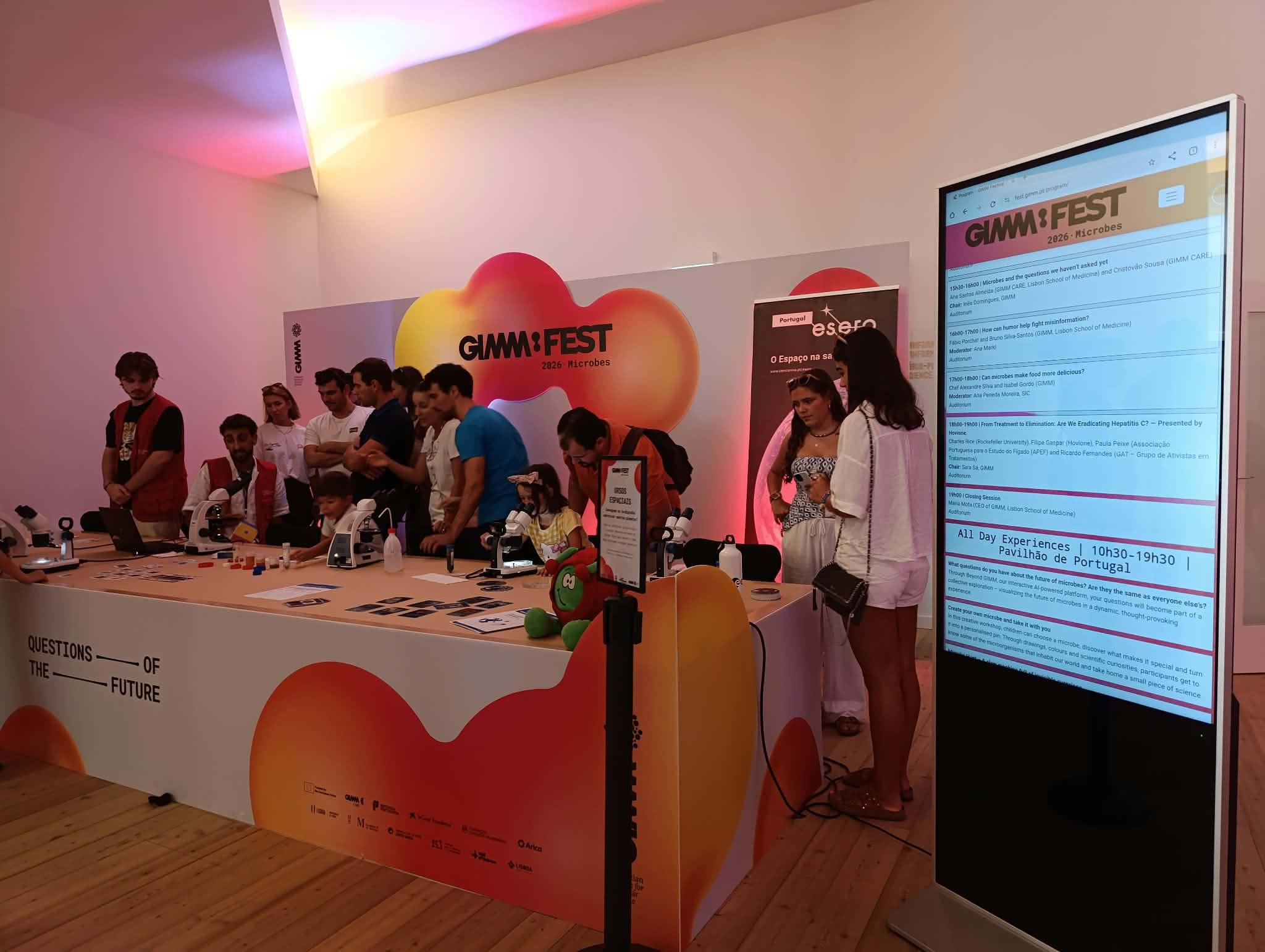
The GIMM Festival, a three-day science celebration, took place in Lisbon from September 17 to 19, embodying the Gulbenkian Institute of Molecular Medicine’s core commitment to research and innovation. Designed to bridge the gap between science and society, the festival provides an open platform for dialogue and public engagement. The event marks a practical milestone in GIMM’s broader mission to advance scientific discovery and ultimately improve human quality of life.

Each year, the festival focuses on a theme that reflects one of the world’s pressing challenges. For instance, while the 2025 theme centered on aging and longevity, this year the GIMM Festival focused on microbes.
“By shifting its focus annually, the GIMM Festival ensures a continued connection to the evolving frontiers of knowledge, fostering public awareness and inspiring action,” the festival’s website states.
The first two days of the festival were highly specialized. Scientists and researchers in the field presented their findings in the auditorium, while the audience took notes and asked questions. The primary goal of the GIMM Festival is to identify unanswered questions that could lead to new discoveries and collaborations, as well as shape the future.

“Over the course of three days, we explore critical questions about the future,” Mota tells Hetq. She says that it is essential to bring to light questions that do not yet have answers. According to the scientist, any major research begins with asking questions. Turning to the subject of microbes, Mota notes that a new revolution is underway in microbiology, with an emerging consensus that microbes are crucial for human health and longevity.
“We bring together the most influential minds in fundamental and applied biomedical sciences, as well as thought leaders from diverse complementary fields such as the social sciences, the arts, engineering and public health,” the festival’s website reads. The third day of the festival is an “open house” day: popular science topics are discussed in the hall, while scientific experiments are organized for children outside.
When asked what she considers the greatest challenge of our time, Prof. Mota responds that there are many.
Public resistance to modern medicine remains a critical hurdle, according to Prof. Mota. She emphasizes that a primary challenge lies in ensuring that lifesaving tools like vaccines and antibiotics are fully utilized by the public. She notes that while skepticism over potential side effects leads some parents to avoid pediatric vaccinations, public awareness often overlooks the fact that vaccines have saved millions of lives globally.
To illustrate the historical toll of infectious diseases, Mota shares a personal example from her own family: her grandmother gave birth to seven children, five of whom tragically died from infections. Looking ahead, Mota stresses that science’s greatest frontiers involve tackling these public health challenges, uncovering medical unknowns to directly improve human lives, and unlocking how the microbes within our bodies function so that we can learn to control them.
She cites the malaria parasite as a negative example, noting that hundreds of thousands of children under the age of five die from it today. This represents a major challenge for scientists: there is a need for complex vaccines, and researchers must work toward that goal.
What lessons have we learned from COVID-19?
Mota – “We must be prepared. We can no longer afford to be caught off guard, yet people tend to forget. Even just two years after the pandemic, it seems we began to forget about it. We need the scientific community to be ready for such situations.”
Is AI destined to become humanity’s biggest future challenge?
Mota – “Artificial intelligence will either destroy us or become our good friend. Let us hope it becomes our good friend. If we use it correctly, it can become a wonderful tool for new discoveries.”
If you found a typo you can notify us by selecting the text area and pressing CTRL+Enter