
Happinet is a comprehensive entertainment trading company that serves as a vital artery in the Japanese video game market. Founded in 1969 as a toy distributor, Happinet has grown to generate annual sales of approximately 360 billion yen (around 3.2 trillion won) and holds a dominant position in intermediate distribution (wholesale), supplying physical packages to nearly 6,000 brick-and-mortar game stores across Japan. Notably, it is the only distributor in Japan that covers all major console platforms—including PlayStation, Nintendo Switch, and Xbox—and is considered a key player with an integrated system spanning manufacturing, wholesale, and retail.
The company also shares deep ties with the Korean game industry. Happinet handled the local physical distribution for flagship Korean console titles in Japan, including Neowiz’s Lies of P and Pearl Abyss’s Crimson Desert. It has also published titles like IKINA GAMES’ STARBITES while maintaining close distribution partnerships with Korean gaming companies such as CFK and Daewon Media. In short, Happinet is an indispensable key partner when discussing the settlement of Korean console games in the Japanese market.
At Tokyo Game Show (TGS) 2026, we met with Masayuki Itani, President of the Game Company leading all of Happinet’s gaming business, and Mr. Watanabe from the Game Publishing Division. Alongside these veterans who have watched market shifts from the front lines for 25 years, we engaged in an in-depth discussion covering the current state of Japan’s packaged software market amid the console generation transition and digital shift, strategies and realistic break-even advice for Korean titles entering Japan, and their upcoming publishing lineup.
 Watanabe from the Game Publishing Division (left), Masayuki Itani, President of the Game Company (right) ©INVEN
Q. Happinet started as a toy company in 1969 and has grown into a massive comprehensive entertainment enterprise. For those unfamiliar with Happinet, could you briefly introduce the company and what it does?
Masayuki Itani (hereafter Itani)= Happinet operates across four main business sectors: toys, video games, video and music, and amusement, which includes capsule toys (gacha). While we began in wholesale toy distribution, we now run retail operations directly and act as a manufacturer creating our own content. We have established ourselves as a company that encompasses manufacturing, wholesale, and retail. Ultimately, our goal is to achieve balanced growth across all four of these business areas.
Q. Intermediate distribution (wholesale) exists in Japanese game distribution, but it isn’t common in Korea. Why do publishers go through Happinet rather than supplying directly to retail stores?
Itani= Japan has roughly 6,000 physical retail stores that sell video games. It is practically impossible for manufacturers or publishers to deal with this vast array of stores directly and handle both sales operations and logistics to match their vision of who they want to sell a product to and where. We step into that middle ground to understand the manufacturer’s intent, pitch product stocking to each retailer through specialized sales efforts, and handle logistics in a single package.
 ©INVEN
Q. Happinet is the only distributor in Japan that handles every platform, including PlayStation, Nintendo Switch, and Xbox. Why can’t other companies do this, and what practical benefit does handling all platforms offer publishers?
Itani= The biggest reason is that we have worked closely alongside Sony since the launch of the original PlayStation for over 30 years, and we were also there when Xbox first entered Japan. This long history and relationship of trust is a unique advantage of ours that other companies cannot easily replicate.
For publishers, a major merit is that we cover the entire Japanese gaming market and thoroughly understand retail trends and consumer dynamics. Based on this, we can offer feedback to shape effective promotional and marketing strategies, which our partner companies appreciate immensely.
Q. Having watched the transformation of Japanese game distribution from the front lines for 25 years since joining Happinet in 2001, what do you think has changed the most in the gaming industry?
Itani= Without a doubt, it’s the rise of digital download sales. Back when I started in distribution, the concept of digital barely existed. As the share of digital grew, user preferences and purchasing channels changed dramatically, and the growth of Steam became impossible to ignore.
Watanabe= I believe the decisive catalyst for digital downloads’ rapid growth was the COVID-19 pandemic. As indoor leisure activities increased and demand for influencer game streams exploded, gaming PCs and the Steam platform firmly established themselves in the Japanese market.
 ©INVEN
Q. Market data on the Japanese gaming industry shows that average sales per title have halved from 29,000 units to 13,000 units, yet the total number of titles released has actually increased. What is driving this phenomenon, and how do you see the future of physical distribution?
Itani= During hardware transitions, there is always a wave where the market temporarily contracts and then expands again with the release of next-generation consoles. The decline in average sales per title is also an ongoing trend. With indie games jumping into physical releases, the total number of titles itself has actually grown, but due to the digital shift, individual sales volumes have shrunk.
However, because Japan has a firm player base that values physical copies for collectability, the physical market will not disappear entirely.
Q. Even with the growing digital share, why should overseas publishers still release physical copies in Japan? Conversely, are there titles that are better off skipping a physical release?
Itani= First, it fulfills the needs of players who want collectible physical items. Second, physical stores act as a powerful promotional window. Simply having a game displayed on retail shelves produces an exceptionally strong marketing effect.
On the other hand, games that are overly casual or light, as well as live-service games that require frequent updates, face significant friction with physical releases. For those, a digital-only approach is better suited.
 ©INVEN
Q. The market share of Korean games in Japan’s console market is gradually increasing. What do you see as the line between Korean titles that resonate with Japanese players and those that do not?
Itani= The most critical factor is whether, at the marketing stage, they clearly target Japanese gamers and commit an appropriate budget. A mindset of “let’s just throw it into the Japanese market and see” will never succeed. We actively cooperate with partners who have a firm determination to sell and deploy localized marketing tailored to the market.
Watanabe= The psychological barrier against Korean games has lowered significantly compared to the past. Built on the familiarity established since the era of Mabinogi, MapleStory, and Ragnarok Online, combined with the influence of players like Faker in the esports scene, Japanese gamers are showing much more interest in the Korean gaming market. Therefore, as long as a game itself is fun, I believe it can succeed regardless of nationality.
Q. You handled local distribution in Japan for major Korean titles like Neowiz’s Lies of P and Pearl Abyss’s Crimson Desert. How were the results and player feedback?
Watanabe= For Lies of P, we feel it hit the mark by taking the Soulslike genre—which already enjoys high demand in Japan thanks to FromSoftware’s influence—and combining it with the familiar Pinocchio IP woven into a dark fairy tale. However, word of mouth exploded right after reviews dropped, causing temporary physical inventory shortages, which we regret internally. Still, the end result was that the title established a rock-solid foothold in the Japanese market.
Itani= In the case of Crimson Desert, backed by the developer’s bold marketing budget, massive promotions were conducted at TGS and other venues, successfully imprinting its identity as an open-world action-adventure game on players. In particular, the developer’s swift update response to incorporate player feedback and rapidly elevate game quality was immensely reassuring for us as distributors.
Q. Releasing physical titles in Japan involves an 18-week lead-time process. In an era where global simultaneous releases are common, this 18-week timeline could be a tricky constraint. Are you considering changes to shorten this process in the future?
Itani= The physical retail order cycle is unlikely to change easily. It is tied to platform holder policies, and fundamentally, the Japanese market operates on a user-first principle. As long as consumers have no complaints about this system, we expect the existing schedule structure to remain in place.
Q. Beyond game distribution, we know Happinet is actively expanding its publishing business. Could you introduce the main publishing titles you currently have or are preparing for release?
Watanabe= Happinet’s publishing titles broadly fall into two pillars: internally planned original IPs and licensed titles secured through IP rights. Of the 26 titles showcased at this TGS, six are directly published by Happinet.
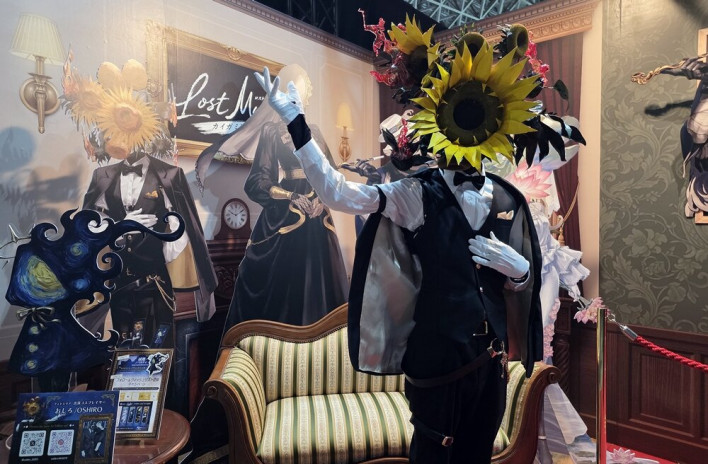
A representative original IP is Brigandine: The Legend of Runersia, a turn-based strategy RPG released globally. Another original title aimed at global audiences is Lost Museum, which is currently in development with a target release window of next summer.
 ©INVEN
We are also broadly expanding our licensed and global collaborative publishing lineup. This includes publishing Game Freak’s new action RPG Beast of Reincarnation in Japan and Asia, the sci-fi turn-based RPG STARBITES created with Korean developer IKINA GAMES, and Tokyo Stories, an adventure game combining pixel art and 3D graphics.
Furthermore, we are preparing Mononoke no Kuni for Steam and Nintendo Switch, an action-adventure game set in a world of Japanese folklore and yokai where players go on adventures with a Shiba Inu companion. We are also publishing the official Korean Nintendo Switch release of Artis Impact, which generated significant buzz by sweeping the grand prizes at BitSummit and the RPG Maker Awards.
Q. Finally, do you have any closing words for Korean gamers?
Watanabe= Happinet is preparing a diverse array of global titles not just as a distributor, but also as a publisher. Beyond our original IP Brigandine: The Legend of Runersia and Lost Museum coming next summer, we sincerely want to showcase many new titles to Korean gamers. In particular, Lost Museum has seen such strong early response that Korea ranked near the top in early Steam wishlist conversions, for which we are internally very grateful.
Itani= When bringing games to the Korean market, we always consider the cost-effectiveness of Korean localization. Thanks to the encouraging early response from Korean gamers for Lost Museum, we have set a goal to quickly build a solid fanbase and community in Korea. We ask for Korean players’ continued interest and support for the diverse lineup of games we will showcase moving forward.
 ©INVEN
 ©INVEN
 ©INVEN
 ©INVEN
 ©INVEN
 ©INVEN
[Read Original]