
Populist parties gain ground on economic worries but pro-Western coalition likely to stay in power
RIGA: Latvians vote on Saturday in an election dominated by the threat from Russia. Despite gains by populist and protest parties, voters are expected to confirm the country’s pro-European and pro-Ukrainian course. The Baltic state is a key pillar of NATO’s eastern flank, and experts say there is broad support for backing Ukraine in its war with Russia.
“The stance towards Russia is the main reason for Latvians’ Western, NATO and European anchoring,” a Western diplomat in Riga told AFP. The diplomat added that it was hard to imagine major political change.
Polls predict that the center-right United List, led by Prime Minister Andris Kulbergs, will be the largest party in parliament. But his coalition, which also includes the centrist New Unity, the nationalist National Alliance and the Union of Greens and Farmers, is expected to come out of the vote weakened.
Security is at the top of voters’ minds in a country that borders Russia and was annexed and ruled by Moscow for much of the 20th century. Roberts Kits, an analyst at the Latvian think tank LaSER, said “defense and security will be the priority”. Apart from a few dissenting voices, he said, there is broad consensus on keeping military spending at nearly 5 percent of GDP and on supporting Ukraine.
The economy is also a major concern. Latvia has the lowest living standards of the three Baltic states, despite catching up since joining the European Union in 2004. Growth is sluggish, and voters point to the cost of living, the health system and strained public finances. Regional disparities are wide: around Riga, GDP per capita reached 101 percent of the EU average in 2024, according to an EU report, but in other regions it does not exceed 50 percent.
The situation is particularly tense in the eastern region of Latgale, home to a large Russian-speaking majority and suffering from significant population decline. “The most important thing is the lack of young people, the lack of good jobs,” Aigars Soikants, 30, a resident of Daugavpils, Latvia’s second-largest city, told AFP.
Economic concerns have boosted populist parties. Sovereign Power (SV), which opposes aid to Ukraine and higher military spending, is polling at 9 percent and could come second. Critics consider the party, led by Julija Stepanenko, to be pro-Russian. It is isolated politically and, barring a major upset, has no chance of joining a governing coalition. “We are the ones who need help, not the other way around,” said Vjaceslavs Stepanenko, who heads the party’s list in Latgale and is married to its leader.
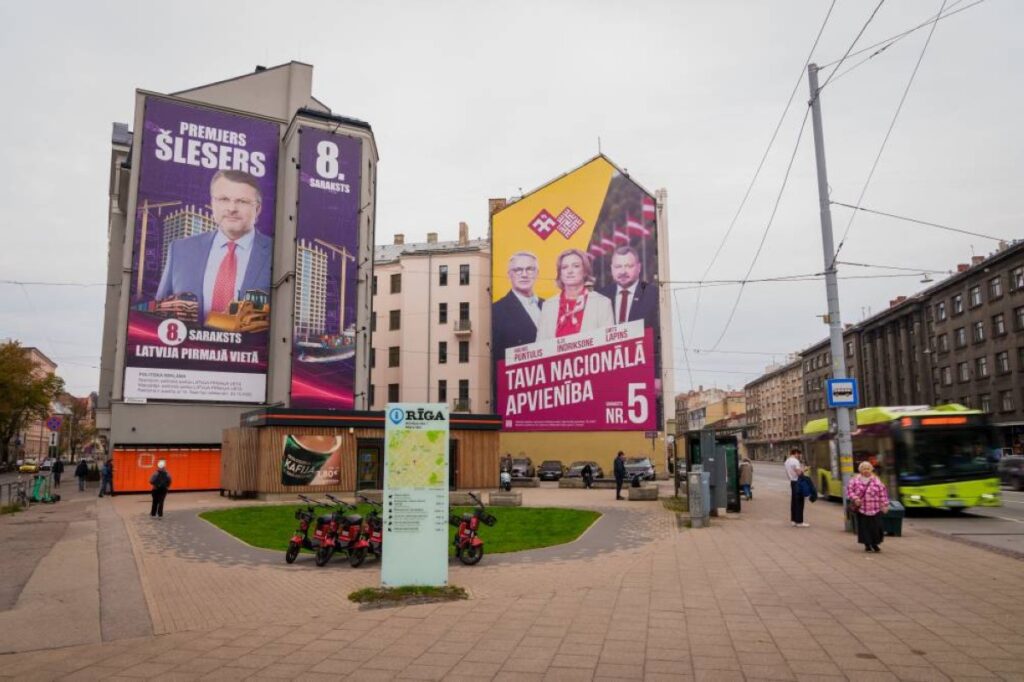
Another populist party, Latvia First (LPV), is also polling at 9 percent. Its leader, businessman Ainars Slesers, is often compared to US President Donald Trump. Unlike SV, it could become an essential partner in coalition talks. “The big question is whether the United List will cooperate with Slesers’ party,” said political analyst Sigita Struberga.
Russian speakers, who make up about 35 percent of the population, no longer vote as a single bloc. Harmony, the party that long drew their support, dropped out of parliament in 2022 and has little chance of returning. — AFP