

Karnopat, Bulgaria – Archaeological excavations at Markele Fortress near the city of Karnopat in southeastern Bulgaria have unearthed a number of important historical artifacts, including Byzantine seals and 46 coins from various periods.
The excavations, which took place during July and August, focused on sections of the fortifications located on the southeastern side of the fortress.
Researchers uncovered parts of the tower at the southeastern corner, as well as sections of the southern wall and the eastern fortification system.
Archaeological excavation discoveries
The discoveries included coins dating back to the 6th century AD, most of which are associated with the reign of the Byzantine Emperor Justinian I.
In addition, other Byzantine coins were found, likely dating to the 10th and 11th centuries.
Researchers also documented the discovery of fragments of Roman pottery within the site’s stone and brick fortifications.
This provides new insights into the history of the area and its various uses, predating the construction of the medieval castle.
The excavations also yielded decorative pieces, including two well-preserved items likely dating to the 9th and 10th centuries.
Household pottery, decorative fragments, and candlestick fragments were also unearthed.
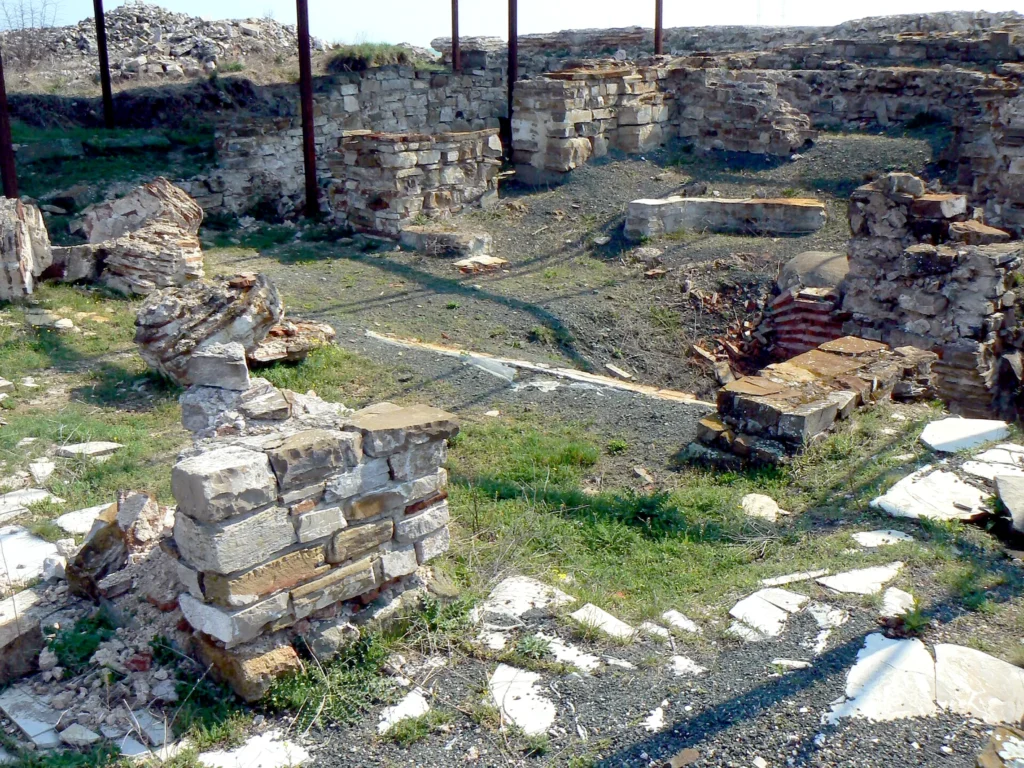 Byzantine seals and rare coins reveal the secrets of Markele Castle in Bulgaria (Photo/Archive)
The historical significance of Markelli Castle
Excavations also revealed clear signs of destruction on the inner side of the southern wall.
In contrast, searches near the southeastern tower uncovered additional sections of the fortress’s eastern defensive system.
Markel is of great historical importance due to its location and military role during periods of conflict and confrontation
between the Bulgarian state and the Byzantine Empire, particularly during the 8th and 9th centuries.
These new discoveries provide further evidence to help archaeologists trace the history of the fortress, its expansion, reconstruction, and use.
This work is part of the ongoing archaeological studies that began at the site in 1986.