
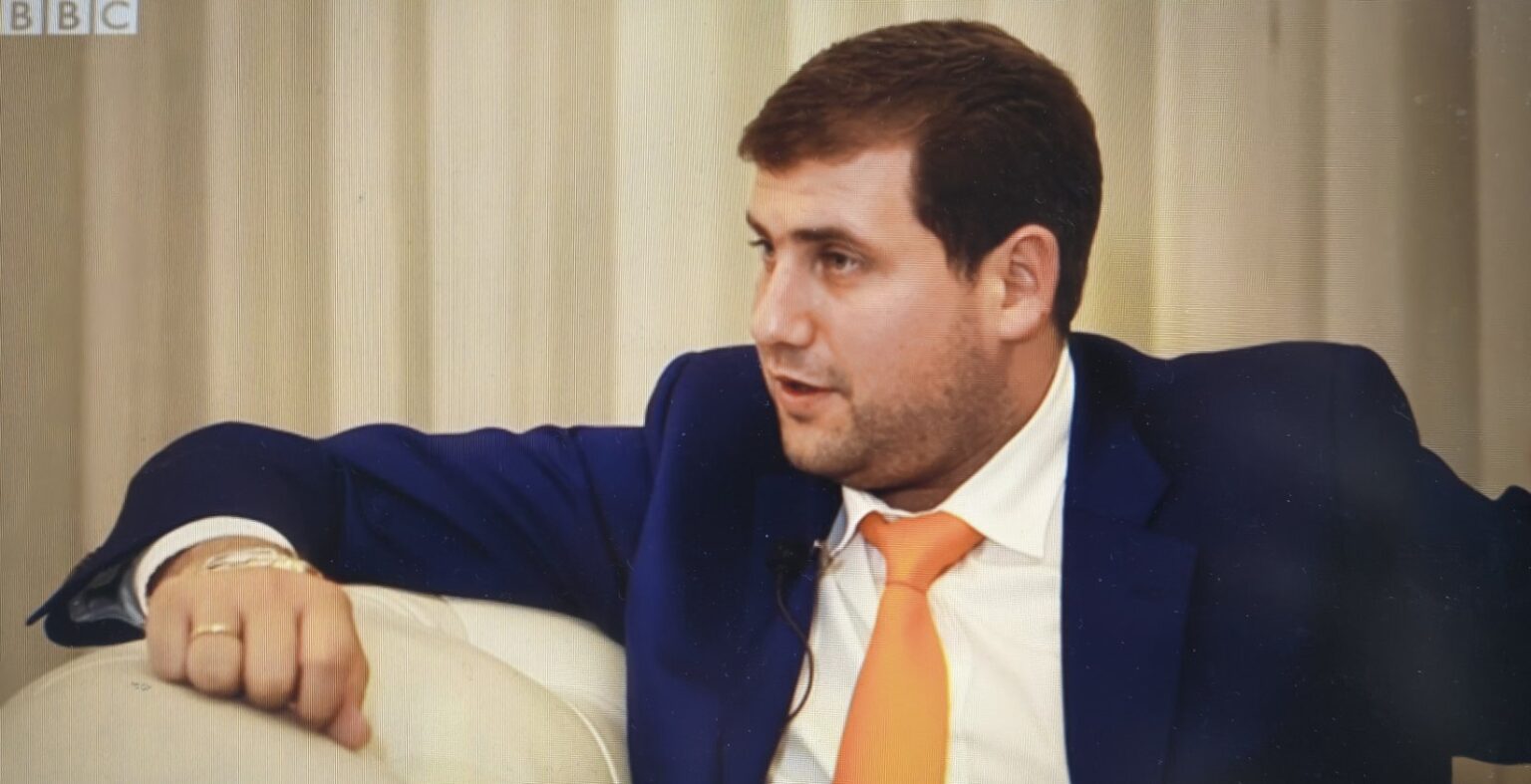
The United States has sanctioned the Russia-linked A7 financial network led by Moldovan fugitive oligarch Ilan Shor, designating it a significant transnational criminal organisation and accusing it of helping sanctioned entities move money through the international financial system. The network is accused of facilitating sanctions evasion and illicit financial transactions involving Russia, Iran and other sanctioned actors.
Israel-born Shor, who holds Moldovan, Israeli, and Russian citizenship, is linked to Moldova’s 2014 “theft of the century,” in which roughly $1 billion (about 12 percent of GDP) was siphoned through fraudulent loans. Convicted in 2017 and sentenced in absentia to 15 years in 2023, he now lives in Russia. Washington has designated A7 as a “transnational criminal organisation”, saying it was created by individuals already under U.S. sanctions to help sanctioned entities circumvent restrictions.
The Treasury said A7 built a global network of shell companies that allowed payments from sanctioned entities to be presented as ordinary commercial transactions. The network allegedly used falsified commercial documents, import-export records and descriptions of goods to disguise the nature of transactions.
The sanctions mean that A7 and the designated entities are subject to the U.S. sanctions regime. Their assets and property interests under U.S. jurisdiction are blocked, while U.S. individuals and companies are generally prohibited from conducting transactions with them.
The action came shortly after a Financial Times investigation based on a large leak of internal A7 documents detailed how the platform allegedly moved billions of dollars through an extensive network of front companies.
A financial network built around sanctions evasion
According to the U.S. Treasury, A7 was established with the purpose of facilitating sanctions evasion. Its network of subagents and shell companies allegedly became a mechanism for moving funds internationally while concealing the identity of the parties involved.
The scale described by U.S. authorities is substantial. By January 2026, A7 was processing more than 2,000 transactions a day, with a cumulative volume of more than $91.5 billion. According to the Treasury, that represented around 13% of Russia’s foreign trade transactions in 2025.
The Financial Times investigation, meanwhile, identified more than 100 A7 front companies involved in payments between late 2024, when the fintech was established, and August 2025. The documents referred to at least another 100 such companies, including entities in the United Arab Emirates, Hong Kong, Kyrgyzstan and Indonesia.
The FT reported that the network had funnelled more than $6.9 billion through the international banking system, including through lenders such as Standard Chartered and Citigroup.
U.S. authorities also allege that the network was used for Iranian oil transactions and arms procurement and provided financial support to Iran’s Islamic Revolutionary Guard Corps and allied groups, including Hamas. They further allege links between A7 and Nobitex, Iran’s largest digital asset platform, as well as transactions associated with North Korean cyberattacks on cryptocurrency platforms.
A7 has rejected those accusations, saying it has never conducted transactions for Iran or terrorist organisations.
Links to Russia’s financial system
A7 emerged as part of Russia’s effort to develop alternatives to the Western financial system after sanctions imposed following Moscow’s full-scale invasion of Ukraine.
The platform was established by Shor with support from Promsvyazbank, a Russian state-owned bank with close links to the Kremlin’s defence industry that is also under U.S. sanctions.
Shor has publicly promoted A7 as an alternative to the Western payments system. At a conference attended by Russian President Vladimir Putin in September, he said the platform was processing between 1,500 and 2,000 transactions a day and had handled about 7.5 trillion roubles, or $91.5 billion, over the preceding 10 months.
The Financial Times also reported that traders connected to Russian state-owned oil company Rosneft allegedly provided more than $2 billion to the A7 network. According to the investigation, 16 Rosneft affiliates were among foreign-exchange providers transferring revenues in UAE dirhams.
The documents examined by the FT indicated that daily foreign payments through the network could reach around $500 million. To conceal the nature of some transactions, companies allegedly used falsified documents describing goods as “fuel oil” or “grain”, while destinations or delivery points did not correspond to the actual transactions.
The companies named in the investigation have disputed the allegations. Coral Network denied involvement in A7 or money-laundering schemes, while representatives of Evraz said sanctions were restricting its operations in the UK. Rosneft, Sibur and Gazprom did not respond to requests for comment cited by the FT.
Shor and A7’s cryptocurrency
Shor, the Moldovan oligarch behind A7, is also linked to the platform’s own cryptocurrency, A7A5, which is presented as a tool for international transactions and revenue generation.
The Treasury identifies Shor as a convicted and sanctioned criminal and links him to the network of companies used to conceal transactions.
The U.S. sanctions add A7 to Washington’s financial restrictions, while the Treasury’s Financial Crimes Enforcement Network has also proposed rules that would restrict the transmission of funds involving A7’s extensive network of subagents.
The European Union and the United Kingdom had already imposed sanctions on A7 in 2025, while the United States had previously sanctioned selected entities within its network over sanctions-evasion activities.
Treasury Secretary Scott Bessent said the latest measures were aimed at dismantling financial infrastructure that allows Iran and other U.S. adversaries to evade sanctions, move illicit funds and undermine the international financial system.
Moldovan oligarch Vladimir Plahotniuc detained in Greece, faces extradition
Sources: This article draws on reporting by EUalive’s partner Espress.ro
Caption: Still image of Ilan Shor from his BBC interview
Updated: October 5, 2026 – 18:07