
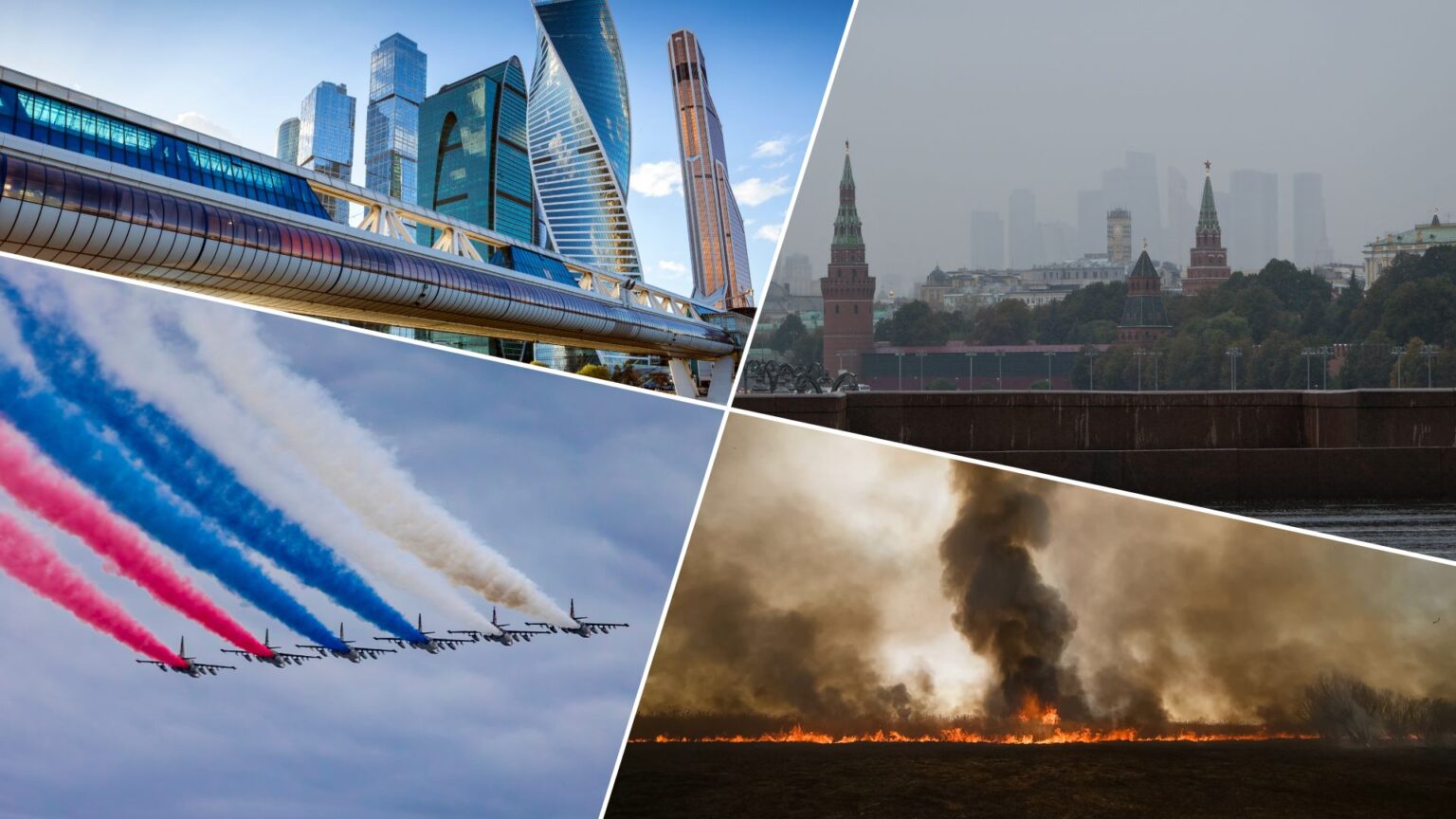
The Ministry of Defence, the Ministry of the Interior and the Ministry for Foreign Affairs have published the results of the joint Russia’s Futures foresight project. A collaboration involving a wide range of experts, the project set out to strengthen Finland’s ability to anticipate possible developments in Russia and assess their implications for Finland, Europe and the international system through to 2045.
The project results are presented in two publications: Russia’s Futures and a separate appendix that describes the key drivers of change affecting Russia’s development. Anyone interested can use and further develop the results.
The project prepared four alternative scenarios for Russia’s development by 2045: Renewing Russia, Fading Russia, Imperialist Russia and Chaotic Russia. Besides the scenarios, the ministries also publish related impact assessments and a set of measures considered important regardless of which scenario, or combination of scenarios, emerges.
Since Russia launched its war of aggression against Ukraine, the operating environment has become significantly more uncertain. The project identified 22 drivers of change affecting Russia’s development and 14 key uncertainties and used them as the basis for the scenarios.
The appendix to Russia’s Futures is a collection of the key drivers of change affecting Russia’s development, covering the perspectives of foreign policy, society, the economy, technology, the environment and military developments. Key areas of analysis include the persistence of great-power thinking, demographic challenges, economic and technological dependencies, the effects of climate change and the growing militarisation of security policy. Russia’s trajectory is not examined in isolation, but as part of a wider international context shaped by changes in the global operating environment and the actions of other states and actors.
Four alternative scenarios for Russia in 2045
Based on the identified drivers of change and uncertainties, the scenarios outline alternative but plausible futures for Russia up to 2045:
- Renewing Russia: a pragmatic regional power that seeks broader influence through a combination of competition, cooperation and incentives;
- Fading Russia: a weakening regional power that remains outwardly defiant but loses some of its influence and becomes increasingly dependent on China;
- Imperialist Russia: an authoritarian and expansionist regional great power that relies on power politics and succeeds in achieving its key foreign policy objectives;
- Chaotic Russia: a nuclear-weapon state, engulfed in a deep internal crisis, that persists with its risk-taking and its violent and militaristic policies despite the deterioration of its capacities.
Preparing for multiple possible futures for Russia
“The project’s key conclusion is that Finland and Europe must prepare simultaneously for several possible futures for Russia. Russia’s development, as well as the broader operating environment, is shaped by the combined effects of multiple concurrent changes, crises and uncertainties. Preparedness must therefore be based on the examination of alternative scenarios rather than on any single assumption about Russia’s future direction,” says Ministerial Adviser Terhi Ylitalo, coordinator of the foresight project.
The project was carried out as a foresight exercise, applying the foresight methods used in the preparation of the Government Report on the Future. The purpose of foresight is not to predict the future or assess the likelihood of individual scenarios. Instead, it seeks to identify alternative futures, risks, opportunities and preparedness needs, as well as ways of influencing developments.
The project also identified several measures that are relevant regardless of the scenarios and Russia’s actual development. These include strengthening anticipatory preparedness, Russia expertise and strategic foresight; containing Russia’s aggression and supporting Ukraine; enhancing security and resilience; safeguarding freedom of decision-making and economic and technological resilience; managing climate and environmental risks; strengthening the European Union’s capacity to act; and supporting the rules-based international order.
Part of a long line of Russia projects
The Russia’s Futures project is the latest addition to a series of projects focusing on Russia, the previous ones being Russia of Challenges (2007–2008), Russia of Changes (2011–2012) and Russia of Power (2018–2019).
The Ministry of Defence was responsible for the overall coordination of the project, and dozens of experts, researchers and public officials took part in its different phases. Their work was supported by a group of experts from the Ministry of Defence, the Ministry of the Interior and the Ministry for Foreign Affairs.
The purpose of the project is to support the foresight efforts of authorities, research institutes and other actors and to stimulate discussion on Russia’s possible futures and their implications for Finland. The project results can be used in foresight activities, security environment analyses, strategic planning, policy preparation, national preparedness development and international cooperation.
Publications
The final report of the foresight project Russia’s Futures and its appendix Key Drives of Change Affecting Russia’s Developments are available in Finnish in the Institutional Repository for the Government (Valto). Translations into English will be published later.
Appendix to Russia’s Futures: Key Drivers of Change Affecting Russia’s Development (in Finnish)
Inquiries:
Terhi Ylitalo, Project Coordinator, Ministry of Defence, terhi.ylitalo(at)gov.fi, tel. +358 295 140 143.