
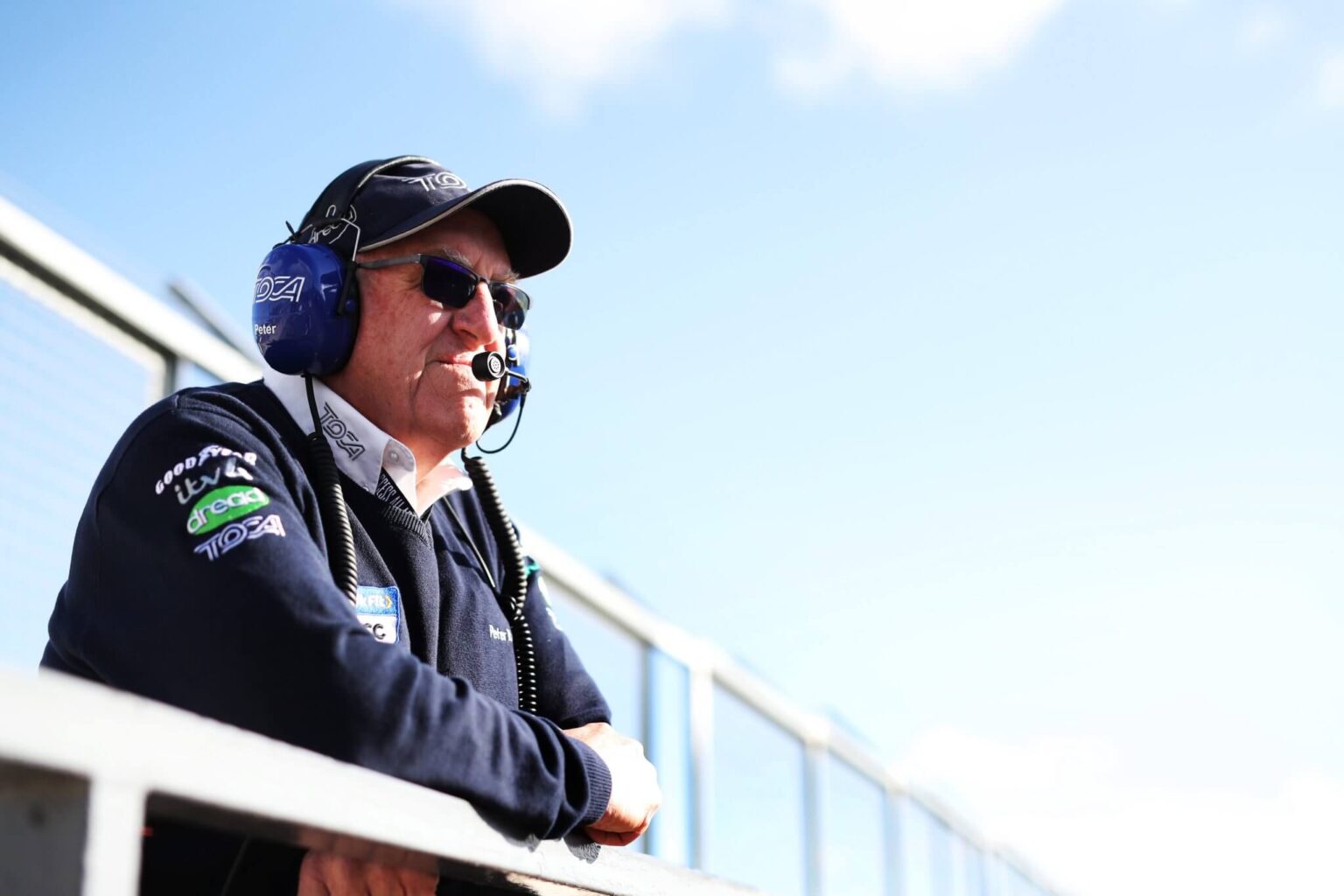
Former F1 Chief Scrutineer and BTCC Technical Director Peter Riches explains what skills you need to become a scrutineer. Do you have what it takes?
Peter Riches has spent 40 years at the top of the game in UK scrutineering, 30 of which were in a full-time role. There is very little he has not experienced – and while both the sport and the role are very different to when he started, the fundamentals remain the same.
Attention to detail
Spotting technical issues, rule breaches or safety concerns that may be easy to overlook.
“One of the biggest things scrutineers have to remember is that pre-event scrutineering is only a cursory look – because the teams get the cars back! After that, they may have totally rebuilt it and those changes could then make the car or safety equipment non-compliant. You have to have a good eye to spot things that are different – with ride heights and wing angles, for example, if you’re used to what they should look like, if they’re different they stand out, and with roll-hoop heights, they are supposed to be a certain distance above the driver’s head but they’re very good at slinking down in the seat when they’re checked!”
Strong technical knowledge
Understanding vehicle construction, regulations and safety requirements.
“The job has become more complex these days because of the complexity of motorsport itself – you’re still checking that the brakes work, the steering’s connected and all the other safety elements, but the PPE required has many detailed homologations and many series now have common parts on the cars, so these days a lot of time is spent checking the parts are as they left the manufacturer. It helps to have knowledge and understanding in that area, even though in a lot of cases there are people from the manufacturer to help you.”
Capability with technology
Ability to adapt to new tools that are introduced into the sport.
New technologies are always being introduced and changing the cars, or changing the way scrutineers work. When data systems and electronics came in, they changed the game completely because very few people have that expertise. Most one-make series now have experts to help but the scrutineers can learn to use check programmes, plugging in a laptop to analyse the CPU, to check whether it’s rule-abiding or not. If it doesn’t pass the test, you then need to go to the expert to check why it didn’t pass before you take any action.”
Impartiality and integrity
Applying the regulations consistently and fairly to every competitor.
“There have been instances where, unfortunately, some scrutineers have not been respected because of the way they operate. That’s where friction can arise – and the last thing you want is friction. You have to remember that the competitor is a customer.
If you treat them right, they’ll generally treat you right. The first rule is always don’t examine the car on your own – always try to make sure an engineer or mechanic is present. We’ve had many challenging discussions over the years in Touring Cars and you have to decide if you are definitely right so, if possible, try to get at least one or two more opinions from other scrutineers before you make a decision.”
Good communication skills
Clearly explaining findings and requirements to drivers, teams and officials.
“You need to be positive when speaking to people – we’re working with you, not against you – and try to avoid any confrontational approach. You also need to know when to back off, even if you think you’re right. If there is an issue, you will also need to write a report – so you have to be good at communicating on paper as well as in person. That means dealing only in facts, not fiction – you can only write ‘it’s black, it should be white’ not ‘I think this is not right because of this and that…’ It’s also important to remind everybody that the term ‘performance advantage’ doesn’t exist in the regulations – so you can get penalised for a rule irregularity, even if it makes you slower!
Confidence, decisiveness and professionalism
Making sound decisions under pressure, particularly when safety or compliance is involved.
“A lot of this comes from your work-life background. If you can’t make a decision, you’re the wrong person for the job because it’s very difficult to train that into anybody. Typically, people with more mechanical knowledge and a more professional work-life balance end up becoming eligibility scrutineers as that has greater complexity, whereas with safety, it’s an easier role to get involved with because it’s more about reading the rules and checking everything is right. At the end of the day, you’ve always got a Chief to go to, and even in smaller Clubsport events, there’s always somebody to discuss things with.”
Putting in the hours
Committing to time at the track – and recognising the huge opportunities that come with it.
“It’s long hours – you have to be at the circuit at 7am and end at 7am – and I think that can put people off, but you’re not stuck in a scrutineering bay all day long; there is plenty of time when you can go out and watch the racing, get a burger, do all the things spectators to – but then you can also get up close and be in the pitlane if you want. Eligibility scrutineers often only look after a couple of championships, so when they’re done, they’re free to go home or watch the rest of the racing, but they have to want to travel all around the UK following their championship. If you’re a safety scrutineer, you can do your whole career at one venue.”
Looking to start your own scrutineering journey, find out more here.