
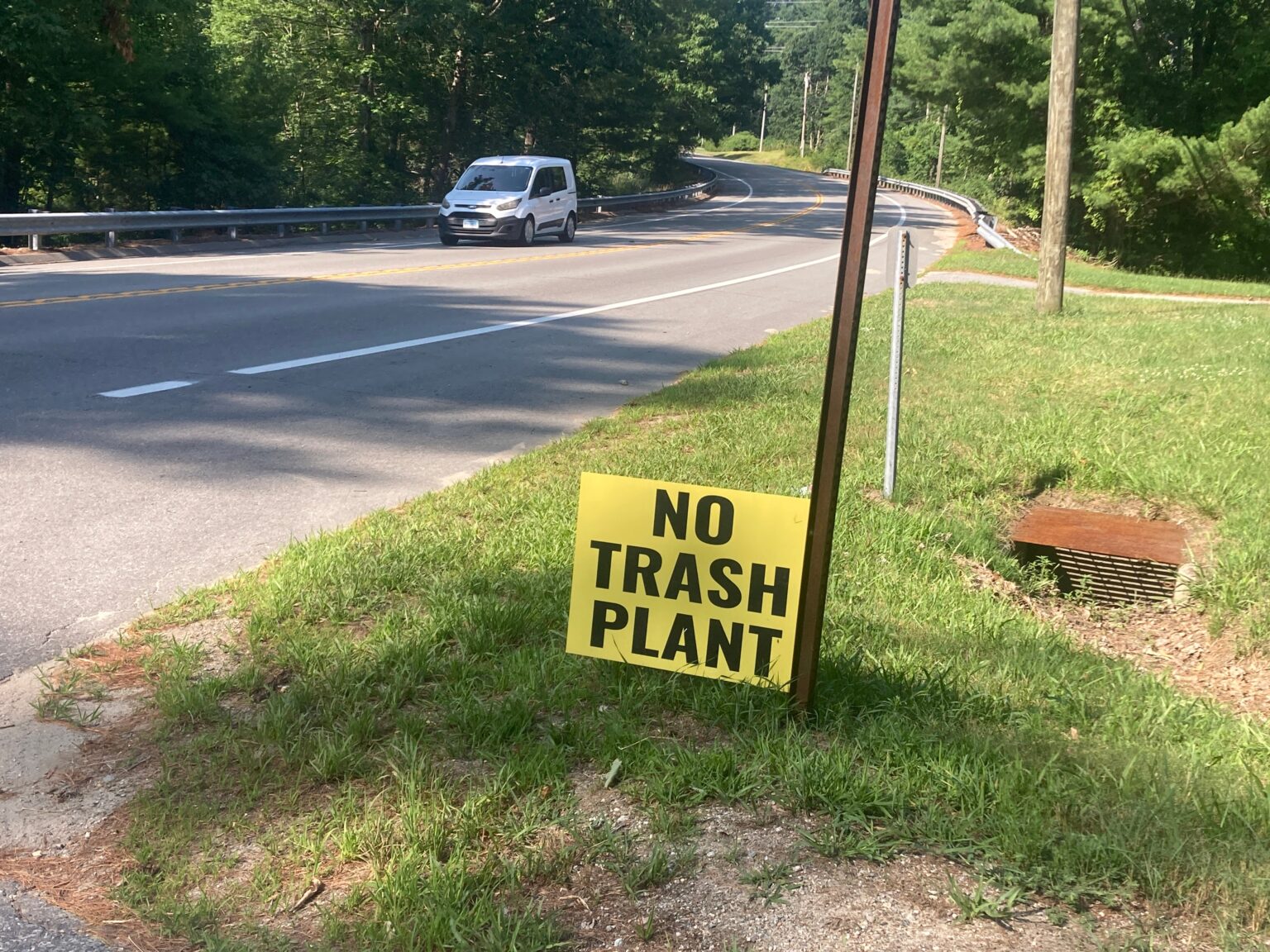
Incinerators are not the answer to Connecticut’s waste crisis.
A case in point is the gasification incinerator proposed, and now delayed, by SMART Technologies, LLC in the town of Plainfield.
The new incinerator would use gasification technology that has failed in comparable facilities in the UK and Germany, potentially at the taxpayer’s expense, it would emit substantial quantities of harmful pollutants in a predominantly low-income community, and it fails to address the root cause of the waste crisis.
The incinerator’s proposal was recently being considered by the Siting Council. Apparently in response to the large volume of public comments opposing the incinerator, SMART Technologies withdrew their application on October 8. The company, however, has signaled their intent to amend their application and resubmit.
The solution? The state must instead invest in durable and sustainable solutions that diminish the overall quantity that households create or that recycle household trash.
First, we must face the reality that Connecticut is dealing with a waste management crisis. In very broad terms, Connecticut’s solid waste crisis stems from the fact that the state generates more household trash (municipal solid waste or MSW) than it can currently dispose of within its borders. There are no longer any active landfills within Connecticut receiving MSW, and the problem became significantly worse when the Hartford MIRA waste-to-energy facility, which processed approximately 15% of Connecticut’s MSW, closed in 2022.
According to the latest available figures, in 2024, the state produced just under 2.3 million tons of MSW: 41% of that was shipped to landfills out of state.
Municipal tipping fees and property taxes are skyrocketing. Comprehensive figures are not available, but, for example, Hamden’s tipping fee budget increased from $1.1 million in 2019 to $2.15 million in 2022, a nearly 100% rise in just three years . These costs will climb much higher as other states follow Connecticut’s suit and close their landfills.
Historically, the pollution associated with Connecticut’s waste management has been borne by low-income neighborhoods. All 102 of the state’s major solid waste facilities are in or near low-income neighborhoods and municipalities with financial difficulties. Incineration, with its localized air quality impacts, has been a particularly polluting and inequitable solution.
Connecticut’s waste management system has also failed to protect the state’s waterways and Long Island Sound. Countless pieces of trash can be found in the state’s streams and rivers, and in the Sound. Items containing toxic substances, such as phthalates, PCBs, and PFAS, harm aquatic life and pollute our environment.
The Plainfield Case
Now back to Plainfield. SMART Technology’s proposed gasification plant, which was proposed to replace the shuttered MIRA incinerator, is not a suitable solution.
It is unclear whether the plant will be cost effective. Gasification is a specialized, highly complex type of incineration. It requires complex technology and careful monitoring. This will be expensive.
Taxpayers may have to foot the bill for failure. Bill Corvo, managing partner at SMART Technologies, pitched the Plainfield incinerator proposal to the Connecticut General Assembly in 2025 and told legislators, “you have to spend . . . serious . . . millions and millions of dollars” to develop the incinerator, estimating the facility would cost $600-700 million. Corvo said that the state should borrow funds. The state has already authorized itself to spend some of this money. Back in 2023, the Connecticut General Assembly authorized the state Green Bank to issue $500 million in bonds for a new trash-to-energy plant, without attaching any conditions for repayment.
The proposed incinerator would follow old, unfair patterns for citing waste facilities. Plainfield is designated as an “environmental justice community” by CTDEEP. The town is already home to several new large distribution warehouses, a biomass incinerator, and a superfund site—as the pace of development has rapidly increased in Eastern Connecticut in recent years.
The facility would emit substantial quantities of pollution that will harm public health and environmental quality. According to SMART Technology, the Greenhouse gas emissions from the facility will exceed 490,000 tons, representing a 1.3 – 1.4% increase in the state’s total greenhouse gas emissions—a huge contribution from just one facility. It will also emit substantial quantities of nitrogen oxides, sulfur oxides, carbon monoxide, volatile organic chemicals, and particulate matter. The facility would also emit small amounts of highly toxic and persistent chemicals, including cadmium, mercury, dioxins, and furans. These pollutants carry health risks, increasing the risk of cardiovascular disease, respiratory disease, and human mortality.
Gasification is risky and has a bad track record. Incineration by gasification was rejected in Germany, after a flagship gasification plant, in Karlsruhe, was shut down in 2004 after years of technical failures. In 2013, a fire closed down a gasification plant in Dumfries, Scotland. In 2017, a gasification plant on the Isle of Wight, England, was closed for failure to comply with its pollution limits. Also in 2017, an explosion at a gasification plant in Oldbury, England, killed a plant worker. To function properly, the facility will need to consistently follow rigorous standards—which have failed before, in the UK and Germany. As far as the author is aware, incinerator gasification for the disposal of household waste, or MSW, has not been proven on a commercial scale in the US.
If the plant fails, Connecticut will have spent hundreds of millions of dollars on a boondoggle, without addressing the roots of waste crisis, with communities and taxpayers taking on the brunt of the impact. The only durable solutions to the waste crisis are through meaningful investments in diversion, recycling, and producer responsibility programs, and through consumer education.
Connecticut households and businesses are eager to be a part of the solution. Thanks to modest investments in food scrap diversion programs, for example, the state went from diverting less than 10,000 tons of food scraps in 2021 to more than 50,000 tons in 2024. Though this represents a small fraction of Connecticut’s household trash, it shows that such programs have potential to scale quickly.
The bottle bill, meanwhile, is a prime example of a producer responsibility program that works. States with bottle deposit programs reduce roadside and park litter by 70%.
The state can make huge strides by targeting low-hanging fruit first. More than 40% of the state’s MSW is composed of paper products and food scraps, both of which can be easily repurposed, recycled, composted, or processed by anaerobic digesters into methane biogas.
The state’s decision makers need to search for and adopt these solutions at scale, and citizens can make a difference by contacting their legislators to make their views heard.
Gabriel Slaughter is Save the Sound’s Peter B. Cooper Legal Fellow