

From Philly and the Pa. suburbs to South Jersey and Delaware, what would you like WHYY News to cover? Let us know!
Dottie Sloan’s front yard in the West Mt. Airy neighborhood of Philadelphia is a colorful landscape of flower beds and plants. She spends a lot of time out here maintaining her yard.
“I got some mums from the Acme. They were only nine bucks,” she said, looking down at the mounds of white and red flowers she recently planted.
Gardening and lawn care aren’t just hobbies. They’re part of Sloan’s daily exercise and fitness goals, which also include a lot of walking and aerobics classes at the nearby Salvation Army Kroc Center of Philadelphia.
The retired public high school math teacher says she has always been physically active and eaten generally well, but she was still diagnosed with prediabetes about 10 years ago.
“I realized that I have to do something different, something better,” she said.
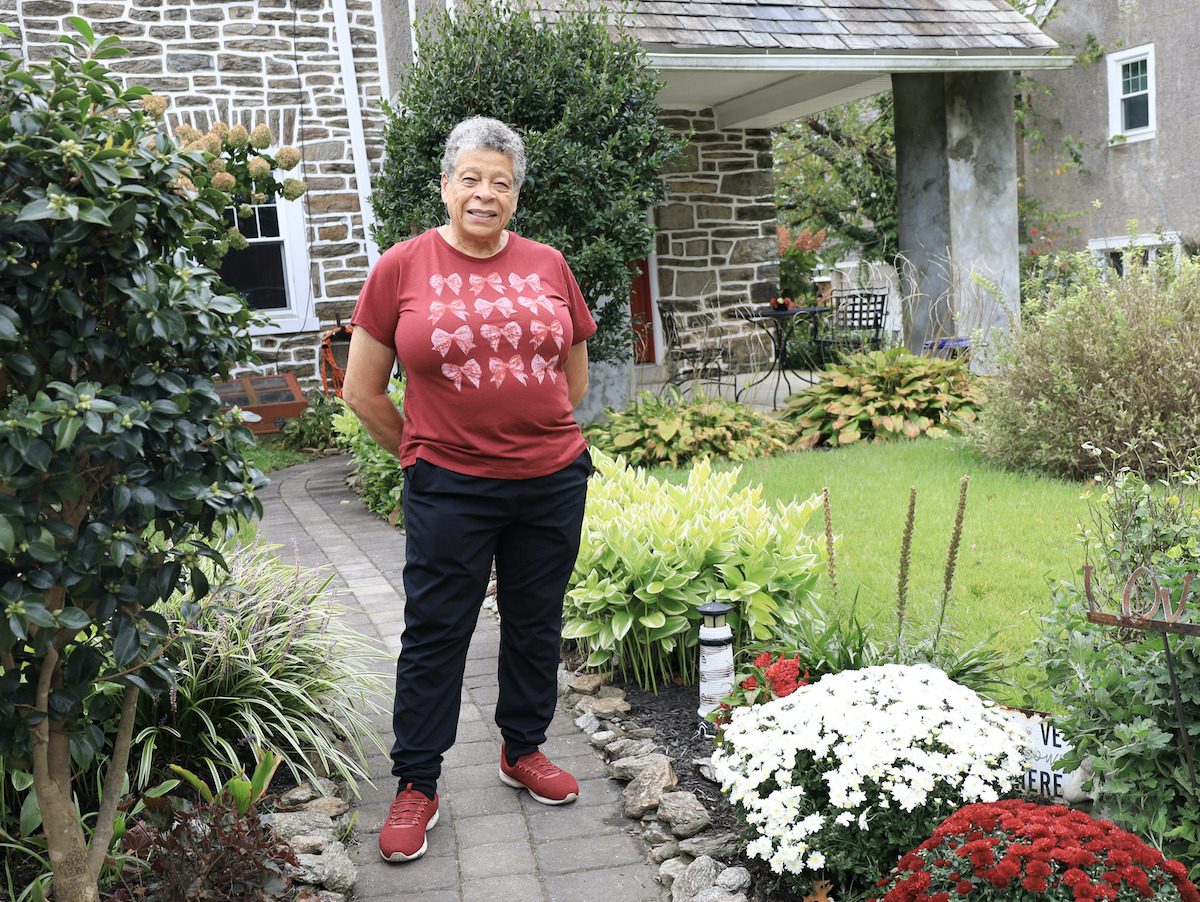 Dorothy “Dottie” Sloan, 80, stays active with planting and gardening at her home in West Mt. Airy. (Nicole Leonard/WHYY)
Sloan, who is 80, tried to make changes on her own, but in 2024, she and a friend discovered the National Diabetes Prevention Program.
It’s a yearlong curriculum of classes, presentations and workshops that was designed by the Centers for Disease Control and Prevention. It’s based on studies showing that a structured group-style education and lifestyle program for prediabetics was effective in preventing or delaying the onset of Type 2 diabetes.
In clinical trials, people who went through the program reduced their risk of developing Type 2 diabetes by about 58% when compared to others who received a placebo treatment medication, CDC data shows.
The national curriculum is offered and delivered by local public health organizations and partnering community centers to adults of all ages, who meet in person or virtually several times a month to learn how to manage nutrition, exercise, sleep, stress and other factors that play a role in blood sugar levels and overall health.
Sloan said she was immediately sold on the idea.
“Diabetes is a very serious condition,” she said. “You definitely have to take ownership of it and see what you can do to prevent it if you can.”
The program was created more than 15 years ago, but participants, life coaches and public health experts say it’s just as effective today as it was when it first launched.
Follow-up research shows that program alumni were still one-third less likely to develop Type 2 diabetes a decade later than those in placebo groups. Participants who still ended up developing the chronic disease were able to delay onset by an average of four years.
Public health providers in the Greater Philadelphia region have been working to expand access to the program locally while figuring out new ways to sustain and pay for them if and when federal grant funding runs out.