

Prof. Amnon Shashua, founder and CEO of AI startup doubleAI and founder of Mobileye, said the company will announce a product next week, offering an early look at its effort to address one of the central challenges in artificial intelligence. AI systems can produce results that appear convincing while failing to meet the requirements they are supposed to satisfy.
“We published papers on the subject and decided to focus on code optimization. It is a challenging task, yet there is significant market demand for a solution, as it offers substantial cost savings. We began with several milestones, and next week we will announce a product,” Shashua said at the Journey conference hosted by consulting firm EY.
Shashua said doubleAI had rewritten an Nvidia library and was also exploring quantum computing. The company has moved into hardware design, he added, and recently published a paper written entirely by AI, with the AI agent credited as the sole author.
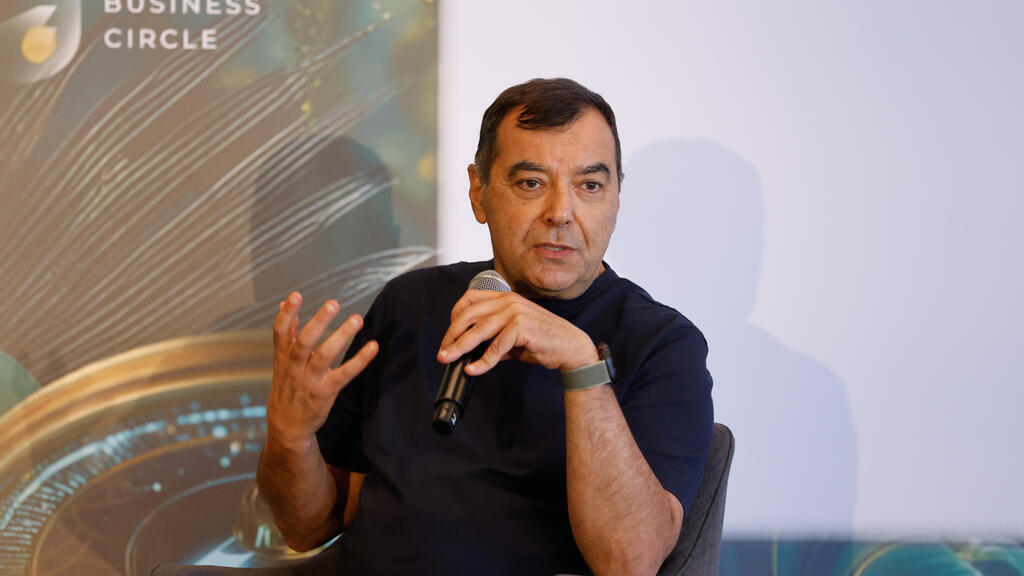
The product announcement follows doubleAI’s work on what Shashua describes as the two key components of “deep reasoning.” These are information retrieval and verification. Retrieval, he explained, is the more intuitive task, while verification requires a system to establish whether a result is actually correct.
“We wanted to develop the two key components of ‘deep reasoning,’ which is essentially intellect,” Shashua said in a conversation with Yair Snir, head of Dell Technologies Capital in Israel. “Retrieval is the intuitive part, whereas verification is the non-intuitive part.”
He pointed to software development as an example of the distinction. A programmer can check whether a piece of code performs as required, but AI systems are generally designed to improve specific metrics without necessarily determining whether the outcome is correct.
“Artificial intelligence works differently. It knows how to improve a specific metric, but it doesn’t know whether the result is correct or incorrect. Debugging something that ‘cheats’ like a machine is extremely difficult,” he said.
The challenge extends beyond code. Shashua said recent advances in AI-assisted mathematics had demonstrated progress in solving complex problems, but that verifying the solutions remained a major obstacle.
2 View gallery

Robotics Panel at the Journey Conference (from right): Yael Fainaro, Jonathan Jacobi, Alon Lifshitz, Dr. Yossi Nathan, Susanne Senoff
(Nimrod Glickman)
“The profound shift we have witnessed over the past month lies in the resolution of deeply complex mathematical problems that were previously unsolvable. The public sees only the solution, unaware of the many attempts that preceded it. Consequently, verification remains a major open challenge. Once that is resolved, it will be possible to solve extremely deep problems,” he said.
Alongside his discussion of doubleAI, Shashua warned that Israel’s traditional advantage in technology, its concentration of talent, may not be enough to sustain its position in the AI era.
“Israel has always excelled in fields that didn’t require massive infrastructure investment. Until now, all you needed was your brain. AI, however, demands significant investment, and that is where Israel is still struggling to build the necessary infrastructure,” he said.
Shashua argued that Israel’s talent pool remains exceptional compared with other countries, but that developing advanced AI requires a different level of capital investment. In the U.S., he noted, talent is distributed across a much larger geographic area, while Israel benefits from a concentrated pool of skilled people.
“I don’t yet see a solution taking shape in this area. That is why we see many Israelis currently incorporating their companies in the U.S. Israel needs to consider how to invest capital wisely to address these critical needs,” he said.
Snir, whose investment fund was among the early investors in doubleAI, said the launch of DeepSeek in late 2024 had made him question why a comparable development had not come from Israel.
“We have invested in many AI companies, but, until we invested in you, never in model-based companies. The reason is that in late 2024, DeepSeek, the Chinese AI model, was released, and it frustrated me. That was something that should have come out of Israel. It is simpler and cheaper, exactly the kind of thing we excel at. Then I met you and realized this was a dream team doing things differently. Israel needs to have its own sovereign AI,” Snir said.
Shashua sees humanoid robots as the next major challenge
The discussion also turned to physical AI, which integrates artificial intelligence into systems operating in the physical world. Shashua divided the field into autonomous vehicles and humanoid robots, arguing that the former had largely overcome its central technological and cost challenges while the latter still faced a fundamental hurdle.
“The major challenge with autonomous vehicles, cost, has been resolved, and the technology is already operational. The problem is effectively solved,” he said.
Humanoid robots, by contrast, still need to learn how to generalize from one task to another and repeat tasks independently without having to be taught each time. Shashua said he expected that challenge to be resolved within a few years, with potentially far-reaching consequences for society.
He also highlighted the regulatory questions that would arise as robots become more common, particularly when they operate around people.
“What happens if a 70-kilogram robot falls on a child? What do you do then? Yet it will be amazing, even with the regulatory complexities we’ll need to resolve,” he said.
A panel following the conversation examined the future of robotics and the role Israeli high-tech companies could play in the field. It featured Lior Ben Horin, head of robotics at NVIDIA Israel; Susanne Senoff, CISO at Conga; Jonathan Jacobi, founder and CEO of Enigma; and Dr. Yossi Nathan, founder, president and chief medical officer of Foresight Robotics. The discussion was moderated by Yael Fainaro, president and chief business officer of RGo Robotics.
“Humanity seeks to automate everything, and nearly 90% of tasks have already undergone this process. Today, NVIDIA is focused on closing this gap to further improve humanity’s quality of life,” Ben Horin said.
Senoff argued that robotics introduces safety concerns that go beyond conventional cybersecurity and data protection.
“We usually think about how to secure data, but in robotics, the question is how to deal with a ‘psychopath.’ Robots perform many actions, yet they lack the human value system, and that presents a challenge,” she said.
Nathan said safety was fundamental to medical robotics, where systems must operate within strict boundaries. “We implement safety constraints, both physical and non-physical. It takes many layers to ensure the robot stays within its boundaries,” he said.
Ben Horin added that simulation plays an important role in training robots. “NVIDIA sees value in simulating the real world and in training. If it doesn’t work in simulation, the robot won’t work in the real world either,” he said.
Jacobi said robotics had yet to experience a breakthrough comparable to the launch of ChatGPT.
“The ‘ChatGPT moment’ for robotics hasn’t happened yet, despite frequent claims to the contrary. Models in this field still need to learn how to perform inference and generalize more broadly and accurately,” he said. Robots can struggle when real-world conditions differ from those in a laboratory, he added.
The panel also addressed the cost of building robotics companies and moving from pilot projects to mass production. Nathan said Foresight Robotics had attracted investors prepared to support a long development cycle.
“They understand that it will take at least eight years to reach the market, but once we do, revenues will reach the multibillion-dollar range within five years,” Nathan said. “We raised $100 million, yet that is not a large amount by global standards.”
Jacobi likewise emphasized the capital-intensive nature of the sector. “We raised $71 million in our seed round, which is necessary because this is a capital-intensive field. Investors understand the potential when it succeeds. They’ve seen it in other models, and in physical AI, the scale is even greater,” he said.
Toward the end of the discussion, Ben Horin said interest in robotics had accelerated over the previous year and a half. But he also pointed to a structural challenge for Israel, namely the lack of large-scale manufacturing facilities.
“Unlike Europe, we don’t have large-scale manufacturing facilities here. The shift currently underway requires time, money and even physical equipment. These are friction points that exist today, but it’s only a matter of time before we resolve them, and we also have the tailwind of government initiatives,” he said.
Fainaro concluded the panel by expressing hope that technologies developed in Israel’s defense sector would increasingly be adapted for civilian applications.