
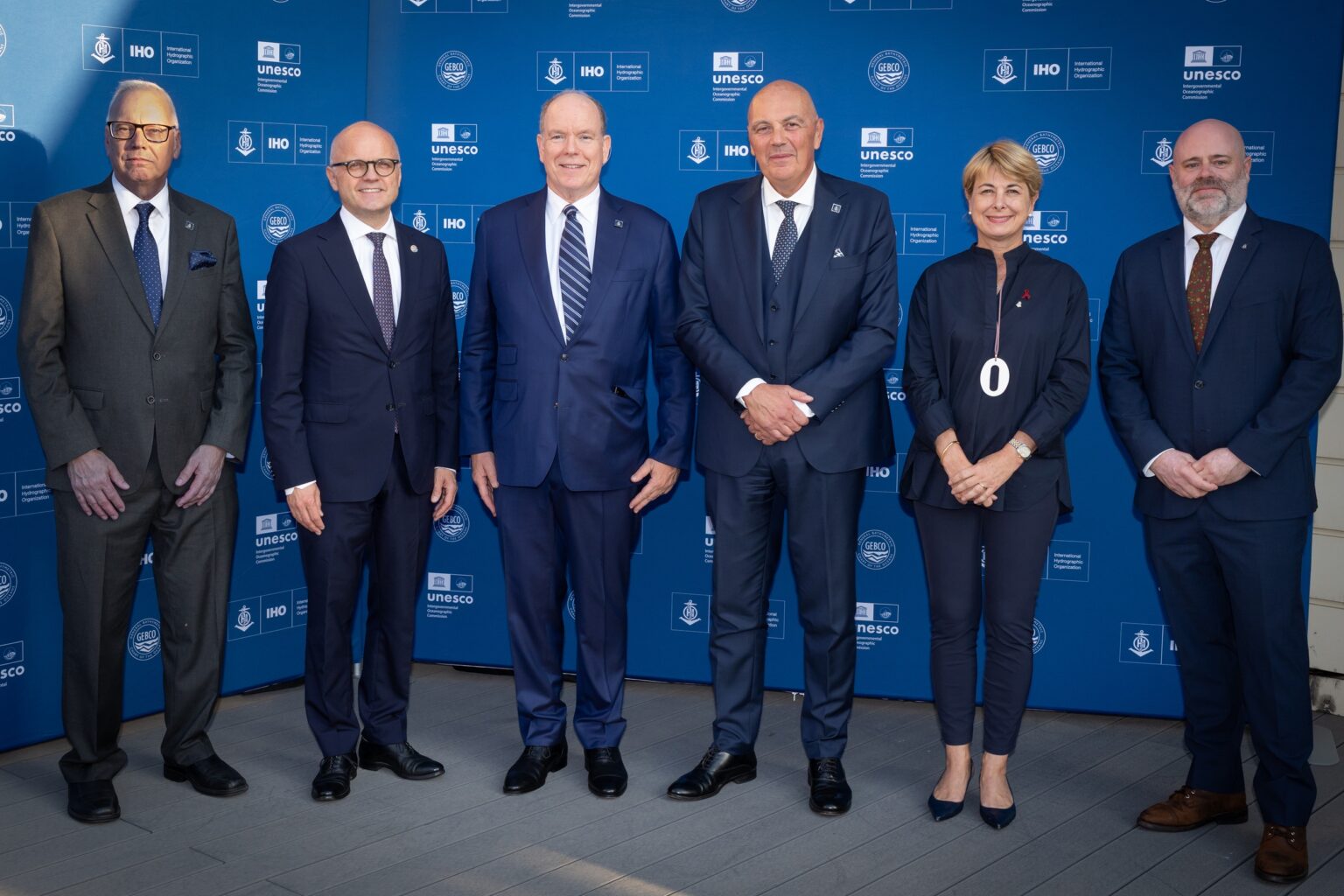
The global effort to map the entire ocean floor now has a permanent home. The General Bathymetric Chart of the Oceans (GEBCO) opened its new Secretariat on 13 October 2026, at an inauguration led by H.S.H. Prince Albert II of Monaco alongside members of the IHO Council. The office gives the programme a central body to coordinate seabed-mapping initiatives worldwide, a step backers say will speed up progress.
Housed within the IHO’s offices in Monaco, the Secretariat gives GEBCO a dedicated team to manage its growing portfolio of activities and pursue its long-term strategic goals. Guests at the inauguration included Isabelle Berro-Amadeï, Monaco’s Government Counsellor and Minister, and Vidar Helgesen, Executive Secretary of UNESCO’s Intergovernmental Oceanographic Commission (IOC).
For IHO Secretary-General Rear Admiral Luigi Sinapi, the timing of the inauguration carries particular weight. “For the first time in history, we have the technology necessary to achieve the goal of a fully known ocean. The creation of the GEBCO Secretariat will give us the means and the people to achieve this ambition.”
Almost everything humans do at sea depends on knowing how deep the water is. Depth data guides scientific research, shapes marine spatial planning, powers tsunami early-warning systems and informs how ocean resources are managed and exploited. The OECD made the economic case plainly in a recent policy brief on mapping the ocean depths, calling seabed mapping a cornerstone of the future ocean economy.
The gap, however, remains striking: more than 70% of the ocean floor has yet to be mapped to modern standards. Closing it is precisely the job the new Secretariat has been set up to drive.
“The ocean is a symbol of eternity, yet it remains a constant source of novelty.” Highlighted Vidar Helgesen, Executive secretary of IOC UNESCO. “New findings continue to emerge, while the ocean itself is always changing and regenerating. The new GEBCO Secretariat represents a new phase in ocean exploration, one marked by greater ambition, stronger institutional collaboration, and deeper connection with the global ocean community. This will enable us to better understand and monitor these ongoing changes.”
At the top of the Secretariat’s agenda is expanding global mapping initiatives and advancing GEBCO’s mission to “bring knowledge about our planet’s seabed to everyone”. Beyond that, it will work to shape a global policy environment that makes seabed mapping and ocean data sharing easier, and to build the funding partnerships needed to finance mapping efforts.
GEBCO is more than a century in the making. Its story begins with Prince Albert I of Monaco, a celebrated navigator and scientist who recognized how little was known about the ocean in much of the world. On his initiative, the first GEBCO charts appeared in 1903, built largely on data gathered during his own oceanographic expeditions.
As survey technology improved and international cooperation deepened over the decades that followed, GEBCO grew into a global seabed-mapping programme, today run jointly by the IHO and IOC-UNESCO.
With this new coordinating office, Rear-Admiral Sinapi expressed his “ambition that this Secretariat becomes a beacon of international cooperation, scientific excellence and shared ambition; that Monaco continues to be the place where the world’s commitment to ocean knowledge finds both its inspiration and its direction.” The IHO Secretary General emphasized that “the future of our oceans is inseparable from the future of humanity”.
The Government of Monaco will fund the Secretariat for its first three years. At the helm will be Sam Harper, Assistant Director at the IHO, who takes on the role of Head of the GEBCO Secretariat as he steps into the new position.
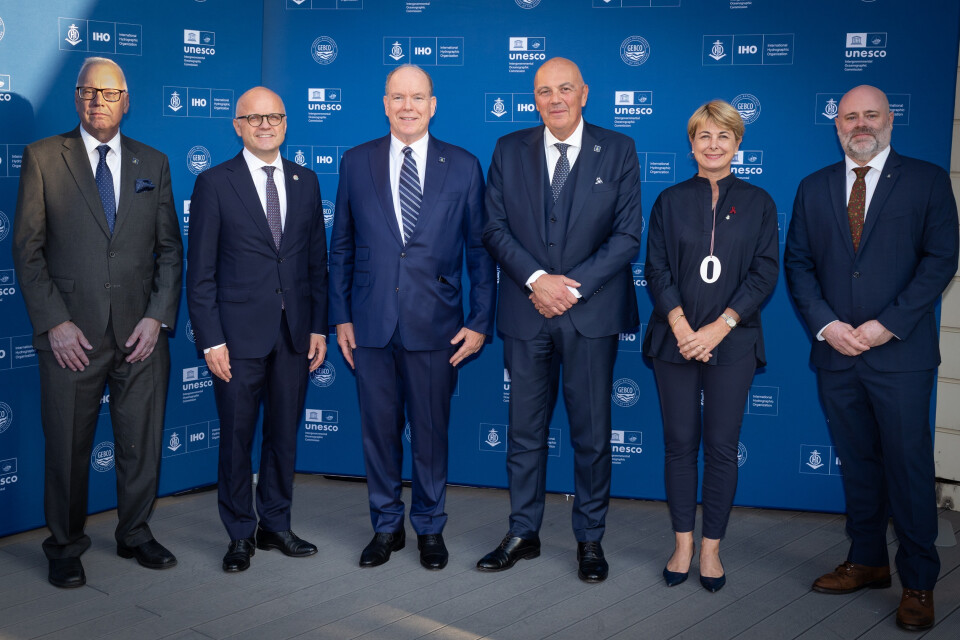 From left: IHO Director Adam Greenland; Vidar Helgesen, Executive Secretary of IOC-UNESCO; H.S.H. Prince Albert II of Monaco; IHO Secretary-General Rear Admiral Luigi Sinapi; Isabelle Berro-Amadeï, Monaco Government Counsellor and Minister; and IHO Director Dr John Nyberg inaugurate the GEBCO Secretariat. (Image courtesy: Frédéric Nebinger / Palais Princier de Monaco).