

Girl’s flag football coach Angel Fierro instructs his players to run play “number two” after practice at the Nicolas P. Ochoa Soccer Complex, on Tuesday, Oct. 20, 2026.
Makensie Sherard, Arizona Sonoran News
“I don’t want my players to get hurt, because the fields can get really muddy and slippery,” Fierro said.
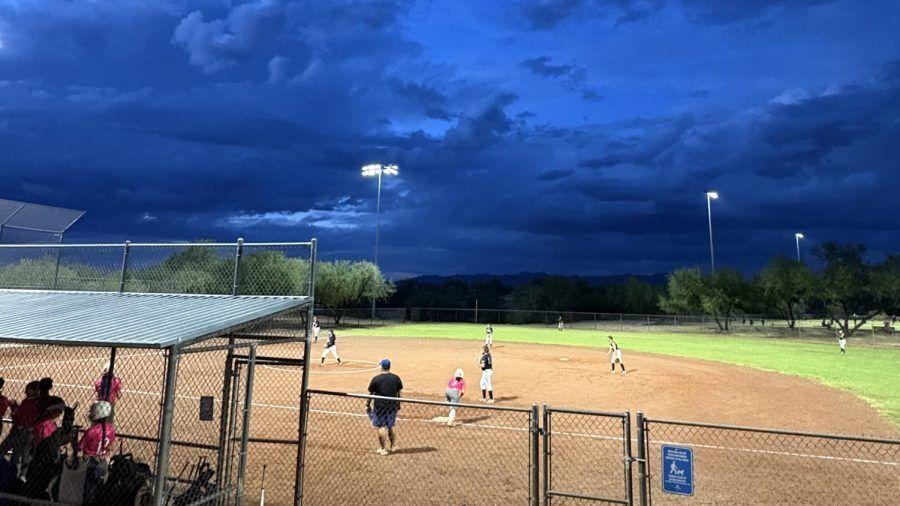
Gilbert Dominguez, whose 16-year-old daughter, Karley, plays softball for the Desert Thunder youth team, said she has participated in sports in Tucson for 10 to 12 years.
Although rain and lightning have occasionally caused games or practices to be canceled, he said those disruptions have not significantly affected his family’s schedule.
“A lot of people who aren’t from here have concerns about the heat that natives don’t,” he said.
He thinks many Tucsonans are already adapted to dealing with extreme heat, and said his daughter’s coaches emphasize hydration.
Still, Wu said the weather Arizonans are accustomed to is changing, and shifts in the climate may require sports organizations to rethink how they operate in the future.
“With sports and everything here, we kind of adapt to the climate because Pima County is hot, in general,” he said. “But also I feel like you know, it’s getting hotter.”
One challenge in Pima County is the limited access to indoor facilities where young athletes can practice during periods of extreme heat, Meadow added.
Some public schools in Southern Arizona lack consistent access to air-conditioned facilities, forcing teams to schedule practices earlier in the morning or cancel them due to excessive heat in the afternoon.
But changing practice times and schedules can create additional challenges for families.
“The challenge is it’s not going to get any better, and we have to start thinking longer term,” Meadow said.