
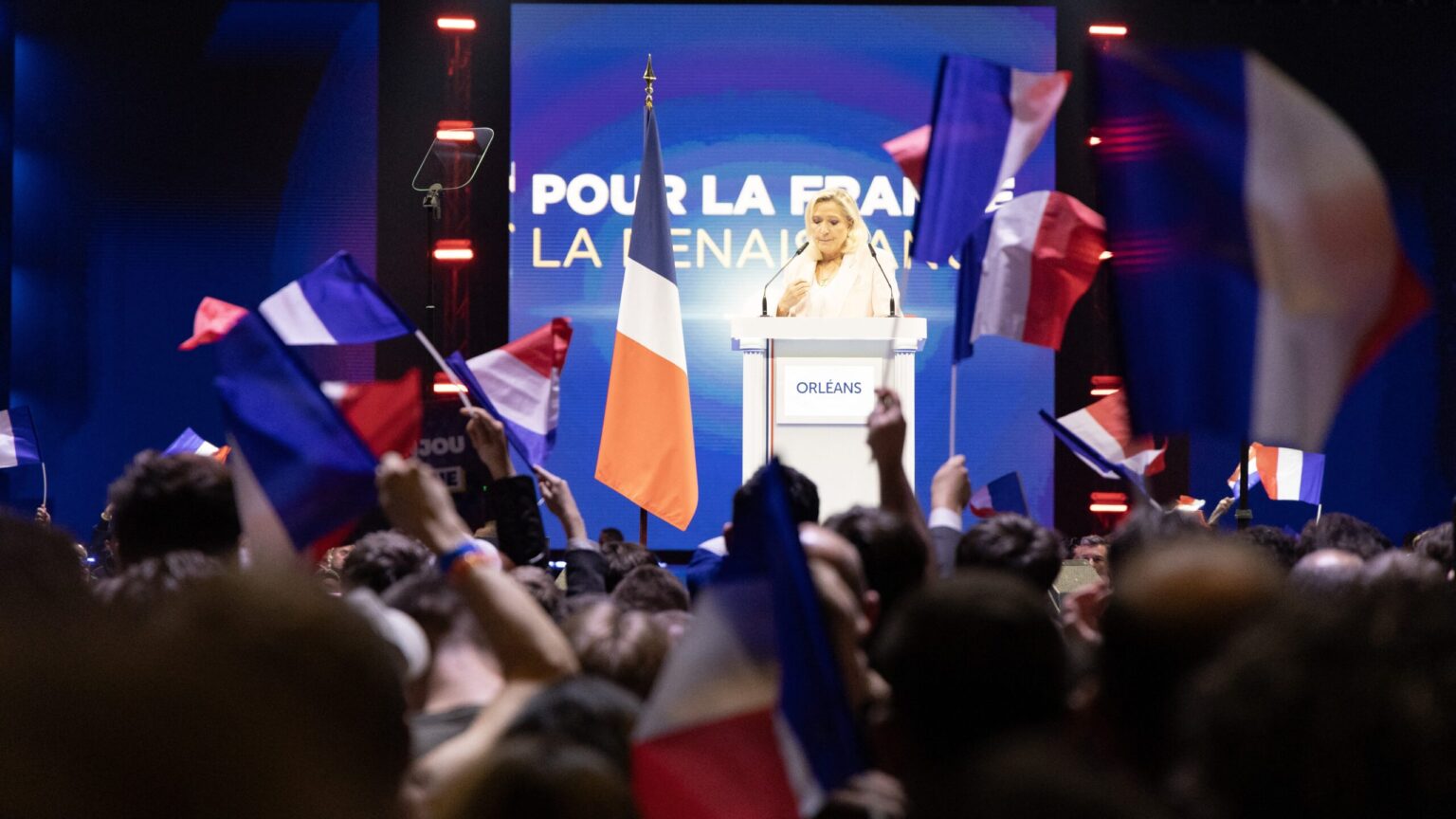
French far-right leader Marine Le Pen formally launched her presidential campaign on Sunday, pledging to restore public order, strengthen national sovereignty and rebuild confidence as the country faces mounting economic and social tensions.
Speaking to cheering supporters in Orléans, the hometown of Joan of Arc, a historical figure frequently invoked by French nationalists, Le Pen presented herself as the candidate best placed to address what she described as France’s economic, social and security crises.
‘We are not living through the end of the world but the end of a world, their world,’ she said, referring to her political opponents.
Le Pen promised a policy of zero tolerance towards crime, arguing that ensuring security was the state’s primary responsibility. Her speech followed mass protests over living costs and inequality the previous weekend, which were accompanied by looting and vandalism.
‘Le Pen promised a policy of zero tolerance towards crime, arguing that ensuring security was the state’s primary responsibility’
An opinion poll published on Sunday put Le Pen at between 32 and 33.5 per cent, ahead of her nearest rival, hard-left leader Jean-Luc Mélenchon, on 17 per cent. The figures suggest support for more radical political parties is drawing voters away from France’s traditional political forces.
Seeking to project optimism, Le Pen built her campaign around the idea of a national ‘Renaissance’. She said France was experiencing a period of upheaval but could emerge stronger by pursuing security, prosperity and renewal.
On immigration, Le Pen pledged to restore border controls, automatically expel foreign nationals convicted of crimes and intensify efforts against gangs and drug trafficking.
Her campaign is taking place while she appeals a court conviction for embezzling European Parliament funds. The legal proceedings could affect her ability to campaign, with the possibility of her being required to wear an electronic monitoring tag.
On economic policy, Le Pen promised spending restraint, lower business taxes and reduced bureaucracy, while pledging support for industry, innovation and artificial intelligence. She also opposed further increases in the retirement age.
The National Rally gathering was intended to demonstrate unity within the party. Jordan Bardella was re-elected as party president and presented as Le Pen’s preferred choice for prime minister.
Bardella’s speech was interrupted by activists from a Jewish student union, drawing attention to allegations that he had made antisemitic remarks in his youth. Bardella has denied the accusations.
Le Pen has spent more than a decade seeking to broaden the National Rally’s appeal since taking over the party from her father, Jean-Marie Le Pen, in 2011. The effort has included attempts to soften its public image and attract voters beyond its traditional anti-immigration base.
On European policy, she stopped short of calling for France to leave the European Union. Instead, she pledged to reduce Brussels’ influence, restore national control over borders and legislation, and prioritize French interests, including by avoiding foreign wars.
‘The future belongs to us,’ Le Pen said before leading supporters in singing the French national anthem.
Related articles:
At a time when public debate is increasingly polarized and superficial, Hungarian Conservative remains committed to depth, intellectual honesty, and independent conservative thought.
Producing high-quality journalism requires resources. Your contribution helps us expand our coverage, reach new audiences, and keep our content accessible.
Please consider supporting our mission.