
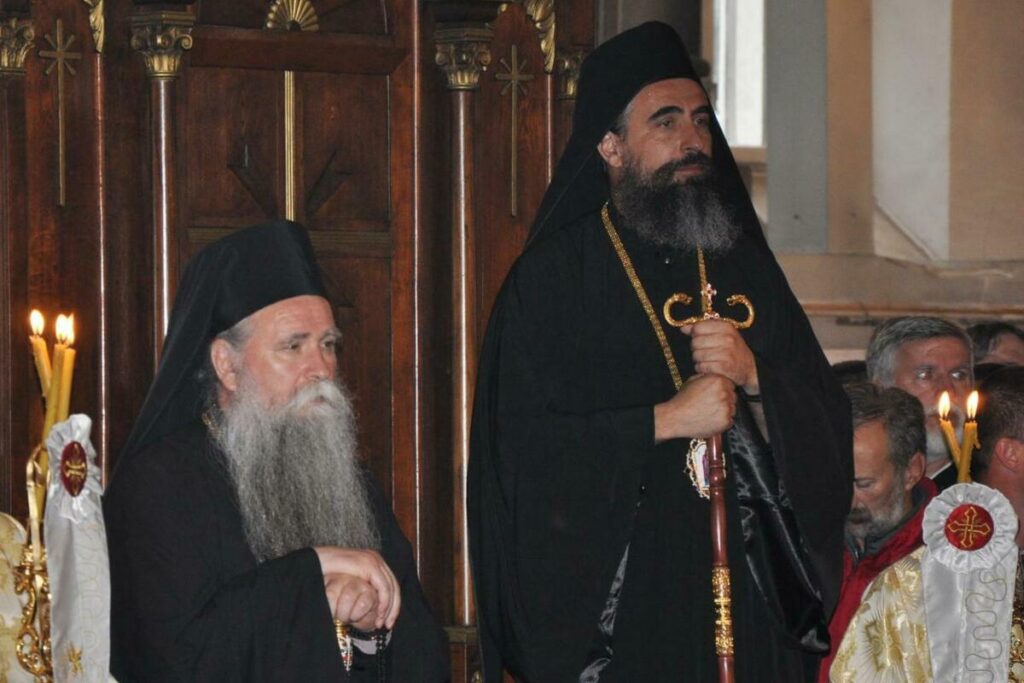
Defeat Aleksandar Vučić The elections in Serbia will inevitably affect the situation in the Serbian Orthodox Church (SPC) in Montenegro, so it is completely legitimate to expect a revision of the legacy left by the Belgrade “alliance of the throne and altar”. The pressure from the centers of power there on the Metropolitanate of Montenegro and the Littoral will inevitably weaken, which is a good thing, but not enough to completely normalize the situation regarding church conditions in Montenegro.
With these words, the interlocutors of “Vijesti” talk about the potential consequences of last week’s Vučić defeat (from the Student List) on the church climate and the metropolitan dual power in Montenegro.
Two church rulers, the Metropolitan of Montenegro and the Littoral Joannikius and Metropolitan of Budimlje-Nikšić Methods, this summer they made official what had long been suspected – that they were on different sides and that the church in Montenegro had also fallen out over Vučić. They showed this at the time by reacting to the statement of the former president of Serbia that the 2020 processions – which began due to amendments to the Law on Freedom of Religion and which resulted in the removal of the government that voted for them – actually started “when some wanted to create an Orthodox church in Montenegro, just to erase the ‘Serbian’ thing”.
The Cetinje Metropolis then hit back at Vučić, saying that his statements were unclear, and that uninvited interference by politicians in church matters does not bring good to the state and the church. However, the Diocese of Budimlje-Niksic came to Vučić’s defense, stating that “his messages bring peace among the people of St. Sava and preserve the unity of the Serbian Orthodox Church.”
After a message was sent from Cetinje to Vučić, an organized campaign was launched by Belgrade tabloids, close to the former government there, who wove a narrative that the Metropolitanate had intentions to create a Montenegrin church, while Methodius was widely praised.
In the end, Vučić’s “stretch” ended up on the losing side, and Joanikije on the side he supported and which “cleaned up” the leader in the elections.
Šaranović: Fallen government, can the paradigm
The attacks on the Cetinje see began long before August of this year. Joanikije was elected Metropolitan of Montenegro and the Littoral at the SPC Assembly in late May 2021, the same one that repealed the 2006 decision defining the Orthodox Church in Montenegro.
Then (in May 2021), under the leadership of the newly elected Patriarch of the Serbian Porphyria, a decision was made to abolish the episcopal councils as temporary advisory church bodies, including the Episcopal Council of the Orthodox Church in Montenegro. Joaniki was then stripped of the title of Archbishop of Cetinje, while Methodius was “promoted” to the rank of metropolitan last year.
At the end of February last year, the Metropolitan of Cetinje signed a letter condemning allegations from the Serbian Orthodox Church that students protesting in Serbia were “Serbian Ustashas,” a move that did not meet with the approval of the (defeated) regime in Belgrade.
Nikola Šaranović, a correspondent for the Sociological and Legal Data on Religion in Europe (EUREL) project from Montenegro and a member of the International Consortium for the Study of Law and Religion (ICLARS), told “Vijesti” that the change of government in Serbia will inevitably affect the situation in the Serbian Orthodox Church. He stated that many controversies followed the “alliance of the throne and the altar” in Belgrade, which left the achievements of its rule in Montenegro, adding that a revision of these achievements is legitimately expected.
“However, the question can be legitimately raised as to whether this revision can be carried out without changing not only the government, but also the political paradigm in Serbia, when it comes to Montenegro as a subject. Not only international, but also canon law. And it is precisely the canon law desubjectivization of Montenegro that is the greatest achievement of the symphony in Serbia,” he said.
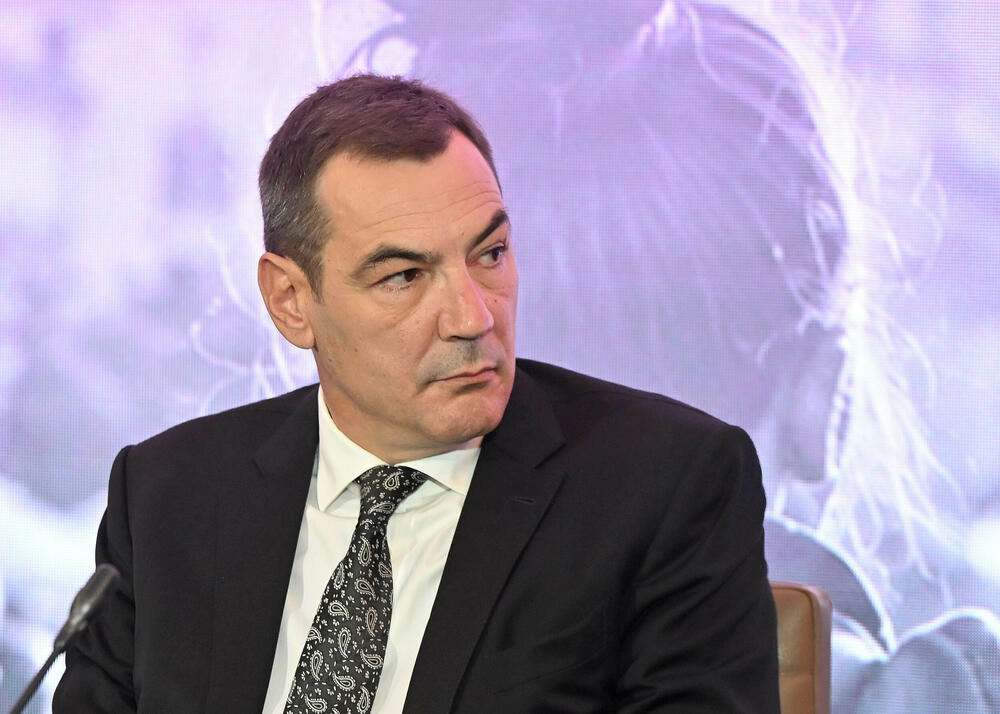
“The canonical-legal desubjectivization of Montenegro is the greatest achievement of the symphony in Serbia”: Šaranovićphoto: Risto Božović
Šaranović assessed that the path from secular Podgorica to spiritual Cetinje led through political Belgrade and led first to the invalidation of the decision of the Holy Synod of Bishops of May 26, 2006, on the Orthodox Church in Montenegro and all its attributes, then to the verification of such a state of affairs by the Fundamental Agreement and, finally, to the metropolitan dual power in Montenegro, of a precedential nature.
According to him, in this sense, the issue of institutional organization is more important than personnel issues.
“The return of Montenegrin organizational specificity in organic unity with the Serbian Orthodox Church should be the minimum revision of the aforementioned achievements. And Montenegro has the right to more. Its centuries-old spiritual institution, the Metropolis of Cetinje, has the right to have an archbishop sit on its chair, not only by honor, but also by authority over the entire territory of Montenegro. And this is regardless of the restoration of state independence,” Šaranović pointed out.
The interlocutor pointed out that it is not certain when these issues will be on the agenda, stating that the new government in Serbia has many more internal priorities, while Montenegro has never been more certain about achieving its final foreign policy goal – membership in the European Union.
“And when these issues come to the agenda, a sustainable and long-term answer must be provided jointly by secular Podgorica and secular Belgrade, and spiritual Cetinje and spiritual Peć,” Šaranović underlined.
Milićević: Don’t be naive with Metodije
Theologian from Belgrade Vukašin Milićević He told “Vijesti” that he could think of absolutely no sphere of life in the region in which the defeat of the Vučić regime could have negative consequences. When it comes to the church situation in Montenegro, Milićević said that he has no doubt that the pressure from Belgrade power centers on the Metropolitanate of Montenegro and the Littoral will weaken.
“That is, of course, a good thing in itself, but not enough to fully normalize the situation. That is why it is important for all involved to understand that the story with Vučić’s regime does not end with an electoral defeat, but only with the complete deconstruction of the political-criminal-propaganda structures on which the regime was based and which destroyed Serbia as a state,” he said.
Milićević stated that he expects the most responsible people in the Metropolitanate of Montenegro and the Littoral not to be naive and not to allow their personal integrity, reputation and good intentions to be an opportunity to clean up the deservedly tarnished biographies of those who, almost literally, worked their asses off.
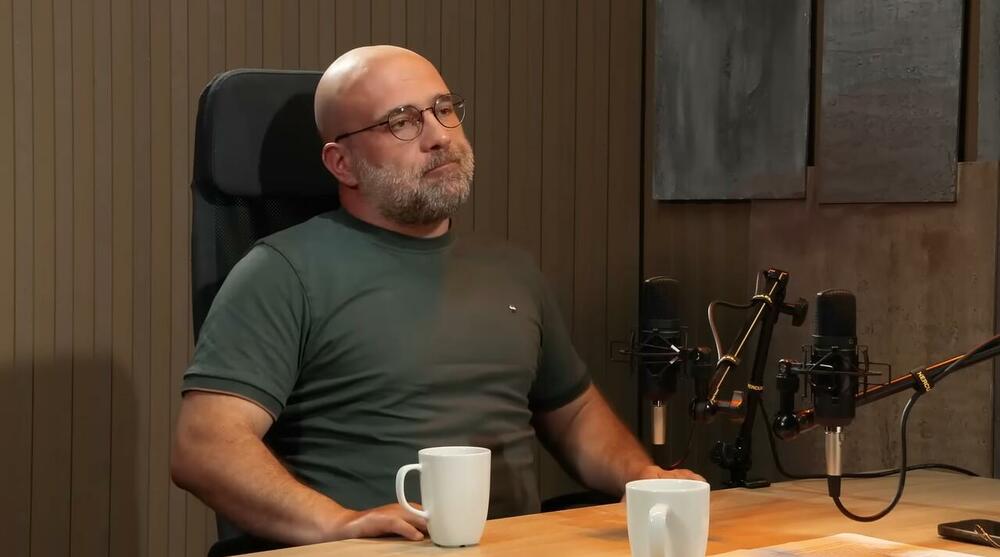
“Metodija has completely lost all capacity for political transformation”: Milićevićphoto: Printscreen / Youtube
Asked whether the fall of Vučić would mean that Metodije would lose influence or whether the ideological campaigns of the Metropolitan of Budimlje-Niksić would continue, Milićević replied that it directly depends on the speed of the aforementioned deconstruction of regime structures.
“Faced with the magnitude of the electoral defeat, Vučić opted for the most rational scenario – to admit it. However, in the days that immediately followed, he showed that he was unable to play by that scenario – both he personally and the Serbian Progressive Party as a political platform,” said Milićević.
He said that the people gathered around Vučić are still trying to impose the rules of the game, and that Vučić is now, in a situation where all responsibility for the functioning of the executive branch is still in the hands of members of his “interest group”, trying to portray himself as the leader of the opposition.
However, Milićević says that this kind of isolation is precisely what led them to complete political defeat, and that there is no doubt that the trends of “cartel disintegration” will now only accelerate.
“In that sense, when it comes to Metropolitan Methodius, I expect that he will continue to play by the dictates of the structures behind him until they completely collapse. In addition, Methodius has completely lost all capacity for political transformation and I expect that such a thing will not happen. But, whatever happens, I can only repeat in relation to him: one should not be naive. Because at the level at which institutions function, there is no difference between naivety and stupidity,” the interlocutor said.
Joanikije: Boka was separated because of Vučić
That Vučić’s regime does not tolerate Joanikije’s disobedience was clear not only in the examples of media hounding over the letter of support for the students and criticism of Vučić’s statements, but also when announcements appeared that Boka Kotorska could be separated from the Metropolitanate of Montenegro and the Littoral and that Joanikije could be “investigated” by the Serbian Orthodox Church’s commission.
In early February, the Belgrade newspaper “Danas” announced that at the May session of the Holy Synod of Bishops of the Serbian Orthodox Church, it was planned to separate Boka from the jurisdiction of the Metropolitanate. The editorial staff was told at the time by several sources familiar with the events in the Patriarchate and the Metropolitanate that there were stories in the Serbian Orthodox Church about separating Boka, while some of the interlocutors claimed that it was about an alleged attack by Porphyry on Joanniki. The Metropolitanate said on that occasion that there were no ecclesiastical reasons for excluding a part of the coast from their jurisdiction and that these were rumors that had, above all, political motives. In the end, nothing came of that idea.
The day before yesterday, while appearing on RTV Podgorica, Joanikije said that the stories about the separation of Boka came from political circles.
“It’s probably because of the animosity of people who couldn’t hide it, because I don’t admire Vučić’s character and work, so they simply couldn’t stand it. It was indecent to insinuate that if you don’t support that regime, you’re not even a Serb. They insinuated that to me and my clergy. It was a dishonorable act and I hope that it will weaken in the future,” Joanikije said.
Regarding the “investigation” of Joanikije, the Nova.rs portal announced in early September that this could happen, that is, that the process would be conducted by a commission of the Serbian Orthodox Church, which, according to the official explanation, should analyze the functioning of the Metropolitanate and determine whether there are administrative and financial failures. However, the media outlet claimed that the real reason why Joanikije is “under scrutiny” is his public disagreement with Vučić’s policies, as well as his refusal to withdraw his signature from the letter of support for the students.
A source close to the Metropolitan Municipality told Vijesti that there was no official announcement of any kind of control, and that he thought there were no reasons for such a thing, so they did not expect it. It is not known whether there was any control.
The commission was allegedly supposed to be composed according to an almost identical model to the one sent to the Žič eparchy. After that control, the metropolitan Justin was suspended (in May) due to, as officially stated, questionable material and financial dealings.
Nova.rs sources claimed that the real reason for the showdown with Justin was that he was the only bishop based in Serbia who openly supported the students. Six bishops were at the Serbian Orthodox Church Assembly against Justin’s removal, including Joanikije.
Speaking about the election results in Serbia, Joanikije told RTV Podgorica that, above all, he was happy that everything ended peacefully.
Three days before the elections were held on October 25, the bishop of the Serbian Orthodox Church in Germany Gregory, who also opposed Vučić’s policies, published a photo of himself in the company of Joaniki and the famous Serbian basketball player Dejan Bodiroga, who is also a candidate for MP on the Student List. On the table they were sitting at was the number three – which was also the ordinal number under which the Student List triumphed in the elections.
“One cannot help but rejoice at this new energy, which brings something completely new. Many are afraid of what it will be, it is not yet entirely clear what it will be, but that this energy is fresh and that these children and the people who supported them have shown great strength and great patriotism, it must be said. That is more than clear,” said Joanikije.
Joanikije: Accusations of separatism, and we refuse to separate
Joanikije stated the day before yesterday that the former head of state, government and Democratic Party of Socialists, Milo Đukanović, offered the clergy of the Metropolitanate of Montenegro and the Littoral to “separate from Belgrade and say what they want.”
He said that this makes it even more unreasonable to accuse him and the late Metropolitan Amfilohije of being “separatists” and separating Montenegro from the Serbian Orthodox Church, and said that relations with Belgrade are strong.
“To frame us, to impute separatism, when we were in the most difficult possible situation here, when the Law on Freedom of Religion was passed, and we were directly suggested: ‘Separate yourself from Belgrade and say what you need’. I am a witness to that. Đukanović offered us that. That was absolutely out of the question,” said Joanikije.
He said that some media outlets in Serbia have previously spread lies and disinformation that Amfilohije is a “separatist” and that he is “separating Montenegro,” adding that he cannot be indifferent to such insinuations.
Đukanović’s office and the Metropolitanate of Montenegro and the Littoral did not respond to “Vijesti’s” questions about when and where the meetings were held at which the Metropolitanate was allegedly offered to “separate itself from Belgrade and say what they need,” and who attended them.
Download the app and follow the news


FOLLOW US ON

News