

The event was attended by Dr. Hisham El-Leithy, the Secretary General of the Supreme Council of Antiquities, the Ambassador of the Czech Republic to Egypt, and Dr. Renata Landgrafová, Director of the Czech Institute of Egyptology, alongside representatives of the event’s partners, including the Czech Centres, Sigma, and the Faculty of Arts at Charles University.
 The Czech Day of Egyptology 2026
Speaking about the institute’s longstanding presence in Egypt, Landgrafová explained that it was established in 1958-1959 as the Czechoslovak Institute of Egyptology before the split of Czechoslovakia.
“We have a dual seat in Prague and in Cairo, and our activities are split accordingly,” she said, explaining that the institute’s work in Egypt is primarily connected to its archaeological concession at Abusir while also extending to Saqqara through various collaborations.
The institute also plays an important role in academic training, providing Egyptian inspectors and Czech students with practical archaeological experience. In Prague, it organizes lectures and exhibitions that attract considerable public interest.
“We have a full-scale university programme in Egyptology, which offers training from BA to PhD level,” Landgrafová added.
Reflecting on the most significant contributions of Czech archaeological missions to Egypt, Landgrafová highlighted several discoveries that have considerably expanded Egyptologists’ understanding of ancient Egyptian society and history.  The Czech Day of Egyptology 2026
She pointed to the research conducted in the royal pyramid field of the Fifth Dynasty, which “has significantly changed the way Egyptology views the history of this royal family.”
She also highlighted the systematic excavations at Abusir South, where the discovery of numerous tombs belonging to Old Kingdom officials has helped researchers understand the social transformations that took place during the reign of King Nyuserra.
Another major achievement is the discovery of the intact tomb of the priest Iufaa at Abusir West, one of the few unlooted tombs discovered in Egypt.
“Besides being one of the very few unlooted tombs discovered in Egypt, it contains a true trove of mortuary texts that have provided parallels for several rare texts found elsewhere,” she explained.
 The Czech Day of Egyptology 2026
According to Landgrafová, the texts also offer a rare opportunity to understand the intellectual activities of ancient Egyptian religious scholars, particularly through the editorial changes made to existing writings and the composition of new ones.
Abusir remains the institute’s principal archaeological site, with research currently divided among three areas, each led by a different team.
At Abusir North, the royal cemetery, the team headed by Jaromír Krejčí is investigating tombs belonging to members of the royal family, including princes and queens, while also studying the architectural features of the cemetery.
 Old Kingdom Tombs of High Priests in Saqqara Discovered by the Czech Mission in 2026
As many of the mastabas are heavily damaged, conservation and site security remain among the team’s main priorities. Researchers have also resumed the exploration and conservation of the substructure of the pyramid of King Sahura.
“This is in itself a monumental project, and it has brought many new insights as it became clear that the underground chambers of Sahura have never been explored and mapped in their entirety,” Landgrafová said.
At Abusir South, the team led by Miroslav Bárta is investigating clusters of tombs belonging to Old Kingdom officials. The research combines archaeology with scientific analyses of plant remains, pollen, animal bones, and human remains, alongside advanced technological methods.
The objective is to establish connections between individual tomb owners and those buried in subsidiary shafts, offering further insights into the structure of ancient Egyptian society.
At Abusir West, the team headed by Ladislav Bareš is in the final stages of exploring the Saite-Persian shaft tomb cemetery, with only two to three tombs remaining.
Landgrafová noted that the cemetery presents particular archaeological challenges because its deep shafts were excavated into unstable tafla ground, making the safety and conservation of the site a priority.
 The Czech Day of Egyptology 2026
Beyond Abusir, Czech archaeological activities have also expanded to Saqqara.
A team led by Mohamed Megahed and Hana Vymazalová is re-excavating the pyramid complex of King Djedkara and its surroundings, including the exploration and reconstruction of its underground structure.
Meanwhile, another team headed by Miroslav Bárta is searching North Saqqara for tombs that were superficially excavated by French archaeologist Auguste Mariette in the 19th century but subsequently lost.
Several important tombs have been rediscovered through this work, including the recently identified tomb of Sabu, which contains a previously unrecorded chapel belonging to his wife.
Landgrafová also stressed that cooperation with Egyptian archaeologists and specialists is indispensable to the institute’s work.
“Collaboration with Egyptian colleagues is an essential and indispensable part of our work,” she said, highlighting the contributions of Egyptian anthropologists and conservators, including Zeinab Hasheesh, Ahmed Gabr, and Ashraf Oweis and his team.
She also noted that several prominent Egyptian Egyptologists, including Tarek el-Awady and Mohamed Ismail Khaled, are graduates of the institute’s PhD programme.  The Czech Day of Egyptology 2026
“Some of the leading Egyptian Egyptologists are PhD graduates of our institute and our friends, which makes collaboration especially easy,” she said.
The institute has also established partnerships with international archaeological teams and researchers, including German art historian Gabi Pieke and Austrian archaeologist Peter Jánosi.
In addition, it has collaborated with the Institute of Nautical Archaeology at Texas A&M University to study an Old Kingdom funerary boat discovered at Abusir South.
Another recent initiative is the first Abusir and Saqqara Archaeological Field School, organized jointly by the Czech Institute of Egyptology and Ancient Egypt Research Associates, led by Miroslav Bárta and Mark Lehner, respectively.
 Minister of Tourism and Antiquities While Inspecting the Latest Archaeological Discovery by the Czech Mission in Sqqara
Turning to the historical milestones of Czech archaeological missions in Egypt, Landgrafová identified the discovery and exploration of the pyramid complexes of King Raneferef and Queen Khentkaus II as particularly significant.
The papyrus archives discovered at these sites contain valuable information about the organization and economy of the royal complexes and the religious cults practiced there.
“We are still studying these papyri, and our work is often shaped by them,” she said.
She also returned to the tomb of Iufaa, emphasizing that its extensive collection of funerary texts continues to inspire research at Abusir West.
“I don’t think anyone expected the immense extent of its textual programme, which we are only now finalizing for publication,” she noted.
 The Czech Day of Egyptology 2026
Discussing the idea behind the Czech Day of Egyptology, Landgrafová explained that the initiative was inspired by similar events organized by other Egyptological institutions in Cairo.
“We plan for it to be a platform of showcasing our recent discoveries to our colleagues, but also and perhaps more importantly, a regular opportunity to forge and re-establish partnerships and friendships and initiate new collaborations,” she said.
Although the event took place close to the Czech Republic’s National Day, Landgrafová clarified that the timing was coincidental.
“We needed to find a date that would fit the Institute as well as the Embassy of the Czech Republic, and we wanted to start this year, and this date emerged as the best one,” she explained.
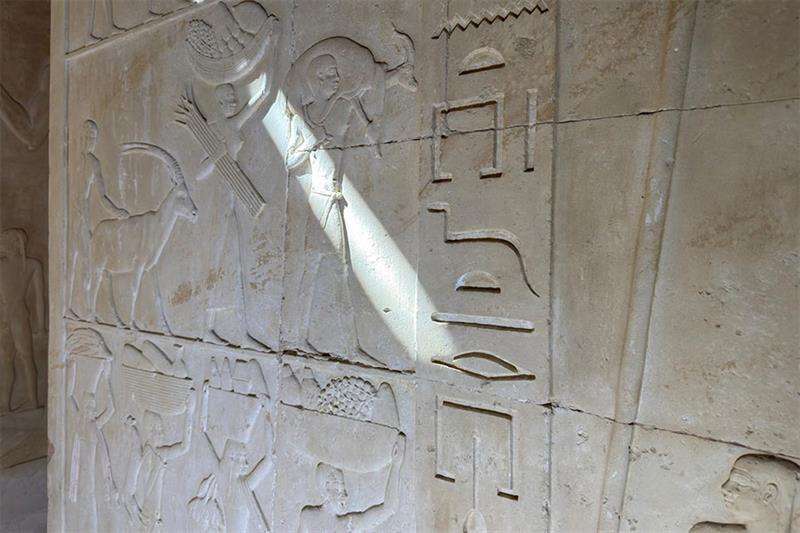 Old Kingdom Tombs of High Priests in Saqqara Discovered by the Czech Mission in 2026
Nevertheless, the institute hopes to establish the gathering as an annual event, with continued support from the Czech Embassy.
“We plan for the Day of Czech Egyptology to be an annual event, and we are grateful to have the support of the Czech Embassy in this,” Landgrafová said.
The institute has also sought to introduce its work to a wider public through exhibitions displayed on the wall of the Czech Embassy in Dokki. The first presented the institute’s archaeological activities in Egypt, while the second featured large-scale reproductions of contemporary artworks inspired by the ancient Egyptian creation myth.
Landgrafová described the location as a particularly effective way of reaching people beyond the academic community, as passersby could encounter the exhibitions without having to make special arrangements to visit them.
 The Czech Day of Egyptology 2026
“There will definitely be more exhibitions in this wonderfully simple setting,” she added.
Looking ahead, Landgrafová sees academic exchanges and archaeological field schools as important opportunities to strengthen cooperation between Egypt and the Czech Republic.
She particularly highlighted the contribution of Egyptian graduates of the institute, describing them as important links between the two countries’ academic communities.
 Old Kingdom Tombs of High Priests in Saqqara Discovered by the Czech Mission in 2026
“Just as our PhD graduates have proven the best ambassadors of Egyptian scholarship for us and helped us forge many Czech-Egyptian collaborations in the past, I believe that this and the future Field Schools for Egyptian inspectors of Antiquities will do the same,” she said.
She added that successful academic partnerships are ultimately built on personal relationships, emphasizing that “most collaborations are born out of mutual friendship and trust.”
Concluding the interview, Landgrafová recalled a particularly emotional moment in her professional life: the discovery of the burial of Wahibremeryneith at Abusir.
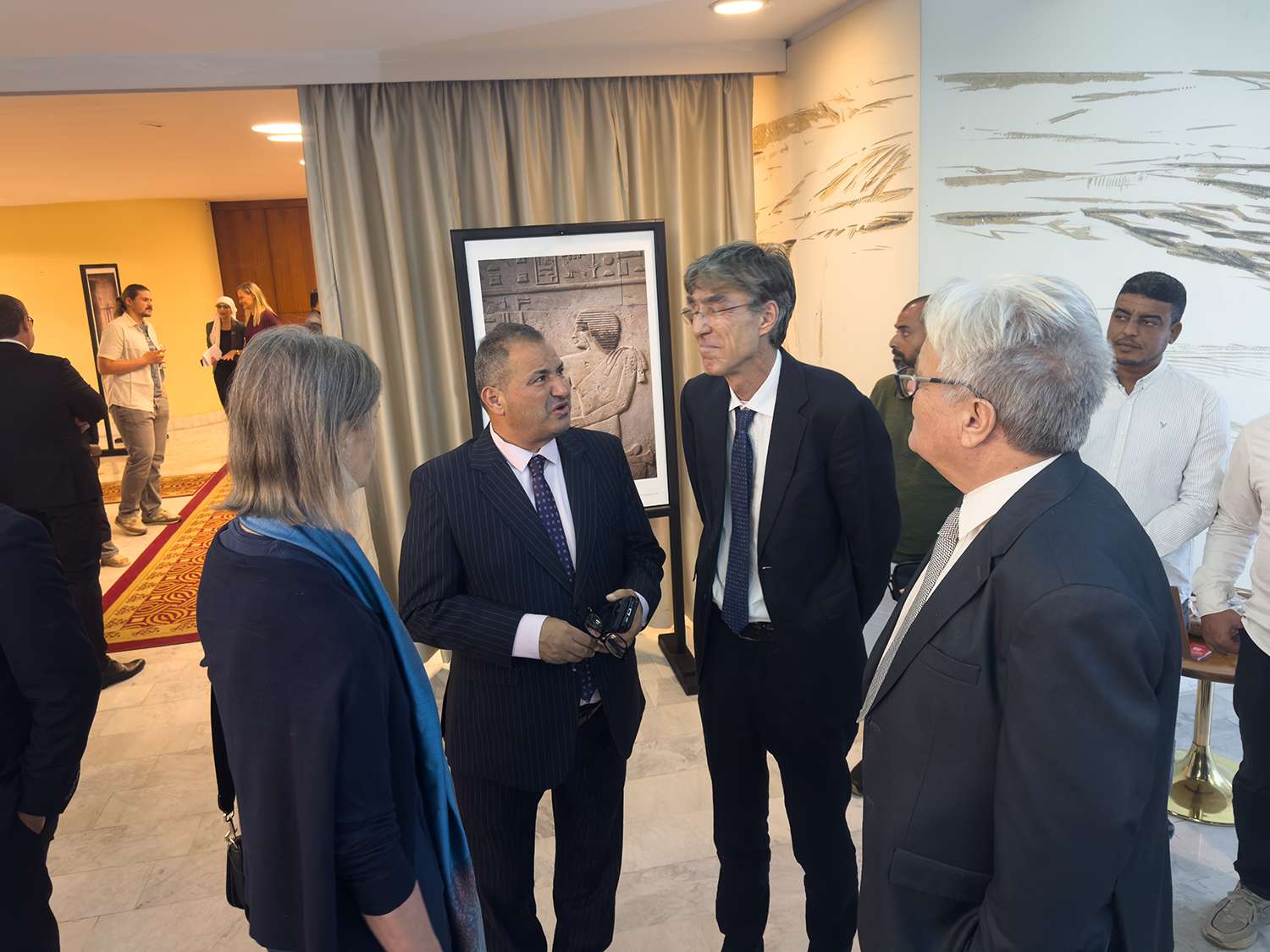 The Czech Day of Egyptology 2026
While her work as a philologist usually takes her to archaeological sites after discoveries have been made, the prolonged excavation of this particular burial allowed her to witness the process firsthand.
She recalled that researchers initially believed the tomb would be unfinished and empty after an access shaft ended approximately 25 metres underground without reaching a corridor.
“I spent about a week at Abusir watching our workers haul clear sand and working in the burial chamber of Iufaa, getting to terms with the apparent fact that ‘our’ new tomb would be unfinished and empty,” she recalled.
 Egyptian-Czech Archaeological Mission Unearthed Remains of King Ramses II Temple in Abusir in 2017
However, the discovery of the first piece of Wahibremeryneith’s basalt sarcophagus changed everything.
“Then, when the first piece on Wahibremeryneith’s basalt sarcophagus came up, I had tears in my eyes. I thought nothing had the power to move me this deep,” she said.
“To this day, this moment is one of the greatest of my life.”