
In a nutshell
A place to sleep, recharge and get inspired – immersed in nature, art and architecture.
Rooms
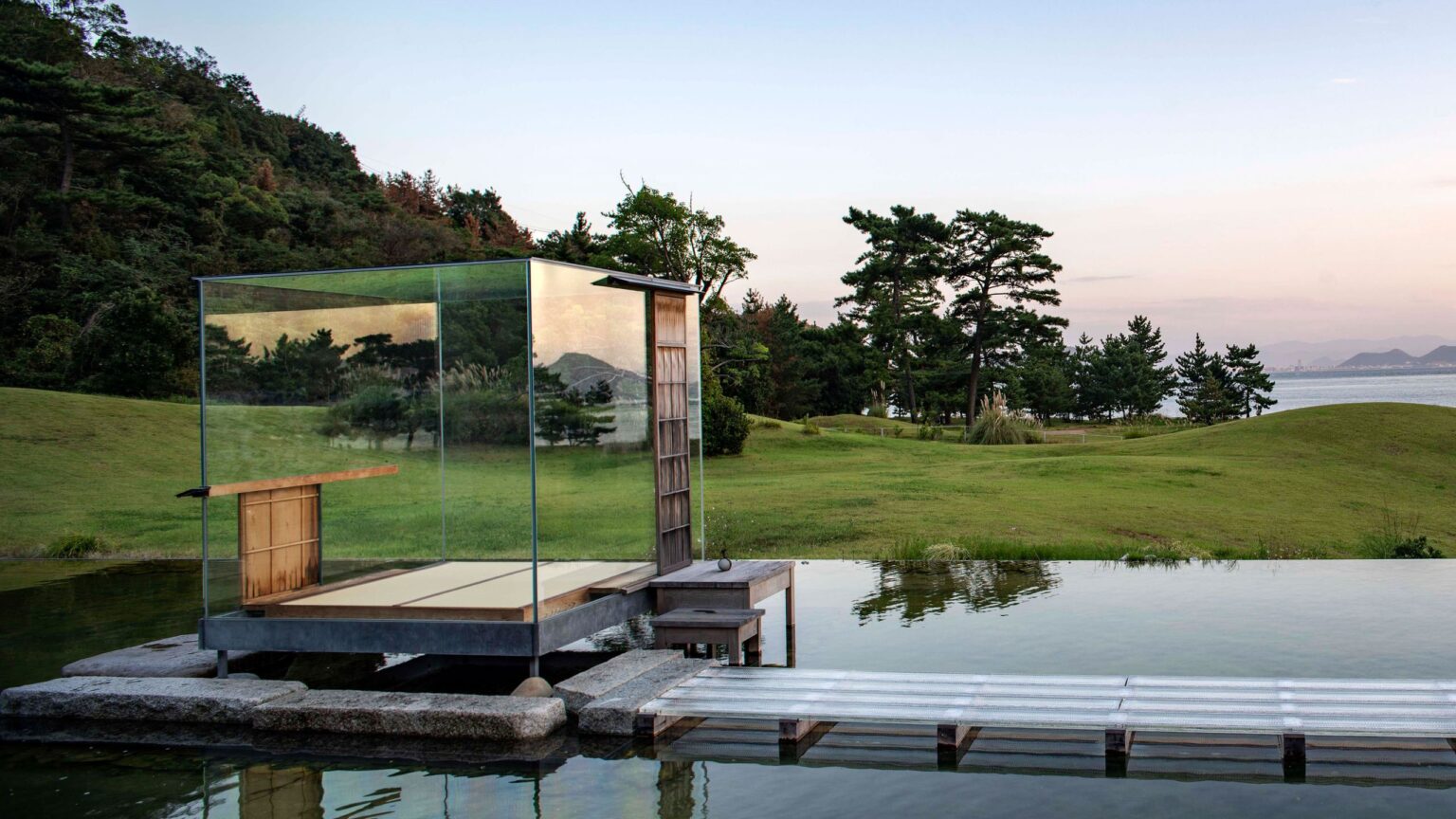
Nature, art and architecture: this purist formula shapes Benesse House, a hotel inspired by the idea of an art museum for overnight stays, designed by legendary architect Tadao Ando. Decades-old yet timeless in its design, the hotel’s 65 guest rooms are minimalist, pared-back and functional, scattered across four buildings. There is Park, with 41 rooms overlooking outdoor artworks (Hiroshi Sugimoto’s floating glass tea house included) and the sea beyond; Beach, with eight spacious art-filled rooms directly in front of the sea; Oval, accessible via a mini monorail that cuts up a mountainside, leading to an oval structure housing six escapist rooms with glorious views; and Benesse House Museum, with ten rooms hidden among impressive art-filled galleries. And connecting them all? Serenely functional interiors, with swathes of signature concrete, clean-lined wood and at least one original artwork in each room (I’ve slept alongside artists ranging from Lee Ufan to Dan Flavin over the years). A stay at Benesse House is minimal not only in aesthetics but in five-star luxury frills: there is no room service, turndown treat or pillow menu. Instead, its true luxury lies in switching off and soaking up art and architecture harmonised with the natural beauty of its island setting.
Food and drink
Creativity further flavours food offerings. The heartbeat is Terrace Restaurant – a large airy space with high ceilings, cobalt blue walls and sea views. Here, simple curry-and-focaccia lunches evolve into playfully inventive dinners. After dark, local ingredients rooted in the seasons are filtered through a contemporary French lens with elegantly surprising results – as reflected in a tasty recent bite of poached kinmedai fish with a froth of bouillabaisse and yellow saffron dots, bringing to mind Kusama’s nearby pumpkin. Tasty buffet breakfasts here offer a curated taste of the region – from noodles from nearby Shodoshima island and local mandarin juice to olive-fed beef curry. For traditional Japanese cuisine, including breakfasts, head to Issen in the museum building, overlooking outdoor artworks and the sea-fringed coastline. And the latest highlight? Setomae Sushi Nagi, an intimate recent addition, with a hinoki-wood counter seating just eight, where chef Makoto Maruyama serves up impeccably crafted sea treats with creative flair: my sushi journey was awash with a constellation of fresh tastes and textures, from Okayama caviar, crab and abalone to squid, butterfish and seabream.
Highlights and experiences
Art is a distracting protagonist – from original works in each of the guest rooms to scatterings of museum-grade installations, photography and sculptures across public spaces. Be prepared for heads to be turned at every corner: it’s impossible for me to arrive at meals on time, endlessly delayed by artworks, even during what should be a short walk between my Park guest room and Terrace Restaurant. A highlight is Hiroshi Sugimoto Gallery: Time Corridors – a network of spaces filled with works by the acclaimed Japanese artist, from his sculptures and photography to a 10m-long table made from yakusugi cedar from a southern Japanese island. Curated tea moments unfold here, with matcha and traditional sweets served on ancient wood tables topped with glass, overlooking his floating Mondrian tea house.
What to do nearby
Art, architecture and nature are in abundance all around. The hotel sits at the heart of Benesse Art Site Naoshima – an ever-growing network of world-class museums, art projects and installations, spanning the scenic forests, towns, rice fields and beaches of Naoshima, as well as nearby islands Teshima and Inujima. Benesse House is the perfect springboard to explore, either on foot, or on the complimentary bus that flits between art spots. From the hotel, the road – meandering, curved, leafy – rises past a string of art surprises embedded into the landscape: the Lee Ufan Museum, a meditative Tadao Ando-designed haven; the reflective silver balls of Yayoi Kusama’s Narcissus Garden floating on a pond at Valley Gallery; and the sunken Chichu Art Museum, journeying through James Turrell installations and Monet’s Water Lilies, illuminated only by natural light. On the other side of the island – about 10 minutes away by bus – is the small town Honmura, home to the Art House Projects, spanning a series of renovated wooden houses, plus Naoshima New Museum of Art, Tadao Ando’s 10th structure on the island which opened in 2025.
The backstory
The seeds of Naoshima’s art journey dates back more than three decades, through the initial vision of a publishing magnate and the mayor at the time – with the island slowly evolving into a major cultural destination and a prototype for rural regeneration through art. The hotel opened with Benesse House Museum in 1992 – conceived as a gallery where visitors can sleep – before expanding in phases over 14 years. I first visited in 2006 and have repeatedly returned over the years – always moved by the hotel’s timeless and restorative formula of harmonising architectural design and artworks with the beauty of the landscape. The hotel continues to anchor a steady growth of museums, site-specific art installations and art projects. Setouchi Triennale, a three-yearly event (next in 2028) connects the creative dots across the wider rural region, with quality art events across a dozen islands (including Naoshima) and coastal spots.
Insider tip
Once day-tripper crowds have disappeared, quietly explore the galleries of Benesse House Museum after dark (a perk of overnight guests, until 11pm) – or linger among Sugimoto’s artworks with a cocktail in Time Corridors in Park (a time-travelling menu ranges from a classic 1896 Daiquiri to a 1985 Espresso Martini). Try to avoid visiting on Mondays, when some museums are closed.
Wellness
Savouring the art and architecture in nature is perhaps the biggest wellness boost on Naoshima – but to unwind further, it’s worth a visit the low-key two-room Benesse House Spa, with treatments ranging from local seawater salt foot baths to aromatherapy massages using wild island pine and rosemary oils.
Final considerations
- Best for: creatively-minded art and nature lovers – families, couples and solo travellers
- Location: Naoshima, a small fishing island in the Seto Inland Sea – aka Japan’s art island
- Can’t miss: wandering solo around art spaces after dark; and rising early to visit Yayoi Kusama’s yellow spotted pumpkin on the beach, before the selfie queues begin
- Family friendly: yes, definitely (Park is perhaps the most child-friendly: under-5s are not allowed in Museum, Oval or Beach Suite Doubles)
- Accessibility: yes, although accessibility varies through the property. Guests requiring mobility assistance are asked to seek advice from the hotel on the most suitable room types before booking
- Loyalty group: No