
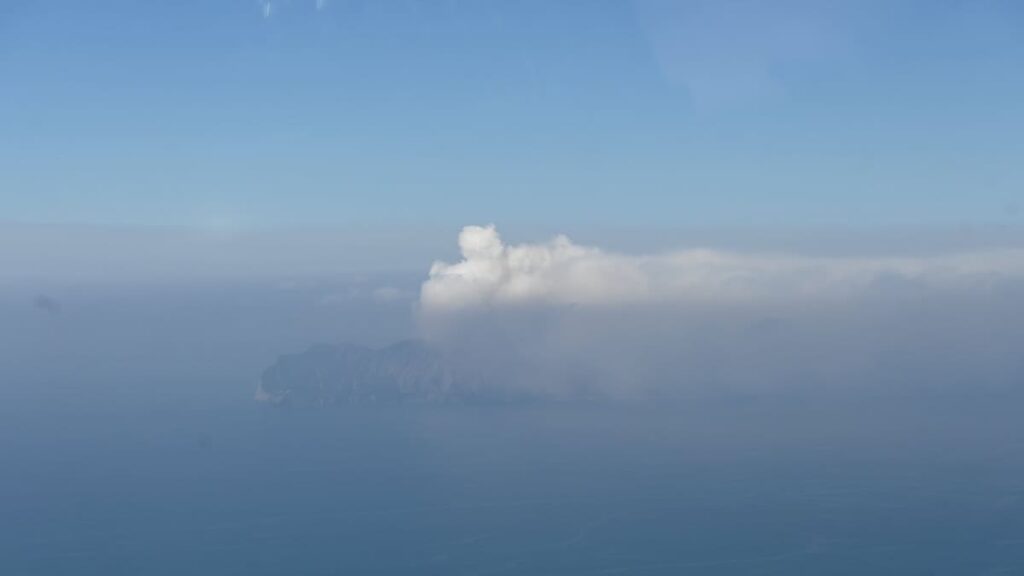
Recent volcanic activity included weak ash emissions and gas plumes that were observed from cameras in Whakatāne and Te Kaha, as well as by satellite monitoring.
A tourist flight over the island on October 31 recorded an elevated steam and gas plume. While scientists could not rule out the presence of small amounts of ash, any emissions were too minor to be detected by remote monitoring systems.
Although the eruption appears to have stopped, volcanologists warned Whakaari remains an active volcano and activity could increase again with little or no warning.
Sudden explosive eruptions remain possible and could generate hazardous ash clouds, gas surges and ballistic volcanic debris in and around the island.
Scientists said significant impacts on the mainland remain unlikely unless volcanic activity increases substantially. Any aviation hazards will continue to be monitored through MetService’s Volcanic Ash Advisory Centre.
Monitoring of the volcano remains challenging as there is currently no functioning instrumentation on the island. Scientists are relying on mainland-based cameras, satellite observations and occasional aerial surveys to track activity.
Whakaari, located about 48km offshore from Whakatāne, remains at Volcanic Alert Level 2, indicating moderate to heightened volcanic unrest.