

- by croatiaweek
- November 3, 2026
- in

(Photo: Grad Split)
Archaeological investigations at the historic Church of St Euphemia in Split have uncovered damage to centuries-old structures caused by the roots of a nearby elm tree.
The investigations began on 1 October 2026, with the aim of assessing the condition of the site and documenting its surviving historical remains.
Following the removal of low vegetation and the surface layer of soil, archaeologists began examining architectural remains and burial structures within the church.
Work so far has revealed the walls of three church apses, with damage identified in several areas. The growth and expansion of roots from a nearby elm tree have caused sections of the historic walls to shift, affecting their structural condition, the City of Split said.
The impact of the root system has also been recorded in burial structures in the eastern part of the church.
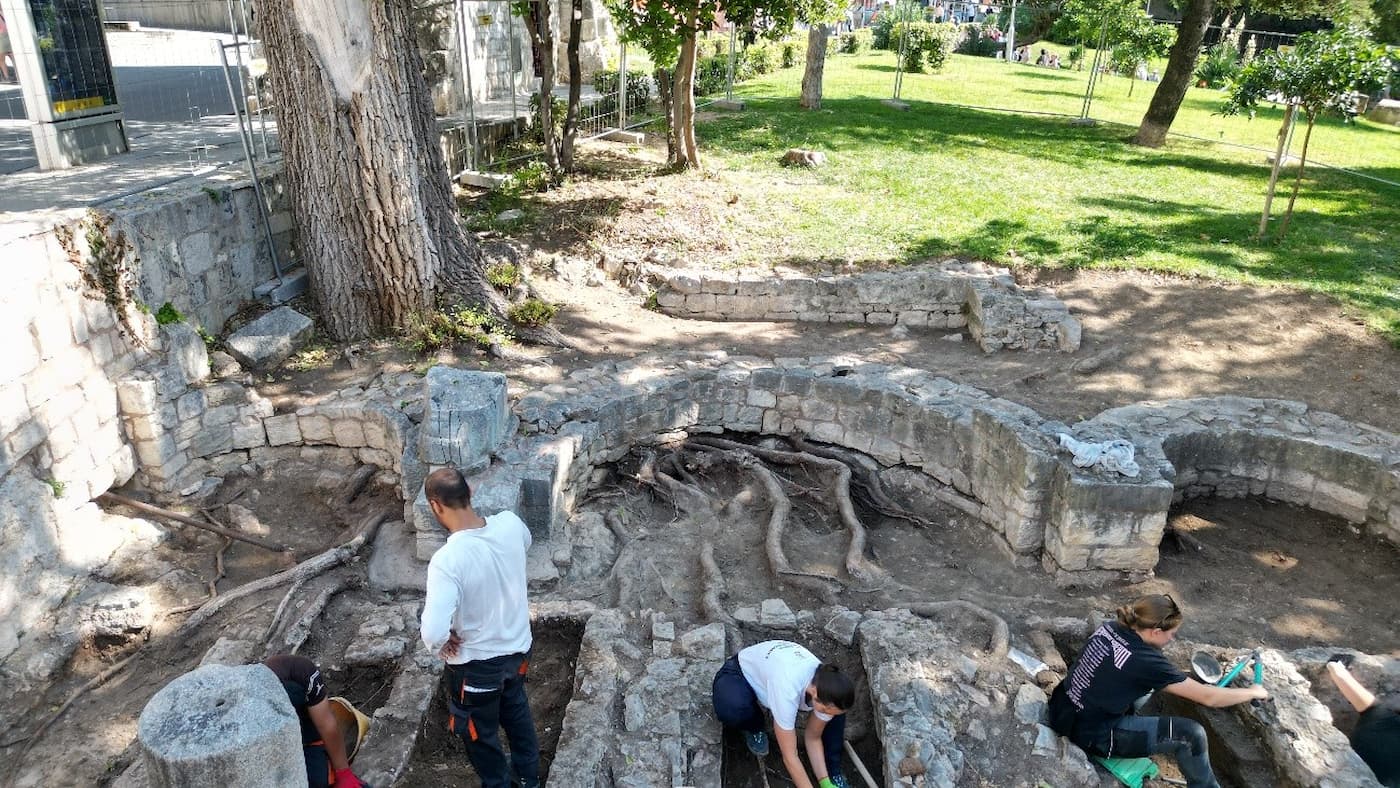
(Photo: Grad Split)
Five tombs have been examined so far, with human skeletal remains found inside them. The tombs had previously been investigated in 1946, and archaeologists discovered that they had subsequently been filled with material. Some of the human remains had been displaced and partially mixed with this material.
Damage associated with the tree roots was also identified on parts of the burial structures and skeletal remains.

(Photo: Grad Split)
The extensive root system has made the archaeological work more challenging, complicating the identification of individual structures, the cleaning of their surfaces and the assessment of different construction phases.
As a result, the pace of investigations has had to be adjusted. Work in affected sections is being carried out gradually and with particular care to protect the archaeological remains and preserve important information about the site’s historical layers.
Further investigations will also consider appropriate measures to protect the surviving structures, taking into account the influence of surrounding vegetation.

(Photo: Grad Split)
Any decisions on protective measures will be based on expert assessments and made in cooperation with the relevant conservation authorities, with the long-term preservation of the site as the priority.
The findings so far are preliminary. A more complete assessment of the condition of the archaeological site, along with recommendations for necessary conservation measures, will follow once further investigations and specialist documentation have been completed.

(Photo: Grad Split)
The City of Split will continue monitoring the work in cooperation with experts, with the aim of safeguarding the Church of St Euphemia and its historical and cultural heritage.