
VOICES OF THE FJORDS – Episode 10
Hyen, Nordfjord – Western Norway • October 2026
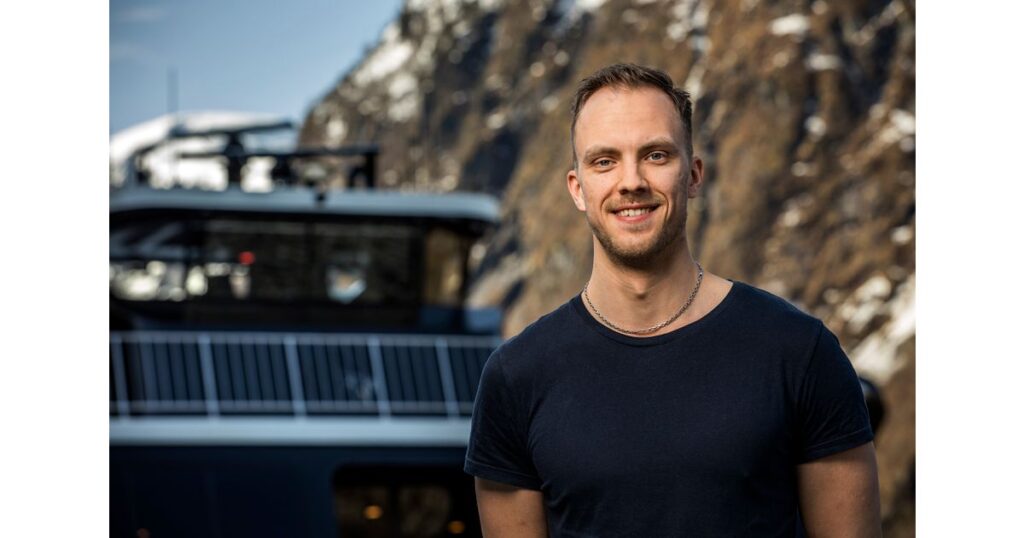
Interview with Torstein Bergheim Aa, designer at Brødrene Aa and co-founder of Livit / Birdbox
He spent his first summer at the family boatyard at thirteen. A decade later, he was sketching a sightseeing ship for a design competition, and the client wanted to sign before they were even back at the airport. Torstein Bergheim Aa, third generation of the Brødrene Aa boatbuilding family from tiny Hyen, is the designer behind Vision of the Fjords, the carbon-fibre catamaran with zig-zag decks that glides through the UNESCO-listed Nærøyfjord. He also drew Birdbox, the little cabin on stilts that went viral around the world. Two very different objects, one idea: let the place be the star.
Hyen sits at the end of Hyefjorden, a quiet arm of the Nordfjord. Around 600 people live here, surrounded by steep green mountains, a lot of water and, since 1947, a boatyard. Brødrene Aa was founded by the brothers Olav and Bertel Aa and grew into one of the pioneers of building passenger vessels in carbon fibre. After some turbulent years the yard is back where it started: in the hands of the family. And one of them still likes to draw.
Torstein, what was it like growing up in Eikefjord?
Pretty normal, honestly. A small village with a lot of nature around it. Boring enough that you had to make your own fun, so we were outside all the time, exploring and building stuff. Building things was always my hobby. I think that’s the good side of growing up in a place like this: you have to be creative.

And the boatyard was always right there.
Yes. My father and my uncle ran it for 20 or 30 years, and my cousins were involved in the shipyard too. From when I was 13 or 14, I spent my summers working at the yard. I learned all kinds of production: how you build a structure, how vacuum infusion works, the whole process. After school I went to trade school and worked at the yard for about three years as an industrial mechanic and plumber. I really liked it. But after a while I wanted something more challenging.
So how did a mechanic become a designer?
When I was thinking about studying, my dad told me: choose what you really like to do. For me that was building things, and drawing. I always did a lot of mechanical drawing. So I went to Bergen, started with
graphic design and ended up in industrial design. I kept working at the yard, and they gave me the chance to try design work there.
I live by one belief: anything can be made better. Engineers solve for function, getting people from A to B. Designers ask what the journey feels like. That’s the work: shaping the experience, not just the outcome. On a plane you notice right away if you’re cramped in your seat. On a boat it’s the same. We’re not really selling boat rides, we’re selling the experience of being surrounded by nature.

Then came Vision of the Fjords. How did that start?
In 2014, my family and our team decided to take part in a competition to design a new sightseeing vessel. There were three or four contestants, and they just let me go for it. The idea for Vision of the Fjords came out of that. The customer was really excited, but I honestly didn’t know how realistic it was to build.
Our CEO and my uncle decided on the spot: “Sign the contract, and we’ll start building your ship for next season.” It wasn’t a gamble. We had already done the design and preliminary engineering, so we knew we could deliver. The customer wanted to meet me right away. Before they were even back at the airport, they wanted another meeting to sign a letter of intent. Same day. That was the real kick-off. The ship was finished in about one year, and it was one of the first hybrid-electric vessels of its kind. I did the general arrangement, the design and the layouts. In 2015 it was named Ship of the Year.

The ship’s shape famously comes from the mountain roads. Where did that come from?
The original brief was universal design. Everyone should be able to move around the whole ship and see the view. I thought of the zig-zag roads on the mountainsides here. They make it possible to get up high, by car or on foot, without it being hard. Why not do the same on a boat? So you walk up gently along the outside of the ship and end up on the roof, with the fjord all around you.
We kept it simple at the start. Two or three designs, basic concepts, try and develop, and only later more people to work out the details. We even designed the chairs and sofa groups. And carbon fibre isn’t just about the look: it’s much lighter, which cuts fuel costs by 30 to 40 percent.
“You want it to be interesting in itself, but not take attention away from the surrounding nature. We’re just framing what’s already there.”
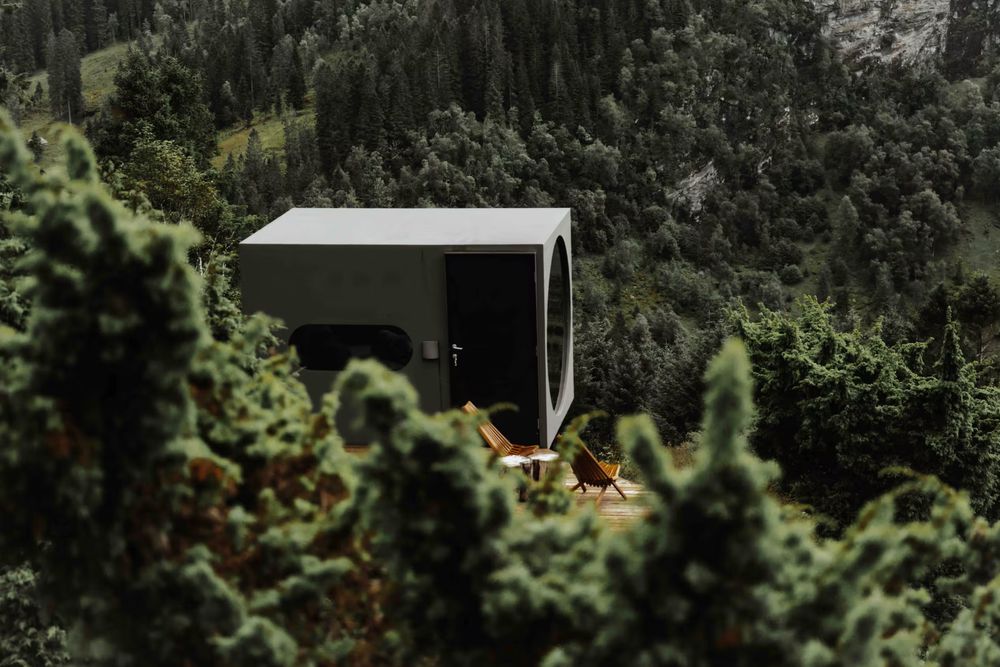
Then you went from a 40-metre ship to a tiny cabin. What’s the story behind Birdbox?
We started Birdbox around ten years ago with Livit. Experience cabins were becoming a trend, and it was a small, interesting field to look into. We were inspired by tiny houses, other cabins and landscape hotels like Juvet, the one people know from Succession, where the rooms are on pillars.
The idea was simple: comfort like in a hotel room, but closer to nature. A Birdbox can be lifted in by helicopter almost anywhere, so you don’t need to build roads for trucks. It stands on pillars, so it doesn’t destroy the ground underneath. And like the boats, it’s built for any weather and needs very little maintenance. It’s the same composite way of building we use at the yard: you get the perfect surface and exactly the right measures for how it’s used.
Inside, it feels a bit like a spaceship. You feel safe. We used natural materials and dark colours, so the walls almost disappear and all the focus goes to the view. Free as a bird.
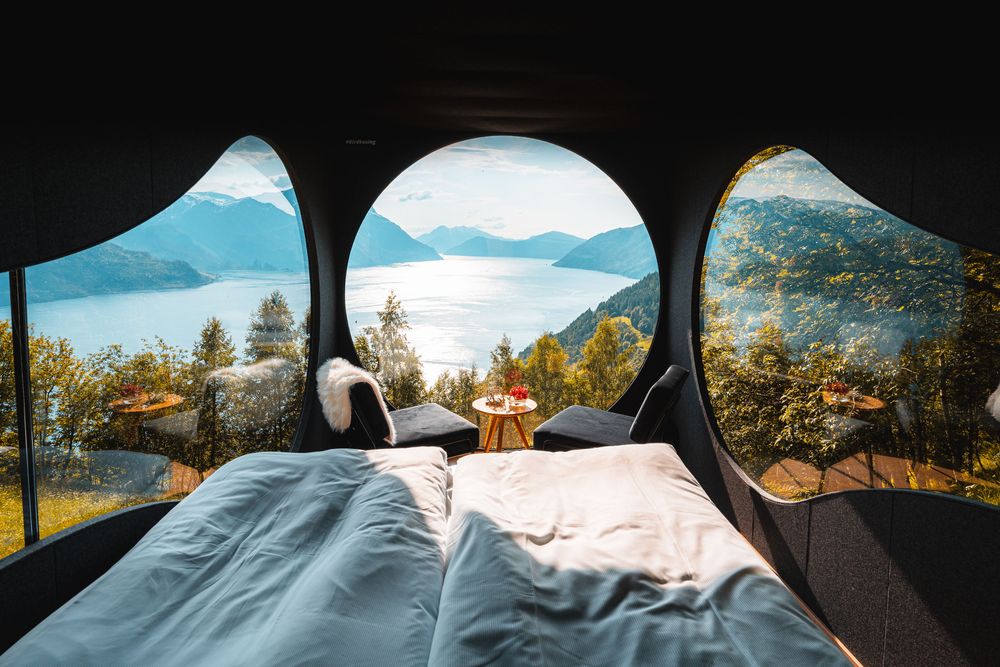
And then it went viral.
Yes, in 2020 a photo got picked up by design media and spread from there to Lonely Planet, Architectural Digest, influencers on Instagram… We hadn’t planned that.
A ship and a cabin. What connects them for you?
It’s the same thing, really. A sightseeing vessel and a Birdbox both bring you close to nature, with comfort. You want the design to be something interesting in itself, but not to take attention away from the place. We’re just framing what’s already there. And it’s something beautiful when you’re surrounded by beauty.
What did the competition teach you about risk?
That you have to be willing to take it. You have to really want to make something new. Sometimes the risk is too much, of course. But if nobody dares, nothing new gets made.
What are you working on now?
Keeping myself busy! The yard is back in family hands, and there are new vessels coming. I’m also working on Studypod, a pod for working from home, and other start-up projects. We look at what’s around us and try to create something new and real. West Norway is just amazing. There’s always something to start.
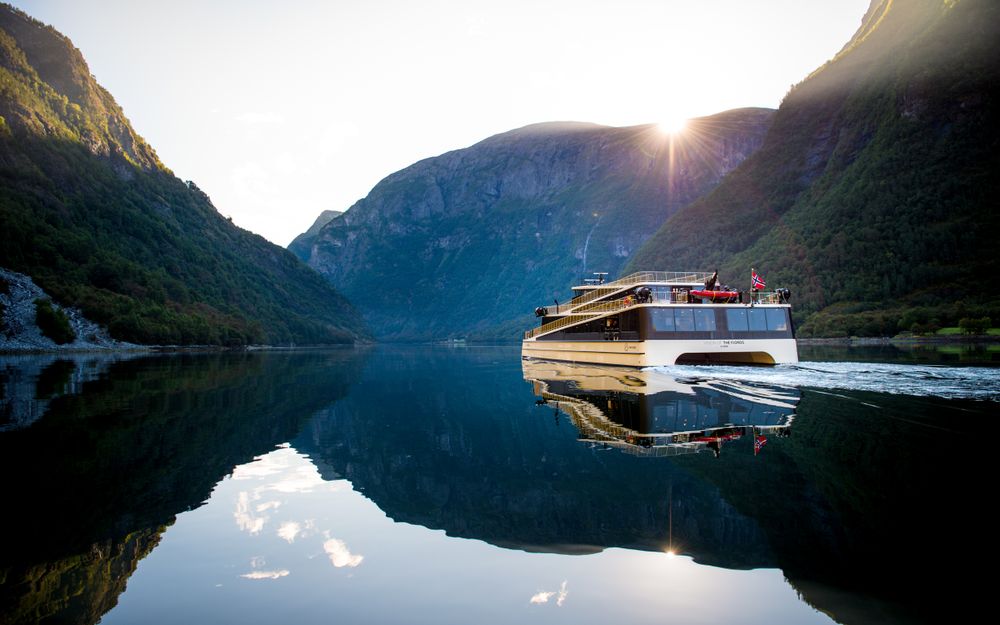
Where to experience Torstein’s work
Vision of the Fjords, Future of the Fjords and Legacy of the Fjords sail between Flåm and Gudvangen through the UNESCO-listed Nærøyfjord, operated by The Fjords. Future of the Fjords, the world’s first all-electric carbon-fibre passenger vessel, was named Ship of the Year 2018. A scale model of Legacy of the Fjords is part of the design collection at Norway’s National Museum.
Birdbox cabins can be booked at sites across Norway, including Eikefjord near Florø, a short drive from where Torstein’s family yard has its second base. Bookings and locations: birdbox.no.
Torstein Bergheim Aa is available for interviews on request. Torstein is on LinkedIn.
Nordfjord stretches from Europe’s largest mainland glacier to Norway’s westernmost Atlantic cliff. Spectacular mountains meet a dramatic coastline – and everything is close together. Surf in the morning, ski in the afternoon. Enjoy the views, experience adventures, explore Viking history, and taste local food and drinks. Ice and sand, peaks and waves: Nordfjord – all in one fjord.
Hyen lies in Gloppen municipality in the Nordfjord region, between Førde and Sandane.