

- Introduction
- Iran: “defensive” strikes in Qeshm, Vance’s letter to Rezaei, and negotiations far from closed
- Ukraine: carnage in Komyshuvakha, Abu Dhabi summons, and Multinational Force exercises in Poland
- Europe: new wave of cold-chain sabotages and North Korean theft at Binance
- United States votes: Supreme Court checks Department of Justice in California
- Media Rack
- Editorial Commentary
Introduction
The past twenty-four hours have unfolded under the sign of a paradox worth keeping in sight. On Monday night, US aircraft destroyed a surface-to-air missile launcher on the Iranian island of Qeshm, in the heart of the Strait of Hormuz, from which the Revolutionary Guard had fired upon an American aircraft.
Simultaneously, Vice President J. D. Vance spoke of “progress” in negotiations, Trump asserted he was in “no hurry” to decide on resuming bombardments whilst threatening to strike the underground nuclear complex at Pickaxe Mountain “within an hour”, and the oligarchic-jihadist regime replied that “the ball is in American court”. Bombs and letters, on the same night and to the same recipient. Brent crude plummeted over **6.5%** down to **$105.55**.
In Ukraine, the end of the Oleshky truce gave way to familiar harshness. Russian guided aerial bombs destroyed a humanitarian aid distribution centre in Komyshuvakha, Zaporizhzhia region, on Monday, followed by the shelter housing survivors: at least **26 dead** and **27 missing**, per the State Emergency Service. Washington has convened a trilateral round in Abu Dhabi for 10–11 November, whilst the Multinational Force for Ukraine, featuring Spain, is set to test its first deployment in Poland.
A fresh wave of cyber-sabotages targeting supermarket refrigeration units across seven European countries, unclaimed, recalls that hybrid warfare has reached shopping aisles, whilst the FBI attributes history’s largest crypto heist to North Korea.
All this occurs on the very day Americans vote in midterm legislative elections functioning as a referendum on Donald Trump’s second term. The eve before, the Supreme Court rejected the Department of Justice’s bid to set aside some 20,000 ballots in California.
China, meanwhile, has turned Beijing into a crossroads of Gulf diplomacy: Xi Jinping received Oman’s Sultan, whilst Foreign Minister Wang Yi met envoys from Iran and Saudi Arabia. Wednesday will dawn upon a different Washington, and Tehran, Moscow, Beijing, and Pyongyang will read the outcome as a measure of American resolve.
Iran: “defensive” strikes in Qeshm, Vance’s letter to Rezaei, and negotiations far from closed
Facts
On the night of 2 November, US forces struck targets on Qeshm Island, the Persian Gulf’s largest, in the Strait of Hormuz’s heart. Official agency IRNA reported several explosions, whilst Fars, the IRGC’s unofficial organ, reported others in Bandar Lengeh. The Wall Street Journal was first to attribute strikes to the US.
A US official described them as “limited” and defensive, targeting Iranians “employing surface-to-air missiles against US assets”; per Axios, they destroyed an IRGC launcher firing at an American aircraft, marking no major combat operation resumption. CENTCOM offered no comment. The IRGC claims capturing two drones and downing an MQ-9 Reaper, unverified independently. British maritime authorities separately reported an “unknown projectile” striking a vessel in the strait, sans casualties.
Per The Wall Street Journal, these strikes form part of a discreter series of recent blows the administration withheld announcing to avoid signaling open operational returns. The paper maintains Trump leans toward a major strike post-midterms, undecided. The president, however, told Axios he feels “no hurry”: “One way or another, we’ll do something, but no rush.”
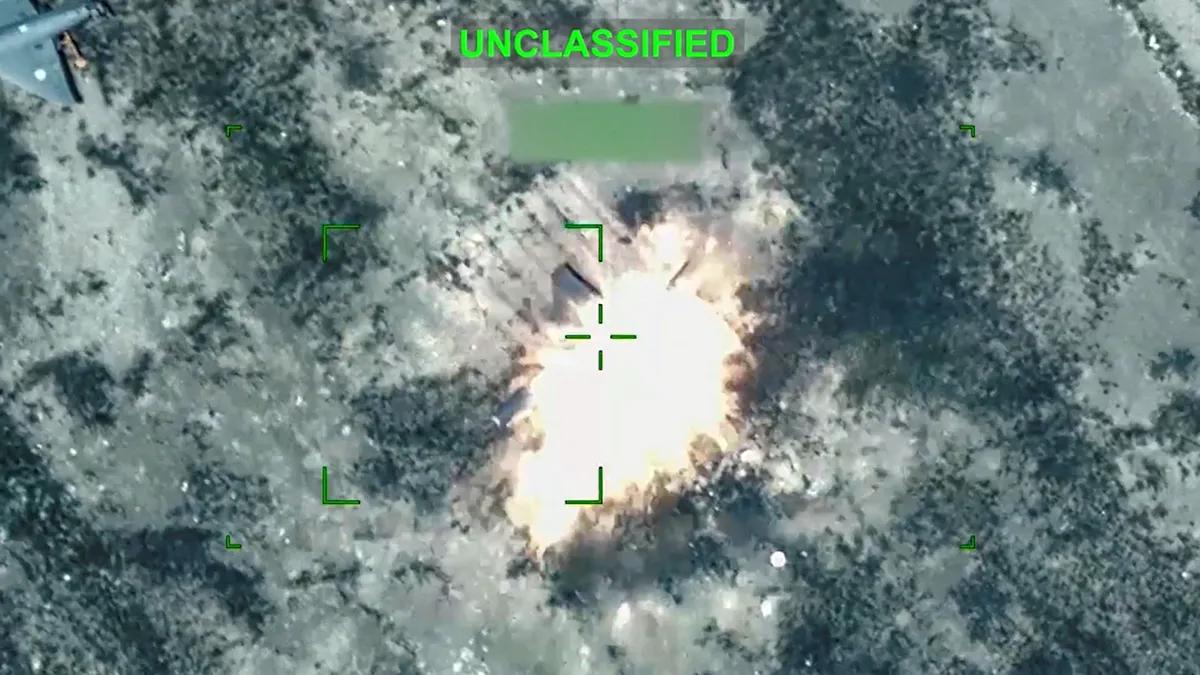
Explosion following what CENTCOM termed an attack on a one-way Iranian drone on 22 March 2026 – CENTCOM via X / REUTERS
He assured Fox News he might strike Pickaxe Mountain, the underground complex near Natanz: “We can do it in an hour, whenever we want.” He added he prefers a deal “to save many lives”, writing on Truth Social that Iran wants a deal “sooner rather than later”. Brent fell over 6.5% to **$105.55** a barrel.
Diplomatically, Vance affirmed “the president and I are quite optimistic” and “we’ve undoubtedly made some progress”. Axios revealed last week Vance sent a letter to Mohsen Rezaei, Supreme National Security Council Secretary, with Qatar drafting a three-day confidence-building sequence to resume direct dialogue.
Qatari mediators flew to Tehran Monday night with a draft. Foreign Minister Abbas Araghchi called consultations “very intense”, whilst Parliament Speaker Mohammad Bagher Ghalibaf, acting as chief negotiator, stated Iran is war-ready yet gave Washington a “rational response”: “the ball is in American court”. A senior Iranian official told Reuters Iran could reopen Hormuz in two days if Washington accepts standing demands, with nuclear talks starting after. A Fars source denied progress, maintaining Tehran holds its seven conditions.
Regime-internally, President Masoud Pezeshkian stated Mojtaba Khamenei granted the Government “certain authorities” to negotiate, whilst First VP Mohammad Reza Aref described US messages as “recognition of our victory”. In Washington, per Axios, CIA Director John Ratcliffe urged Trump to maintain economic pressure, shared by Treasury Secretary Scott Bessent and State Secretary Marco Rubio, whilst Vance and envoy Steve Witkoff push for a pact. Arab states warned Tehran of individual/collective reprisals if attacked, Emirati adviser Anwar Gargash stating his country is “prepared for the worst”. On the Yemeni front, the coalition intercepted a Houthi ballistic missile targeting southern Saudi Arabia, alerting Najran, Taif, Abha, and Khamis Mushait, with fighting resuming in Bab el-Mandeb, Al Jawf, and around Taiz.

Mohsen Rezaei, Abbas Araqchi, Gholamhossein Mohseni Ejei, Mohammad Baqer Qalibaf, and Masoud Pezeshkian at Imam Khomeini Grand Mosque in Tehran, Iran, 3 July 2026 – REUTERS/ MOHAMMED SALEM
Implications
Combining defensive strikes with letters to the National Security Council Secretary confirms Washington chose negotiating under fire, shifting interlocutors from the Foreign Ministry to the regime’s security core.
Rezaei, former IRGC commander-in-chief, features on Interpol Red Notices alongside Gen. Ahmad Vahidi for the 1994 AMIA bombing in Buenos Aires (85 dead). Writing to him acknowledges true power locations in Tehran. Pezeshkian’s claimed “authorities” from Mojtaba Khamenei confirm the inverse: the civil government negotiates by permission, not authority.
Attributed to Yitzhak Rabin is fighting terror sans negotiations and negotiating sans fighting terror. Washington appears applying it with a decisive difference: Rabin negotiated with compromisers, whilst Washington negotiates with terror commanders. US internal division, detailed by Axios, is read in Tehran as a buying-time opportunity.
Ratcliffe, Bessent, and Rubio are right: blockades and sanctions bite, and a hurried two-day Hormuz pact leaving nuclear files intact whilst unfreezing assets and crude sales would let the regime rebuild coffers and arsenals. Eliminating Iranian offensive capabilities—ballistic/cruise missiles, drones, nuclear program—requires blocking rebuilding.
Gulf monarchy warnings and Brent’s drop reveal US ambiguity’s dual effect: calming markets whilst offering the regime scope to frame messages as victories. For Saudi Arabia, Emirates, and Qatar warning Tehran of collective reprisals, worst-case combinations involve minimal deals freeing Iran from pressure without disarming proxies whilst Houthis shell Najran and Khamis Mushait.
Beijing’s intrusion adds uncontrollable variables. China is Iran’s top crude buyer and Gulf monarchies’ primary client; its interest isn’t anyone’s defeat, but Hormuz reopening on zero-cost terms, presenting itself as stability guarantor. Oman Sultan’s Beijing visit amid Qatari/Pakistani mediation suggests Muscat seeks secondary patrons for traditional brokerage. If deals bear Chinese signatures, the oligarchic-jihadist regime secures life insurance neither Moscow nor proxies provided, with Washington paying naval power for diplomatic dividends collected elsewhere.

Chief of Staff of the Iranian Armed Forces, General Mohammad Bagheri – PHOTO/Islamic Republic of Iran
Outlook and Scenarios
Pressure negotiations with limited strikes, no immediate deal (probable): pinpoint blows on IRGC assets whilst Doha/Islamabad seal confidence measures. Tehran tests Trump’s low-intensity strait patience.
Preliminary Hormuz/blockade deal (possible): minimal 2–3 day pact omitting nuclear files, framed by Tehran as victory. Eases crude prices, gifting the White House superficial success at long-term expense.
Major US strike post-midterms (possible): targeting Pickaxe Mountain if mediation fails, risking Gulf monarchy reprisals. Another tactical military success avoiding geopolitical failure only via day-after plans.
Ukraine: carnage in Komyshuvakha, Abu Dhabi summons, and Multinational Force exercises in Poland
Facts
On 2 November, Russian KAB guided aerial bombs struck a school used as a humanitarian aid distribution centre in Komyshuvakha, Zaporizhzhia region, ~20 km from the front. Per Zelensky, a secondary nine-bomb strike hit civilian shelters, with arriving rescuers hit by subsequent blasts. DSNS figures deaths at **26+**, including two rescuers and four police, with **27 missing**. Zelensky denounced an “exceptionally horrific” attack, asserting Russians “could not ignore” civilian presence. Moscow un-commented.
Envoy Steve Witkoff announced 10–11 November Abu Dhabi trilateral talks between US, Ukraine, and Russia regarding “post-war security arrangements, de-escalation, and humanitarian measures”, featuring Witkoff and Jared Kushner. Washington meets UK, France, Germany, the European Union, and NATO in Brussels this week. Secretary of State Marco Rubio stated 31 October in Atlanta G20 meetings he doubts if “negotiated peace is achievable”.

Firefighter working near a crater in a residential area following a Russian drone attack in Kyiv, Ukraine, 15 October 2026 – REUTERS/ VALENTYN OGIRENKO
MNF-U, created 2025 by Franco-British-led “coalition of volunteers” guaranteeing future ceasefires, holds its first field exercise “Koalicja” 9–22 November near Nowa Dęba, SE Poland, ~100 km from the Ukrainian border. ~**2,800 troops** from ten nations participate: Belgium, Estonia, Germany, France, Lithuania, Netherlands, Poland, Spain, Sweden, UK.
France contributes 1,100 and UK 300, directed by French Gen. Armel Dirou and British Lt Gen. Tom Bateman; Turkey directs Black Sea demining simulations from Istanbul. Non-NATO, non-offensive, deploying solely post-ceasefire. British Defence Secretary Wes Streeting defines it as “a real force, ready to help Ukraine once fighting stops.”
Post-truce, Russia and Ukraine accuse mutual alert app hacking; Ukraine’s broadcast false radiological threats, Zelensky admitting cyber-retaliation on Russian systems. Moscow Mayor Sergei Sobyanin claimed air defences intercepted 493 Ukrainian drones heading for the capital, unverified. Kremlin spokesman Dmitry Peskov termed troop shifts during truces “standard practice”; Ukrainian General Staff maintained Russia rotated units during lulls. The European Commission rejected US-backed proposals to resume Russian gas transit via the Druzhba pipeline.
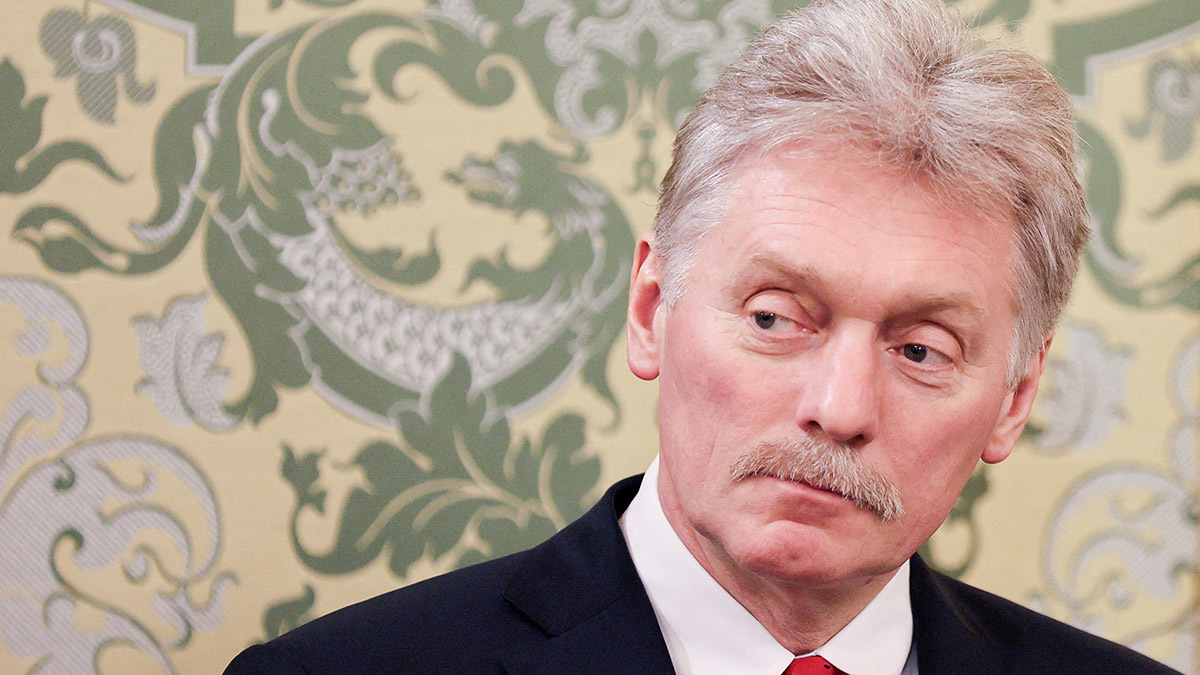
Kremlin Spokesman Dmitry Peskov – REUTERS/ YURI KOCHETKOV
Implications
Komyshuvakha encapsulates the Kremlin’s negotiation logic: humanitarian truces at Oleshky, troop rotation during pauses, and next-day half-tonne bombs on aid points and fleeing shelters, targeting rescuers twice. Double-tapping rescuers violates IHL, a systemic Russian military practice since Syria. Washington convening Abu Dhabi isn’t inherently reproachable; translating into pressure on Kyiv rather than Moscow would be.
Poland’s exercise marks physical proof of European security guarantees shifting from paper to force. Spanish participation is welcome, though un-debated in Parliament. Brussels rejecting Russian gas renewal proves the Union refuses trading energy independence for Washington’s rush towards Putin deals.
Alert-app cyberwarfare is less bloody yet revealing. False radiological alarms sent to millions of Ukrainian phones show Russian aims exceed destruction, seeking to discredit state protective instruments; if citizens disbelieve warnings, subsequent bombs kill more. Ukrainian cyber-retaliation confirms Oleshky truces served positioning pauses. Abu Dhabi requires verification mechanisms and credible armed guarantees—precisely what the Multinational Force rehearses in Poland.
Outlook and Scenarios
Abu Dhabi rounds sans substantive progress alongside continued Russian aerial offensives (probable): technical exchange talks paired with grid/frontline bombardment.
Partial humanitarian/energy deals (possible): reciprocal refinery moratoria for Patriot interceptors, per Zelensky. Winter civilian relief, fragile given Moscow’s opportunistic reorganisation patterns.
Post-midterm escalation (possible): Russian offensives exploiting US midterm/Hormuz distraction.

Hassyan clean-coal power station under construction in Dubai, UAE – AP/ KAMRAN JEBREILLI
Europe: new wave of cold-chain sabotages and North Korean theft at Binance
Facts
On early Monday 2 November, supermarkets across seven European nations—Belgium, Estonia, Finland, Ireland, Luxembourg, Netherlands, Sweden—suffered temperature spikes in fridges/freezers, hitting 50°C in Swedish stores. Stephan Moelans, CEO of Sabcobel managing Delhaize systems, explained attacks switched evaporators to defrost modes, mirroring French incidents.
Belgium impacted ~40 Delhaize, 15 Carrefour, 15 Intermarché, 5 Spar, and Mons Ikea; Ireland, 13 of 223 SuperValu; Sweden, Coop/ICA stores. “It’s a cyberattack, no other explanation,” said Carrefour Belgium’s spokesperson. Belgian federal prosecutors opened probes.
EU Agriculture/Food Commissioner Christophe Hansen condemned “a deliberate attempt to disrupt food supply chains and undermine consumer trust”, clarifying food safety isn’t at risk. The wave mirrors 12 October attacks on French Intermarché/Coopérative U stores probed by Paris prosecutors and ANSSI. Unclaimed, un-ransomed. Danish Danfoss, control software provider, blames unpatched legacy versions.
Separately, the FBI attributed 29 October platform thefts exceeding **$6 billion** from Binance to TraderTraitor, a Lazarus group North Korean intelligence unit; TRM Labs tallies **$6.36 billion**, history’s largest, quadrupling Bybit 2025. Kim Yo-jong termed accusations “absurd rhetoric”, per KCNA reporting Monday strategic cruise missile tests.

Implications
Attribution remains unconfirmed, yet experts view state actors more plausible than ransom criminals, with Western intelligence warning of intensifying Russian European sabotage. Internet-exposed controllers enable commandos to empty national shelves and sow food mistrust. Chief of General Staff Valery Gerasimov wrote in 2013 non-military tools surpass weapon efficacy; Europe read it for a decade without drawing consequences.
Binance’s theft confirms North Korean IT crimes fund prohibited missile/nuclear programs. Pyongyang supplies Russian artillery/missiles and Kursk troops; stolen crypto dollars sustain axis bombing Ukraine and cooperating with Iran.
Kim Yo-jong’s denials paired with missile tests match dictatorship credibility. Countering requires choking laundering networks. Critical civil infrastructure cybersecurity is national security, not corporate problems.
Responses require beyond patch recommendations. The 2012 NIS2 Directive obliges essential sectors (food distribution) to manage risks and report major incidents.
Uneven transposition and absent attribution/response capabilities leave supermarkets undefended against state intelligence. Uncosted attacks signal carte blanche.

Cybersecurity illustration – REUTERS/ KACPER PEMPEL
Outlook and Scenarios
Further unpatched equipment waves (probable): reachable internet controllers invite repeats.
Official state attribution (possible): Franco-Belgio-Swedish probes prompting coordinated EU sanctions.
Extension to connected sectors (possible): heating, building management, alert networks.
United States votes: Supreme Court checks Department of Justice in California
Facts
Americans vote today in midterms requiring Democrats to gain three House seats and four Senate seats for majorities, per France 24. Over **53 million electors** voted early by Sunday versus 46 million in 2022 (University of Florida/Al Jazeera), with BBC Verify estimating $12B total campaign spend. Polls close tonight European time, results pending.
The Supreme Court rejected Monday DOJ requests to compel California to set aside ~20,000 ballots deemed non-citizen. Lower federal judges and Ninth Circuit Court of Appeals did likewise. Judge David Carter wrote 28 October: “Never in US history has the federal government on election eve attempted coercing state/local governments to abandon constitutional election procedures in executive deference.”
In Michigan, defeated primary Democrat Haley Stevens backed Republican Mike Rogers against leftist Democratic Senate nominee Abdul El-Sayed. Trump closed rallies at Washington’s Lincoln Memorial reflecting pool calling Democrats “history’s most dangerous”.

Donald Trump rallies in Salina, Kansas, 1 November 2026 – REUTERS/ NATHAN HOWARD
Implications
Conservative-majority Supreme Court rulings teach institutionalism: checks work. Montesquieu wrote in *The Spirit of the Laws* (1748): power stops power. Mail-in voting doubt leaves lingering wounds adversaries exploit.
Haley Stevens’ Republican backing symptoms un-healed Democratic rifts: moderates versus radicals (Squad, DSA). Foreign policy remains presidential, though House control impacts budgets, oversight, and impeachment threats.
Record early turnout indicates existential stakes. Sensible allies take Trump seriously not literally, noting policy executors: Rubio (State), Ratcliffe (CIA), Bessent (Treasury) ensure continuity.
Outlook and Scenarios
Democratic House, contested Senate (probable): tight margins clipping domestic margins whilst preserving foreign powers.
Republican sweep (possible): endorsing Iran/tariff hardlines.
Prolonged legal challenges (possible): tight district ballot fights.

Secretary of State Marco Rubio at Trump’s State of the Union address, 24 February 2026 – Kenny Holston/Pool via REUTERS
Media Rack
- The Wall Street Journal: Previews Qeshm strikes as prelude to post-midterm major offensives, noting Arab warnings to Tehran.
- Axios: Reveals Vance’s Rezaei letter, Qatari draft, Ratcliffe’s pressure appeals, Trump’s “no hurry” remarks.
- Le Figaro: Leads on Qeshm strikes, Moscow drones, North Korean cruise tests, MNF-U Poland drills.
- Euronews: Details European supermarket cooling sabotage and “Koalicja” drill deployments with Spain.
- Dawn: Highlights Chinese diplomatic outreach with Oman/Iran.
- The Times of Israel: Notes strike limitations, Ghalibaf’s “rational response”, Hormuz reopening claims.
- Iran International: Publishes Trump threats and Aref’s victory claims.
- Al Jazeera: Tracks diplomacy and Yemen’s fronts.
- Kyiv Post / The Kyiv Independent: Report Komyshuvakha casualties and Rubio’s peace-deal doubts.
- CNBC: Explains California Supreme Court rulings and grocery cyberattacks.
- CoinDesk: Covers North Korean Binance denials post-FBI attribution.
- TASS: Reports Russian drone intercepts and anti-West commentary.
Editorial Commentary
Bombs and letters
Some nights diplomacy and war share mailboxes. Monday was such a night. Whilst US jets destroyed missile launchers on Qeshm Island, VP Vance claimed progress, Trump claimed no hurry whilst threatening Pickaxe Mountain, and Iranian negotiators called Washington’s court home. Bombs and letters, identical recipients.
Negotiating under fire isn’t novel; consistency is. Claiming no hurry whilst planning major strikes; preferring deals whilst jets retaliate; Brent plunging over 6.5%. Ambiguity calms markets but unsettles jihadi-oligarchic perceptions of US resolve.
Vance’s letter merits reflection. Writing to AMIA-wanted Mohsen Rezaei recognises Tehran’s power core. Negotiating with terror commanders requires realism without illusions.
Aref’s “victory” claims pander to inflation-exhausted populations (88% October per Iran International). Washington’s internal splits offer undeserved leeway. Rubio sees clearly: premature oil-revenue deals sans nuclear disarmament mean military victory yielding strategic defeat.
Gulf monarchies know best. Warnings and Gargash’s preparedness show consensus on resolute defense. Riyadh intercepts Houthi missiles; US/Israel/Europe must back Saudi Arabia unconditionally.
China steps into vacuums. Xi receiving Oman’s Sultan and dispatching envoys offers stability guarantees to corner crude oil discounts. Strategic clarity requires filling voids.
In Ukraine, Oleshky truces expired as Russian guided bombs flattened Komyshuvakha humanitarian hubs. Abu Dhabi must avoid pressuring victims.
Poland’s “Koalicja” drills mark tangible European security guarantees. Spain participates helpfully, though parliamentary silence remains regrettable.
Cyberwarfare hits freezers and crypto. Uncosted attacks reward aggressors.
Americans vote today; Supreme Court checks hold. Tehran, Moscow, Beijing watch closely.