
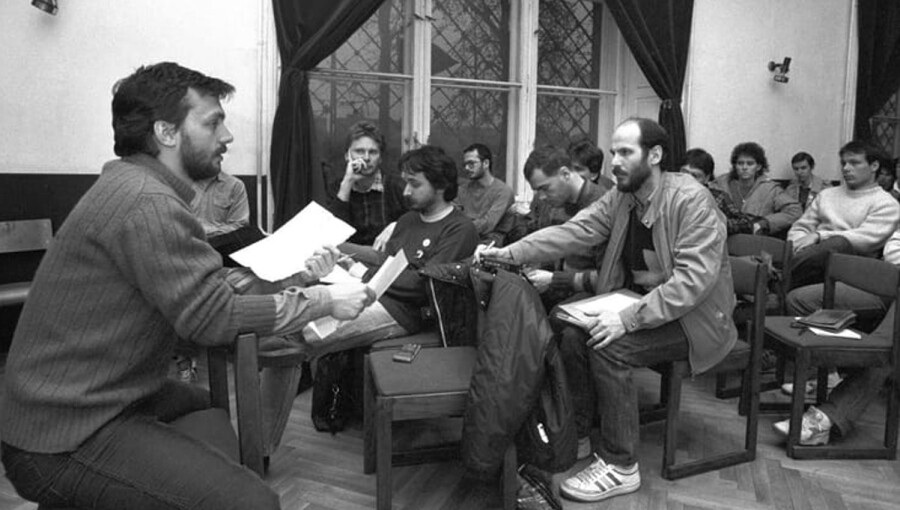
Former prime minister Viktor Orban has published documents from Hungary’s communist-era state security archives, saying he rejected an attempt to recruit him as an informant during his compulsory military service in the early 1980s, Hang.hu writes.
In a Facebook post on November 3, a day before the first batch of records of former communist-era informant set to be published, the former prime minister said he, his wife Aniko Levai and fellow opposition activists were subsequently kept under constant surveillance by the communist authorities, who used informants and wiretapping devices at their workplaces and home, including their bedroom.
A report dated August 25, 1987, eight months before Fidesz, a young anti-Communist youth movement, was founded, showed that Orban was considered for recruitment in 1982, but the authorities eventually abandoned the attempt. It also records that a confidential investigation into him, codenamed “Viktoria”, began in 1985 and closed a year later for lack of evidence. His wife was placed under investigation in July 1986.
Authorities monitored her opposition contacts, intellectual gatherings and efforts to obtain publications considered hostile to the communist regime. Documents also describe plans to recruit informants and install listening devices in the couple’s home in Szolnok, 100km east of Budapest.
The published files include an Interior Ministry report on a Fidesz meeting at a Budapest restaurant on April 10, 1988, in which Fidesz leaders were warned to stop their activities
The disclosure comes amid renewed allegations that Orban may himself have reported on fellow soldiers during his military service.
Hungary’s last communist-era prime minister Miklos Nemeth said that in March 1990 he was shown three handwritten intelligence reports by his defence minister bearing Orban’s name and signature. The documents allegedly contained observations about fellow soldiers, including their political, religious and personal views.
Németh said he believed he recognised Orban’s handwriting but could not verify the documents’ authenticity. He returned the originals without making copies. This account is included in investigative journalist Szabolcs Panyi’s forthcoming book, Friendship with Benefits – Putin’s Servants and Services in Hungary.
In a recent podcast Panyi said Nemeth handed over his memorandum to the Historical Archives of the Hungarian State Security Services in September, after parliament adopted legislation expanding access to former state security files.
In a Facebook post on November 3, historian Krisztian Ungvary, an ardent critic of Orban’s illiberal government, defended him. He cautioned against drawing conclusions from allegation such as made by Miklos Nemeth and stressed that Orban’s appearance in military counter-intelligence records does not in itself prove recruitment or cooperation.
The veteran leader, with the most years in office of any Hungarian premier, consistently denied cooperating with the communist secret services, maintaining that he was targeted for surveillance rather than recruited.
Hungary’s communist-era state security documents on agents are due to be made public on November 4, following a decision by the new parliament to disclose the files. The release is expected to shed further light on the activities of the former communist regime’s intelligence and counter-intelligence services and the identities of those who cooperated with them.
Prime Minister Peter Magyar said the decision to declassify and publish the documents in a searchable database settles a “36-year debt” from the regime change: giving citizens and families the right to learn what the former security services knew about them and who informed on them.
Hungary has been the last major former Soviet-bloc country in Central and Eastern Europe to fully declassify and publish comprehensive records of Communist-era secret police agents and informants. In Hungary, successive governments resisted full disclosure, citing concerns that the files could be used to discredit or blackmail political opponents. Peter Magyar has accused previous administrations of deliberately delaying the process and manipulating the documents for political purposes.