
Mexico and France are deepening bilateral healthcare integration through regulatory digitization, standardized clinical care protocols, and multinational manufacturing expansions to address Mexico’s chronic disease burden and aging demographics. Accelerated COFEPRIS clinical trial timelines and primary care harmonization across public health institutions are lowering barriers for clinical research capital and local formulation development. The strategic alignment directly impacts multinational pharmaceutical firms, consumer health manufacturers, and clinical research organizations scaling local R&D, clinical trial operations, and regional export capacity.
______
Scientific research, regulatory digitization, and industrial capacity expansions are defining the bilateral health agenda between Mexico and France, as public health authorities and multinational executives address the country’s chronic disease burden and demographic aging.
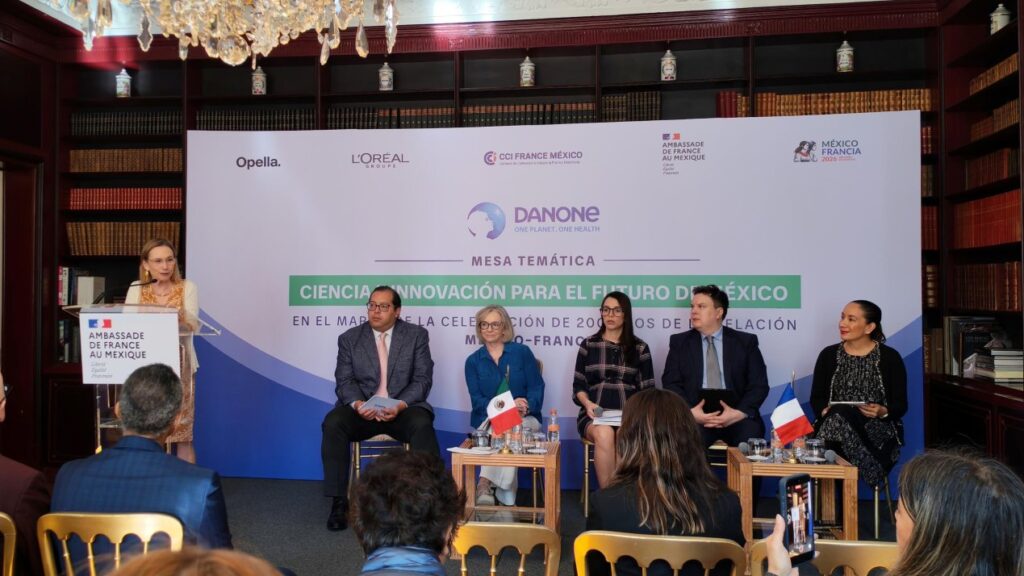
Speaking at a Franco-Mexican business forum, diplomatic representatives, public sector officials, and corporate leaders evaluated the challenges facing Mexico’s healthcare architecture, clinical trial frameworks, and long-term manufacturing investments.
Diplomatic relations between Mexico and France date to Nov. 26, 1826, and were formally restored in 1944, marking two centuries of institutional engagement. Framing the forum within this bicentennial milestone, Delphine Borione, Ambassador of France to Mexico, highlighted the implementation of the bilateral strategic action plan and the modernized EU–Mexico Global Agreement. With historical anchors such as the Franco-Mexican Chamber of Commerce established in 1884, Borione emphasized that 200 years of diplomatic ties now underpin an industrial presence of over 700 French companies operating in the country and generating 215,000 direct jobs, highlighting health, nutrition, and personal care as core pillars of industrial collaboration.
“France is Mexico’s third-largest scientific partner in terms of co-publications, but we can and must go further; we have to continue connecting our ecosystems at every level to facilitate exchanges among researchers, universities, educational centers, and industrial actors,” Borione stated.
The discussion, moderated by Emilio Aguilar, Vice President of Corporate and Legal Affairs at Danone Mexico, centered on clinical care standardization, preventative consumer behavior, industrial capital expenditure, and localized R&D.
Clinical Harmonization and Primary Care Reform
Mexico’s epidemiological profile requires a structural shift toward early intervention. Patricia Clark, Secretary of the General Health Council (CSG), outlined the federal strategy under the leadership of Health Minister David Kershenobich, targeting the integration of a unified national healthcare system anchored in primary care.
To address the historical fragmentation among the Mexican Social Security Institute (IMSS), the Institute for Social Security and Services for State Workers (ISSSTE), and IMSS-Bienestar, the CSG is executing mandatory National Medical Care Protocols (PRONAM). These clinical directives establish standardized diagnostic and treatment pathways across first-level clinics for the cardiorenal metabolic syndrome, encompassing diabetes, cardiovascular disease, obesity, arterial hypertension, and chronic kidney disease.
The federal initiative incorporates unified electronic medical records and telemedicine networks to link rural primary clinics with diagnostic centers. Furthermore, the council introduced simplified “Citizen PRONAM” versions, beginning with diabetes management, to empower patient communities directly. “We need to build a triple helix of industry, academia, and government, because science is created by academia, but academia does not have the capacity to translate it the way industry does. When we generate clinical science, that alliance becomes critical to translate knowledge into public policies that serve the well-being of the population,” Clark said
Regulatory Approvals and Clinical Research
In tandem with public health reforms, regulatory processes overseen by the Federal Commission for the Protection against Sanitary Risks (COFEPRIS) are experiencing adjustments to attract international research capital. Clark pointed out that authorization timelines for controlled clinical trial protocols have been reduced to 30 days once documentation clears institutional research and ethics committees, accelerating the introduction of advanced therapeutics such as CAR-T cell protocols and domestic mRNA vaccine platforms.
Panelists from the private sector validated this regulatory shift, noting that administrative agility and greater institutional openness have tangibly benefited corporate operations. Fabián Flores, Scientific Director for Mexico and Latin America, L’Oréal, corroborated the progress made by the regulatory authority, highlighting that modernization tools such as the DIGIPRiS digital platform have expedited product notifications and interactions, allowing companies to bring innovations to market faster while maintaining science-based compliance. Aguilar similarly reaffirmed that adapting collaboratively with the sanitary authority under evidence-based regulations has driven a meaningful operational transformation across heavily regulated industries.
Clark projected that the clinical research segment could channel significant investment into the country, reinforced by Mexico’s position as a global medical device manufacturing hub and growing institutional alignment across pharmaceutical and device sectors.
Industrial Investments and Export Infrastructure
Multinational pharmaceutical and consumer healthcare manufacturers are channeling capital expenditures into domestic manufacturing hubs to serve domestic and cross-border demand. Erika Hernández, Director of Public Affairs and Communications, Opella Mexico, outlined the company’s capital allocation strategy, highlighted by an ongoing MX$2.3 billion investment at its manufacturing plant in Ocoyoacac, the State of Mexico.
The project expands local production capacity, strengthens technological platforms, and incorporates a new manufacturing line for Enterogermina probiotics, positioning the State of Mexico facility as an export platform serving Latin American and international markets.
Preventative Self-Care and Information Integrity
While consumer interest in health management is rising, institutional data reveals friction in public adoption. Citing figures from the Latin American Association of Responsible Self-Care (ILAR), Hernández noted that while over 80% of Mexicans express an active interest in personal healthcare management, approximately 58% state they lack the resources and guidance to execute self-care effectively.
The growing reliance on digital search and artificial intelligence for health guidance introduces additional complexities. Referencing Edelman’s Health Trust Barometer, Hernández noted that one in three Mexicans currently consults AI platforms for health-related decisions, a figure projected to grow. “Innovating is positive, but it is not enough; the priority is closing the gap between scientific knowledge and everyday consumer decisions. If people cannot understand an innovation, do not trust it, or lack access to it, its impact is limited, which is why we must deliver verifiable, clear, and science-backed self-care solutions without displacing medical professionals,” Hernández stated.
Dermatological Science, Research and Customization
Consumer healthcare demands are shifting from generic cosmetic formulas toward clinically validated dermatological applications. Flores highlighted research into the human exposome, the cumulative impact of environmental pollution, ultraviolet radiation, and lifestyle factors on skin health, alongside cutaneous microbiome studies addressing inflammatory conditions.
To adapt formulations to Mexico’s geographical and demographic realities, including elevated solar radiation levels, L’Oréal operates local sensory and evaluation facilities that assess formulas specifically within Mexican test populations. Technologically, the group applies AI to accelerate molecule discovery and optimize safety and efficacy benchmarks directly aligned with local demographic requirements. “The future lies in personalization, because we have understood that human biology is diverse and individual consumers require targeted solutions. A consumer in Mexico has distinct needs compared to one in Asia or Europe, requiring our formulations to reflect localized demographic and environmental factors,” Flores explained.
Preventative Nutrition, Gut Microbiome, and Demographics
Demographic shifts recorded in Mexico, marked by a declining birth rate and a rising median age, are redefining nutritional R&D toward functional longevity and disease prevention. Alejandra Romero, Nutrition and Science Manager, Danone Mexico, emphasized that nutritional science is pivoting toward healthy aging, requiring sustained protein intake across the lifecycle to preserve skeletal muscle mass and functional mobility.
A central focus of industrial R&D involves the gut microbiome and the gut-brain axis, supported by research across specialized centers such as the One Biom Laboratory. Romero noted that dietary interventions via fermented foods directly influence metabolic regulation and long-term health outcomes.
In Mexico, corporate formulation strategies incorporate product fortificants, including vitamin D and calcium, across pediatric portfolios to combat systemic nutritional deficiencies while balancing taste and affordability. Through the Danone Institute, the company allocates academic research awards, distributes student fellowships, and organizes scientific training forums for medical professionals to translate current clinical evidence into practical healthcare applications. “Nutrition was once viewed in broad terms, but we are entering an era defined by personalized nutrition, where diet is recognized not just as treatment, but as an indispensable preventative tool. Science must be translated into accessible, versatile, and functional foods that solve real-world health challenges for our consumers,” Romero concluded.