
Over the past two decades, the Arctic ice cap has exhibited greater seasonal variation in ice thickness and extent, making maritime shipping routes and rich natural resources increasingly accessible.
According to a report in The Daily Signal, reflecting significant past investments in the Arctic, Russia currently operates more than 40 icebreakers. Two primary routes stand out in the region: the Northwest Passage, which navigates along the northern coasts of Alaska and Canada, and the Northern Sea Route, which runs along Russia’s northern coastline.
These routes promise shorter global shipping voyages that bypass Middle Eastern conflicts as well as piracy-prone areas in Southeast Asia and Africa. However, natural resources could be what makes developing the Northwest Passage viable, much like how Russia attracted significant Chinese investment on the back of massive oil reserves in Yamal to make its Northern Sea Route commercially sustainable.
Over the past decade, Moscow built six major Arctic seaports and plans to develop the Utrenny terminal on the Gulf of Ob, alongside ports at Chaika and Severny on the Taymyr Peninsula. Chinese investments exceeding $734 million through the Silk Road Fund and an additional $12 billion in financing were essential to developing the Yamal LNG facility and ice-strengthened vessels. This created heightened demand for icebreakers, specialized LNG tankers, and supply ships.
Although still lacking critical infrastructure, the Northern Sea Route supported extensive maritime traffic with more than 3,000 vessels between 2013 and 2025. By contrast, only 465 vessels navigated the Northwest Passage between 1903 and December 2025—primarily yachts and cruise ships operating between July and September, carrying roughly 5,000 tourists each year. From a business standpoint, the passage is lagging, and closing the gap requires icebreakers.
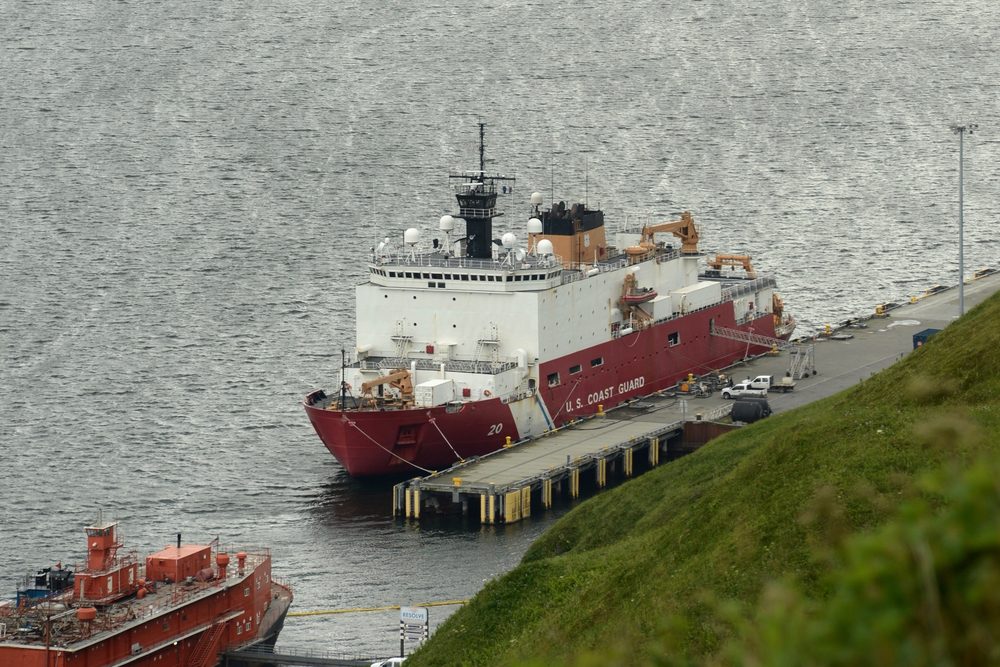
To secure its Arctic waters, the US Coast Guard estimated that it requires five Polar Security Cutters (PSCs) and five Arctic Security Cutters. A medium Arctic Security Cutter can break through 4 feet, 6 inches of ice at 3 knots, or 8 feet of ice by backing and ramming, but cannot sustain year-round operations. In contrast, the PSC operates year-round and can break up to 20 feet of ice.
Under the ICE Pact initiative and the Finland model, the United States is collaborating with Canada and Finland to manufacture icebreakers. The first two vessels across both models will be constructed in Finland, while a US shipyard begins building subsequent ships, with delivery of the first American-built vessel slated for 2028. Contracts have been signed for 11 icebreakers to date.
Currently, active US vessels have exceeded their operational lifespan and suffer frequent breakdowns. A recent incident in September led to the cancellation of an Arctic deployment for the cutter Healy, one of only three active US icebreakers, after a fire in 2024 had already disrupted an earlier mission. The new vessels are intended to break ice and keep routes clear, thereby facilitating commercial shipping and economic development.
Such endeavors carry steep costs: icebreaker construction runs 20% higher than that of open-water ships, fuel consumption for ice-adapted container vessels is 40% higher, and tankers require reinforced hulls and propulsion systems that drive up costs by approximately 9%.