
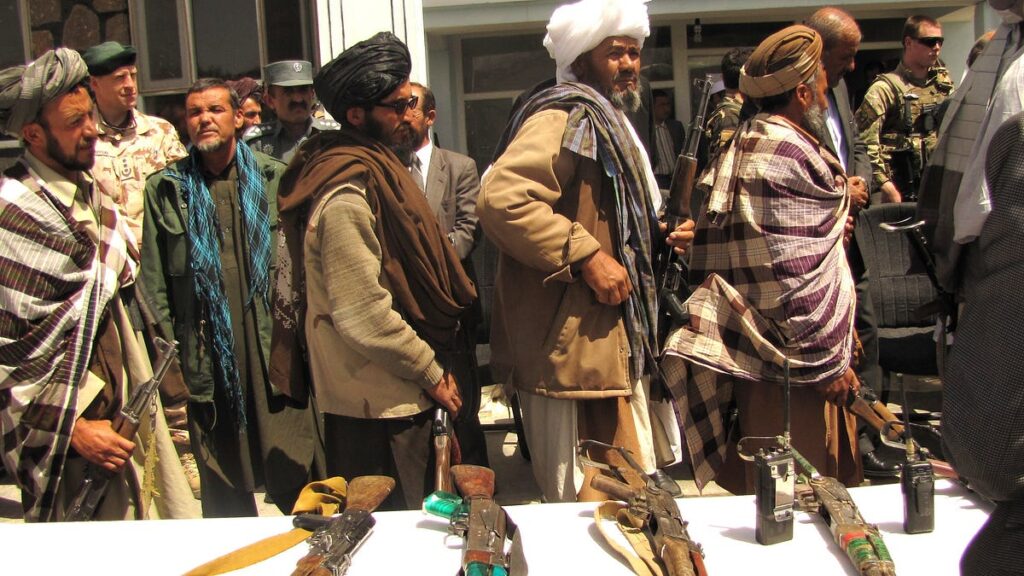
On Oct. 16, Russian Foreign Minister Sergey Lavrov warned that militant organizations continued to maintain training camps and strongholds in Afghan territories bordering Tajikistan, Uzbekistan and Turkmenistan. “Attempts are being made to smuggle weapons and drugs from Afghanistan into Central Asian countries and then into Russia,” he said.
Speaking at a regional security conference in Moscow, he identified Islamic State Khorasan Province as the principal threat, warning that militants sought to use Afghanistan as a base for expanding terrorist activities into Central Asia and Russia. A week later, the Russia-led Collective Security Treaty Organization (CSTO) announced plans to supply Tajikistan with additional weapons and security equipment. Meanwhile, Russian and Uzbek forces conducted joint military exercises near Afghanistan’s northern frontier. Together, these developments expose an uncomfortable contradiction. Sixteen months after formally recognising the Taliban government, Moscow continues to regard Afghanistan as a potential source of regional insecurity, thus reinforcing the border that closer engagement with Kabul was intended to help stabilize.
Russia’s decision to recognize the regime was neither sudden nor entirely driven by security considerations. Moscow had cultivated relations with the Taliban long before it returned to power in August 2021. Through the Moscow Format consultations, initiated in 2016, Russia gradually positioned itself as an important diplomatic interlocutor in Afghanistan. After the American withdrawal, this gave Moscow an opportunity to wield influence as Western governments were reluctant to recognize the new regime.
Recognition also carried geopolitical significance. Moscow’s decision demonstrated its willingness to pursue an independent diplomatic approach while expanding opportunities for regional connectivity, trade and security cooperation. Afghanistan’s geographical position, connecting Central and South Asia, offered potential economic advantages…
This is a preview sent to free subscribers like you. The full content of this article is available exclusively to our paid subscribers. View the full story here.
To enjoy the complete Asia Sentinel experience and access more in-depth, independent reporting, please consider subscribing for just US$10/month or US$100/year.
Support independent journalism. Subscribe today.