
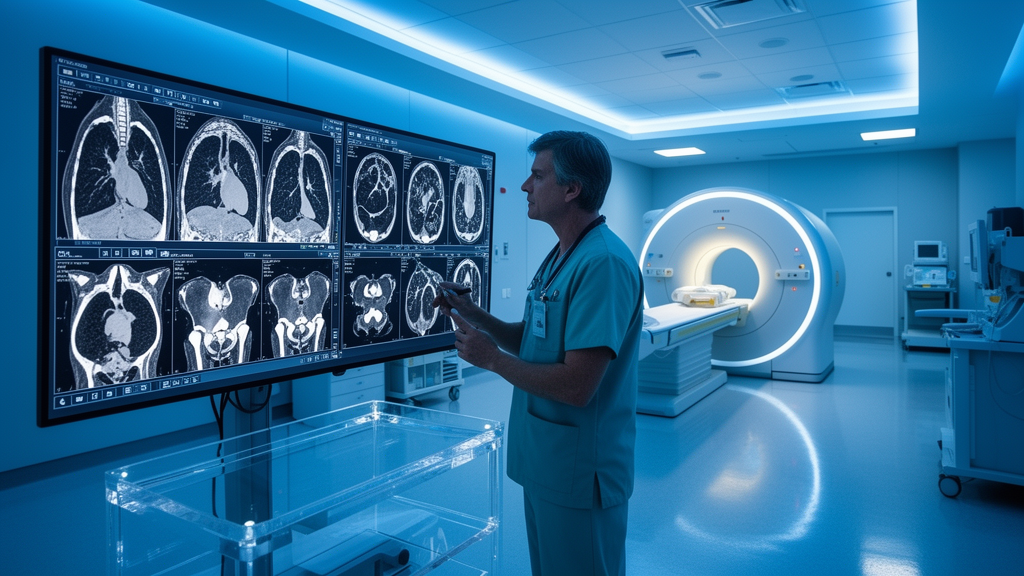
New research published ahead-of-print by The Journal of Nuclear Medicine presents a diverse array of studies focusing on nuclear medicine, molecular imaging, and theranostics. These peer-reviewed articles, released by the Society of Nuclear Medicine and Molecular Imaging, explore advancements in precision medicine that allow diagnosis and treatment to be tailored to individual patients. The collection of studies addresses critical questions in oncology, ranging from the assessment of prostate cancer for focal therapy to the prediction of immunotherapy responses in lung cancer.
One significant study compared the efficacy of PSMA PET/CT and multiparametric MRI in selecting patients for focal therapy of prostate cancer. The research found that combining these imaging methods improved the detection of features that might render patients unsuitable for focal therapy, such as cancer that has spread or involves multiple areas of the prostate. However, the study noted that some cases remained undetected despite the combined approach.
In the realm of targeted cancer therapy, researchers investigated whether diagnostic 68Ga-FAPI-46 PET/CT scans could predict tumor radiation doses from 90Y-FAPI-46 therapy. In a cohort of 14 patients with 24 tumors, measurements from the diagnostic scans were strongly correlated with those from therapeutic imaging. This strong correlation suggests a potential role for diagnostic PET imaging in treatment planning and patient selection for fibroblast activation protein-targeted cancer therapy.
Another study examined patterns of disease progression during 177Lu-PSMA therapy in 361 patients with prostate cancer. The results indicated that 80 percent of patients showed a reduction in tumor size or number, demonstrating the therapeutic potential of this radioligand approach. However, 43 percent of patients experienced disease progression during treatment, most commonly in bone. Notably, imaging and prostate-specific antigen measurements showed conflicting results in up to 43 percent of patients across treatment cycles.
Addressing the challenge of detecting recurrence, a prospective study found that 18F-fluciclovine PET/CT detected prostate cancer recurrence in 56 percent of patients who had rising prostate-specific antigen levels but negative PSMA PET scans. The additional imaging changed intended treatment management in 71 percent of these patients, identifying disease in the prostate bed, lymph nodes, or distant sites.
An analysis of nearly 7,000 patients with prostate cancer found that PSMA PET/CT for initial staging was associated with longer overall survival, cancer-specific survival, and time to biochemical recurrence. The association was particularly strong among high-risk patients receiving radiation therapy, although the study notes that this finding requires further investigation.
Beyond oncology, a study of 1,775 patients with right upper quadrant pain found that both low and high gallbladder ejection fractions were associated with symptom relief after gallbladder removal. Among patients who underwent surgery, 90 percent with low ejection fractions and 94 percent with high ejection fractions reported symptom relief. This finding highlights the potential significance of gallbladder hypercontractility in the context of biliary pain.
In lung cancer, a multicenter study found that PET imaging of PD-L1 expression in patients with advanced non–small cell lung cancer was associated with immunotherapy outcomes. Patients with low tracer uptake were unlikely to experience durable clinical benefit, with PET demonstrating a 94 percent negative predictive value. This performance outperformed standard tissue-based PD-L1 testing, suggesting that PET imaging may offer a more robust method for predicting immunotherapy response.
Finally, a small study explored methods to reduce salivary gland exposure during prostate cancer radiopharmaceutical therapy. The research found that combining botulinum toxin injections with a scopolamine patch reduced PSMA radioligand uptake in salivary glands. Uptake decreased by approximately 30 percent in parotid glands and 17 percent in submandibular glands, with no severe toxicities reported among the 14 patients.
Subject of Research: Nuclear medicine imaging and theranostics research
Article Title: The Journal of Nuclear Medicine Ahead-of-Print Tip Sheet: October 30, 2026
Article References: The Journal of Nuclear Medicine Ahead-of-Print Tip Sheet: October 30, 2026. Original publication (Bibliographic details unavailable.)
Image Credits: AI Generated
DOI: Not provided
Keywords: nuclear medicine, prostate cancer, PET/CT, PSMA, molecular imaging, theranostics, lung cancer, immunotherapy, gallbladder, radiopharmaceuticals, Journal, Nuclear