
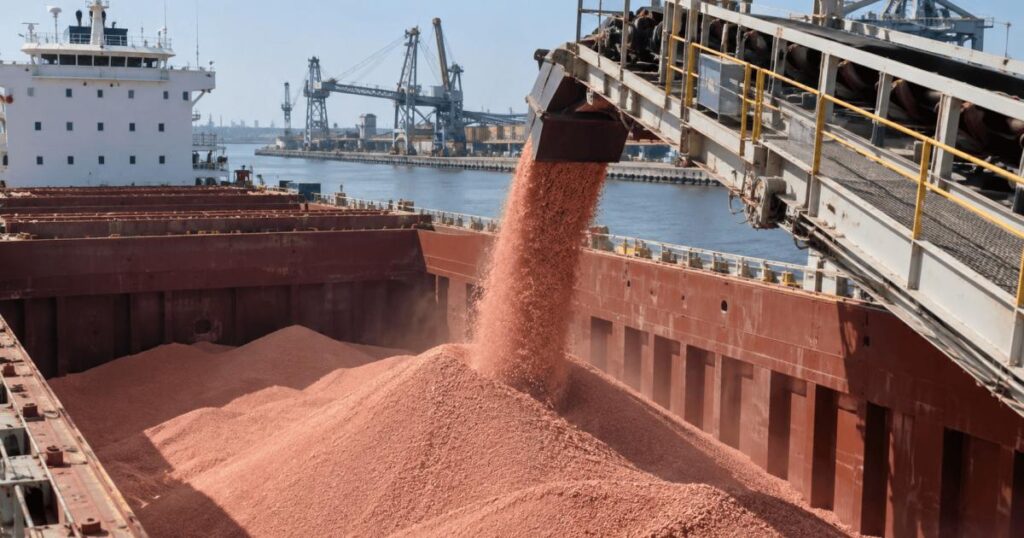
A new white paper from The Fertilizer Institute (TFI) digs into the question: Could Belarus be a significant source of potash for the U.S. market moving forward?
It’s a question the group said it’s been getting since late September when President Donald J. Trump announced a purchasing agreement for potash from Belarus.
The U.S. imports nearly all of its potash, with approximately 90% coming from Canada, according to TFI. In 2025, the U.S. imported 12.6 million metric tons of potash, squarely within its typical range of 11 to 14 million tons per year.
“To put Belarus’s role in perspective, its exports alone are roughly equal to all U.S. potash imports,” TFI’s report stated.
Belarus’s production peaked at about 14.5 million metric tons in 2021, the same year it exported a record 12.3 million tons. Its exports have since eased to a more modest 10.8 million tons in 2024, still close to a full year of U.S. imports.
“At first glance, that might suggest plenty of room to supply American farmers,” TFI noted. “But production capacity does not tell the whole story. Much of that potash already has a destination, and moving additional volumes to the United States would take more than signing a purchase agreement.”
“So, while Belarus certainly has significant volumes of potash to mine, they also have existing customers that rely on those nutrients to support their own agricultural sectors,” TFI added.
“The number of countries that Belarus exports potash to has fallen from more than 80 as recently as 2021 to fewer than 20 in 2024, though export volumes have not changed drastically. China’s imports of potash from Belarus grew by 65% during that time period, while shipments to Europe, North America and Africa have essentially stopped.”
Sending additional potash to the U.S. market would require Belarus to divert production away from existing customers, something TFI said Belarus is unlikely to do — especially as it relates to export markets that remained open to them when facing international sanctions.
TFI also points out that Belarus is landlocked, and losing access to its former export route through Lithuania has meant longer rail trips through Russia to reach ocean ports, with those additional miles adding costs before a ship even leaves for the US.
Getting it here is only part of the trip
Canada has a considerable advantage over Belarus when it comes to proximity to the U.S., in addition to the supply chain that’s been built over decades to move potash to American farms.
“Canadian potash arrives primarily by rail, with deliveries throughout the year,” TFI wrote. “That allows buyers to purchase closer to when they need the product and reduces how much inventory they must store.”
Belarusian potash would take a different route, starting with rail to an overseas port, then an ocean voyage, and another trip inland after reaching the U.S. — most likely through New Orleans.
TFI noted that a typical vessel carrying 40,000-50,000 metric tons of potash needs barges, railcars, storage or some combination of all three to handle its cargo. Plus, the Mississippi River presents challenges with barge traffic.
“None of these challenges make additional imports impossible, but they do help explain why replacing a large share of Canadian supply would be difficult,” TFI added.
What could Belarus realistically supply?
TFI’s white paper estimates that Belarus could realistically supply approximately 1-1.5 million metric tons annually, equating to about 8–12% of US potash imports in 2025.
“That is a meaningful amount of fertilizer and would exceed the roughly 750,000 metric tons the U.S. imported from Belarus in its previous peak year, 2019. But it would still leave Canada supplying the majority of American farmers’ needs,” TFI wrote.
Affordability also depends on the full trip. The price of potash overseas is one part of the cost; transportation, handling, storage, and delivery to growing regions all factor into what farmers ultimately pay.
“American agriculture benefits from access to more nutrient sources, and Belarusian potash can contribute to that supply in a positive way,” TFI concluded.
“For the foreseeable future, though, Canada’s scale, proximity, and established transportation network make it likely to remain our primary supplier.”
Click here to read TFI’s full report.