
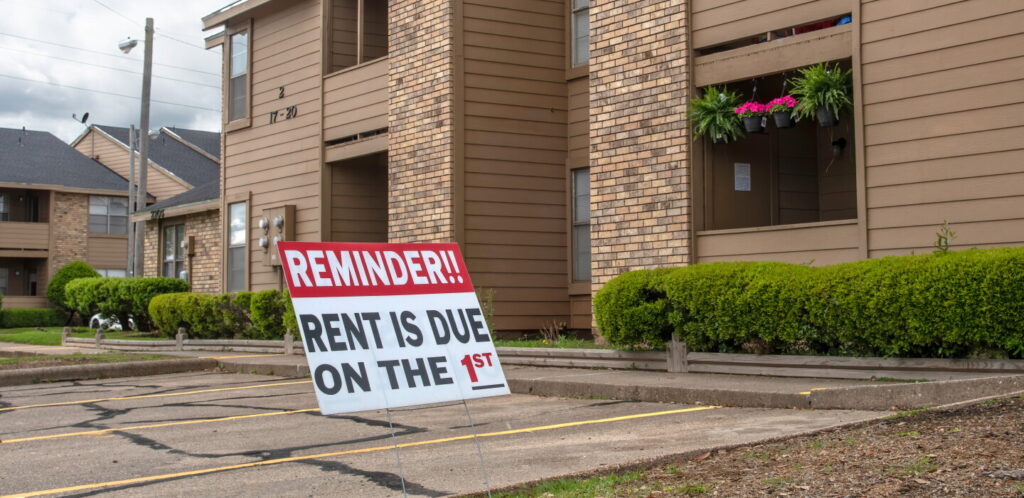
(TNS) — A renter looking for an apartment might assume the monthly price was set by a landlord weighing the location, number of bedrooms, amenities and condition of the property.
But behind the price tag at properties owned by many of Massachusetts’ largest landlords is something tenants may never know about: an algorithm using nonpublic leasing data from nearby properties to recommend how high rents can go.
Landlords who use these programs have been accused of unfair pricing, intentionally leaving units vacant and colluding with others to reduce competition. Now, some lawmakers seek to outlaw algorithmic rent pricing entirely.
State Rep. Lindsay Sabadosa, D-1st Hampshire, compared the traditional method to selling a used car: the seller looks at prices for the same or similar models and sets an asking price accordingly.
“This is a much more sophisticated way of looking at all the rents than actually trying to understand what the maximum the market will bear in a given community is,” Sabadosa said. “If you are someone who is just trying to make money, I am sure you think this is a great idea. … If you’re interested in having thriving communities where people can afford to live, it’s actually a really terrible idea, because it’s just this constant upward pressure which pushes everybody out.”
How algorithms are used to set rent prices
Rent pricing algorithms — often referred to in the real estate industry as “revenue management” software — work by analyzing lease pricing data from the millions of properties across the country that use them. The software tracks market ups and downs, recommending price changes when it predicts they would help landlords maximize revenue.
The biggest player in the industry is Texas-based RealPage, which claims on its website that its customers outperform competitors who don’t use the service by up to 7%.
To set prices, RealPage’s algorithm analyzes nonpublic data gathered from landlords who use its software, including the listed rent, the actual price tenants agree to after any discounts and the length of the lease, both for new leases and renewals. The software also has access to data on a unit’s future demand and occupancy, including inquiries and applications from prospective tenants.
In 2024, the U.S. Department of Justice and several states, including Massachusetts, filed a lawsuit against RealPage and some of the largest landlords in the country that use its services, alleging that the practice illegally decreases competition in the market.
“Renters are entitled to the benefits of vigorous competition among landlords,” attorneys for the DOJ wrote in court documents. “In prosperous times, that competition should limit rent hikes; in harder times, competition should bring down rent, making housing more affordable. RealPage has built a business out of frustrating the natural forces of competition.”
RealPage did not respond to a request for comment for this story.
RealPage’s software prioritizes price increases over decreases, according to the lawsuit, recommending an increase when demand is high but keeping the recommended price the same when it is not. The program will also recommend an increase to mirror changes at comparable properties, even if the unit is priced appropriately.
That can result in advertised rent prices changing daily, or even multiple times a day.
Demetrios Salpoglou, CEO of the real estate platform Boston Pads, said the frequent price fluctuations he sometimes sees on the website cause unnecessary issues for both renters and landlords. He has seen out-of-state landlords rely too heavily on algorithms to set prices, without understanding the nuances of the neighborhoods where properties are located, and has heard complaints from consumers or their agents, confused about why a unit’s price is changing twice daily.
“It’s like over-engineering a Hyundai … and calling it a Porsche,” Salpoglou said.
While advances in artificial intelligence could improve the technology’s accuracy in the future, Salpoglou said he wasn’t convinced by the arguments in its favor.
“I’ve never really had a landlord say to me, ‘This rental software is incredible,’” he said. “What I’ve seen is the opposite.”
Another concern for legislators and advocates is that sometimes, the algorithm will recommend landlords keep some apartments vacant to justify higher prices. If the software determines demand is too low, it will lower the target occupancy rate and lease fewer apartments at higher prices, according to the lawsuit.
In a market where low housing supply is driving high prices, that only exacerbates the problem.
“The problem is that it’s distorting the market,” said state Sen. Cindy Friedman, D-4th Middlesex. “It’s kind of immoral. You’re taking rental houses or places where people can live and need to live, and you’re taking them off the market. So it becomes much more insidious much faster than a landlord going through Zillow or Redfin.”
How common are rent pricing algorithms?
Revenue management programs are most commonly used by corporate landlords, particularly in large buildings and the luxury rental market. Salpoglou said most small- and mid-sized or independent property owners he works with look at real-time pricing data on his real estate platform to decide on the price that makes the most sense for their units. They may lower the rent if they’re getting close to the lease date without finding a tenant, but otherwise, the price tag rarely changes unexpectedly.
It’s not clear how many apartments in Massachusetts are owned by corporations. A 2023 report by the Metropolitan Area Planning Council found that 21% of Greater Boston properties sold between 2004 and 2018 were purchased by an investor or speculator. A 2025 study by the Lincoln Institute of Land Policy found that 8.9% of residential parcels nationwide, including both single-family and multifamily properties, are owned by a corporation.
Salpoglou theorized that corporate landlords may use revenue management software to satisfy their obligations to owners and investors and show they’re doing their best to price rentals appropriately.
“That might be, in the nicest way I can say it, a CYA (cover your a**),” he said. “Hey, why are we 20% vacant? Well, maybe we’re not using the right software.”
In some rare cases, companies have been open about using algorithmic rent pricing. Earlier this year, a Boston-based company, Audubon Capital Partners, was sued by the city of Providence after it purchased an apartment building and sent tenants lease renewal notices with rent hikes as high as 44%. Providence banned rent-pricing algorithms in 2025.
“Lease rates are generated through a dynamic pricing system that evaluates several factors, including market conditions and the number of expected vacancies during a specific timeframe,” the company told tenants, according to the Providence City Council’s complaint. “In some cases, the software may price certain lease terms higher if a larger number of apartments are projected to become available in that particular month.”
Audubon Capital Partners did not respond to a request for comment.
But most landlords do not advertise their use of rent pricing algorithms, making it difficult to determine how common the practice is.
“I’m not sure that people know about it. They don’t know that the rent is being set by some outside force,” Friedman said. “We’ve heard from a couple different people that had been interested and said, ‘I think this is happening to me.’ But if I were a renter, I wouldn’t know this is how rents are being set.”
Regulating algorithmic rent pricing
In November of last year, RealPage and the Department of Justice reached a settlement requiring the company to stop using non-public competitor data when providing price recommendations. The company also agreed not to use active lease data to train its models and to remove or redesign features that limit price decreases, among other changes.
RealPage did not admit any wrongdoing, and reiterated in court documents in a separate case that the company’s executives did not believe it had done anything illegal.
“RealPage continues to believe that this use of non-public data in prior iterations of the software led to more efficient and procompetitive pricing, reduced vacancies, and other procompetitive effects than when non-public data is not used,” the company’s attorneys wrote just a few days after the settlement was announced.
However, Massachusetts and the other states that sued the company have continued their legal battle against RealPage and several of the largest landlord companies in the country. Two of the landlord defendants, Greystar Management Services and LivCor, have settled, but the case against RealPage and Camden Property Trust, Pinnacle Property Management Services and Willow Bridge Property Company is ongoing.
“As residents continue to grapple with rising costs including high rents, our office will seek to hold accountable those who betray renters’ trust and undermine a fair and competitive housing market,” Massachusetts Attorney General Andrea Campbell said in January 2025, when the state joined the case. “This lawsuit against RealPage and the named landlords is one step towards that accountability.”
Legislators have proposed bills in the state Senate and House of Representatives that would outlaw the use of rent-pricing algorithms in Massachusetts, and the Joint Committee on Housing reported them out favorably in March. The proposals currently sit before the Committee on Ways and Means.
Similar legislation has also been proposed at the federal level, though it has stalled since it was filed in November 2025.
Neither Sabadosa nor Friedman, who filed the House and Senate bills, respectively, was optimistic the state legislation would pass this session, which ends Jan. 5. Friedman said she thinks the proposal could make it into larger housing-related legislation next session.
If so, Massachusetts would not be the first jurisdiction to ban the technology. New York was the first state to do so, with the prohibition taking effect in December 2025. California and New Jersey have since followed suit.
But affected businesses have not accepted the laws quietly. RealPage sued the state of New York seeking to overturn the law, arguing that it violated the company’s First Amendment rights to free speech and dissemination of information. In late September, a federal judge issued a preliminary injunction blocking the law while the case plays out. New York Attorney General Letitia James has appealed the decision.
Sabadosa said one advantage of Beacon Hill not yet adopting the legislation here is that they can observe the fallout from similar laws across the country.
“One of the advantages of actually being a little slow-moving is that we’ve seen this pass in other states. And we’ve also seen the immediate legal challenges,” she said. “We’re looking at what those cases were, what the courts identified as issues with the bill, and we’re redrafting in order to be responsive to those.”
© 2026 Advance Local Media LLC. Distributed by Tribune Content Agency, LLC.